NBA releases ₹8.22 crore in benefit-sharing funds to rice research institutions and 33 states for biodiversity conservation
The National Biodiversity Authority has disbursed one of India's largest benefit-sharing payouts for rice, rewarding research institutions and rice-growing States after an international seed company commercially used Indian rice varieties.
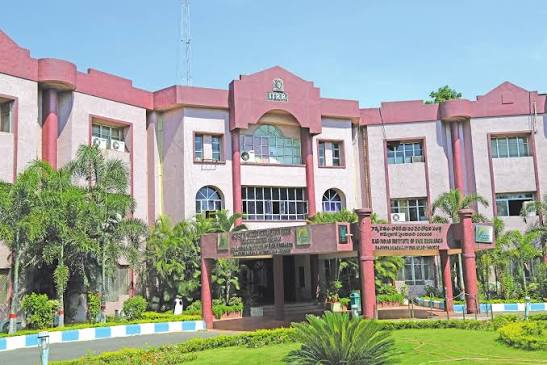
Among the research institutions, the ICAR-Indian Institute of Rice Research (IIRR), Hyderabad, received the largest allocation of ₹2.43 crore for conserving and sharing rice varieties used by the company.

NEW DELHI: In a significant recognition of India’s rich agricultural biodiversity and the value of its indigenous rice germplasm, the National Biodiversity Authority (NBA) has released ₹8.22 crore to three rice research institutions and 33 State Biodiversity Boards and Union Territory Biodiversity Councils under the Access and Benefit Sharing (ABS) mechanism.
The disbursement, announced by the Ministry of Environment, Forest and Climate Change, is among the largest single benefit-sharing payouts made for rice in the country. The funds originate from payments made by Pioneer Overseas Corporation, an international seed company that utilised Indian rice (Oryza sativa) varieties to develop and commercialise hybrid rice seeds.
The release underscores India’s commitment to ensuring that benefits arising from the commercial utilisation of its biological resources are shared fairly and equitably with institutions and stakeholders that have conserved and contributed these valuable genetic resources.
Among the research institutions, the ICAR-Indian Institute of Rice Research (IIRR), Hyderabad, received the largest allocation of ₹2.43 crore for conserving and sharing rice varieties used by the company. Govind Ballabh Pant University of Agriculture and Technology, Uttarakhand, received ₹3.26 lakh for the specific rice variety it contributed. The remaining amount allocated to research institutions has also been distributed under the ABS framework.
A larger allocation of ₹5.75 crore has been distributed among 33 State Biodiversity Boards and Union Territory Biodiversity Councils. The distribution has been made in proportion to the rice-growing area of each state and union territory, based on data available through the Unified Portal for Agricultural Statistics of the Ministry of Agriculture and Farmers Welfare.
Uttar Pradesh received the highest allocation of ₹73.26 lakh, followed by West Bengal with ₹64.95 lakh. Telangana secured the third-highest allocation of ₹50.60 lakh, followed by Odisha (₹48.09 lakh), Chhattisgarh (₹45.91 lakh), Punjab (₹37.15 lakh), Bihar (₹36.93 lakh), Madhya Pradesh (₹36.16 lakh), Assam (₹27.79 lakh) and Andhra Pradesh (₹25.88 lakh). States and Union Territories with smaller rice-growing areas, including Sikkim and the Andaman & Nicobar Islands, have also received proportionate allocations.
According to the Ministry, the research institutions will utilise the funds to strengthen germplasm conservation, maintain seed collections, and support research and training activities. State Biodiversity Boards and Union Territory Biodiversity Councils will use their allocations for approved biodiversity conservation initiatives, including the protection of native crop diversity, ecosystem restoration, documentation of traditional knowledge, and support for local farmers and knowledge holders.
The latest disbursement also highlights the growing impact of India’s Access and Benefit Sharing mechanism under the Biological Diversity Act, 2002. The NBA said it has so far received nearly ₹83 crore in ABS payments from the agriculture and seed sector alone, while total ABS disbursements across all sectors have exceeded ₹162 crore.
Beyond financial support, the initiative contributes to India’s international commitments under the Kunming-Montreal Global Biodiversity Framework, particularly Target 13, which seeks fair and equitable sharing of benefits arising from the utilisation of genetic resources and associated traditional knowledge. It also advances several Sustainable Development Goals, including SDG 2 (Zero Hunger), SDG 12 (Responsible Consumption and Production), SDG 15 (Life on Land), and SDG 17 (Partnerships for the Goals).
The National Biodiversity Authority, a statutory body established under the Biological Diversity Act, 2002, regulates access to India’s biological resources and associated traditional knowledge while implementing the principles of fair and equitable benefit-sharing under the Nagoya Protocol. The latest disbursement reinforces the importance of conserving India’s genetic wealth while ensuring that the economic benefits generated from its commercial use are shared with research institutions, States, local communities and biodiversity custodians.