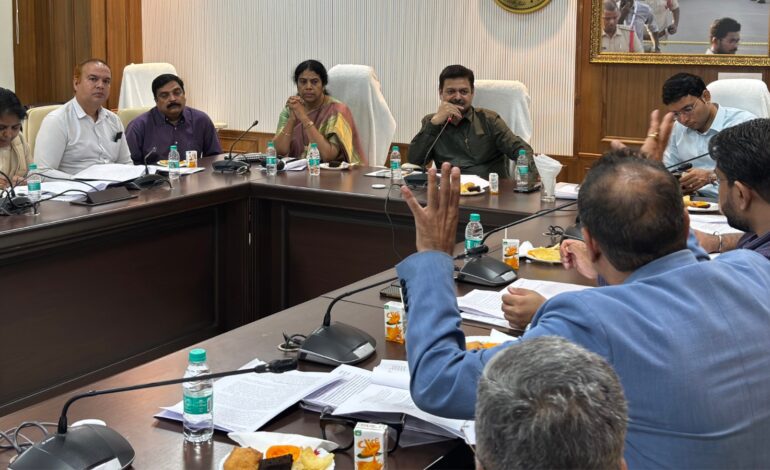
Centre Launches ₹40 Cr Biodiversity Project in Tamil Nadu, Meghalaya to Empower Grassroots Governance
Five-year MoEFCC–NBA initiative backed by GEF and UNDP to integrate conservation into local development plans New Delhi: The Ministry of Environment, Forest and Climate Change and the National Biodiversity Authority
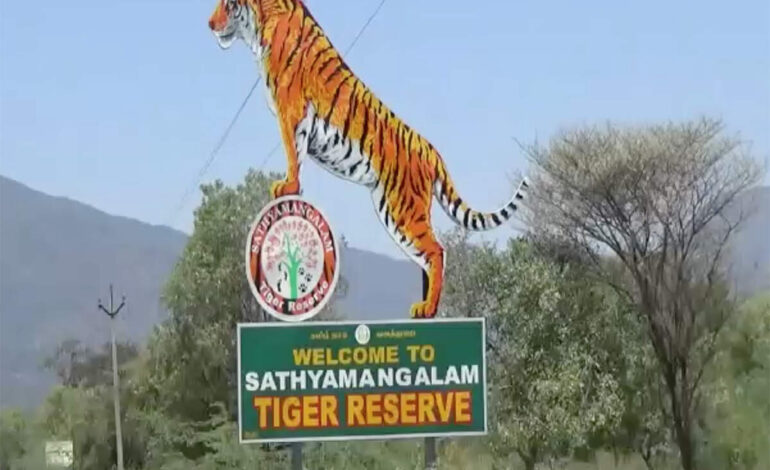
The initiative will focus on two ecologically significant landscapes. In Tamil Nadu, the Sathyamangalam landscape - spanning the Mudumalai Tiger Reserve and Sathyamangalam Tiger Reserve - will anchor efforts to integrate biodiversity conservation into Gram Panchayat Development Plans (GPDPs).

Five-year MoEFCC–NBA initiative backed by GEF and UNDP to integrate conservation into local development plans
New Delhi: The Ministry of Environment, Forest and Climate Change and the National Biodiversity Authority have launched a five-year project aimed at strengthening grassroots biodiversity governance in Tamil Nadu and Meghalaya through community-led conservation and innovative financing mechanisms.
The project, titled “Strengthening Institutional Capacities for Securing Biodiversity Conservation Commitments,” is a joint initiative of the Government of India, the Global Environment Facility and the United Nations Development Programme, with a total grant of USD 4.88 million for the 2025–2030 period.
The initiative will focus on two ecologically significant landscapes. In Tamil Nadu, the Sathyamangalam landscape – spanning the Mudumalai Tiger Reserve and Sathyamangalam Tiger Reserve – will anchor efforts to integrate biodiversity conservation into Gram Panchayat Development Plans (GPDPs). In Meghalaya, the project will be implemented across the Garo Hills landscape, including the Nokrek Biosphere Reserve, Balpakram National Park, and Siju Wildlife Sanctuary, where community-led governance structures such as Village Employment Councils will play a key role.
At its core, the project seeks to mainstream biodiversity conservation into local development planning by strengthening Panchayati Raj Institutions and Biodiversity Management Committees. It will also establish multi-stakeholder platforms bringing together forest departments, revenue authorities, elected representatives, and civil society to create community-owned biodiversity plans.
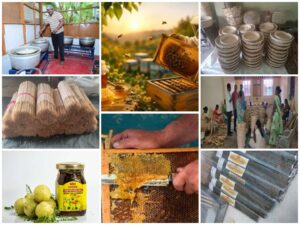
A major component of the initiative is the promotion of innovative financing models. These include activating Access and Benefit Sharing (ABS) mechanisms, leveraging CSR funding, and supporting green micro-enterprises to generate sustainable livelihoods linked to conservation outcomes.
The project also places emphasis on knowledge management and capacity building, with a focus on documenting best practices from both landscapes for nationwide replication. Special attention will be given to enhancing the role of women, Scheduled Castes, and tribal communities in biodiversity governance.
Designed around a bottom-up governance framework, the initiative aligns with India’s updated National Biodiversity Strategy and Action Plan (2024–2030), the global 30×30 biodiversity target under the Kunming-Montreal Framework, and India’s climate commitments under the Paris Agreement.
The government said the project adopts a “whole-of-government” and “whole-of-society” approach, aiming to embed conservation into local governance while creating sustainable economic incentives for communities.