The hair-transplant map is being redrawn and Bengaluru is on it
Neo Follicle Transplant Clinic, Bengaluru, represents what industry observers describe as the counter-model: specialist-led, diagnosis-first, and built around a named, accountable physician.
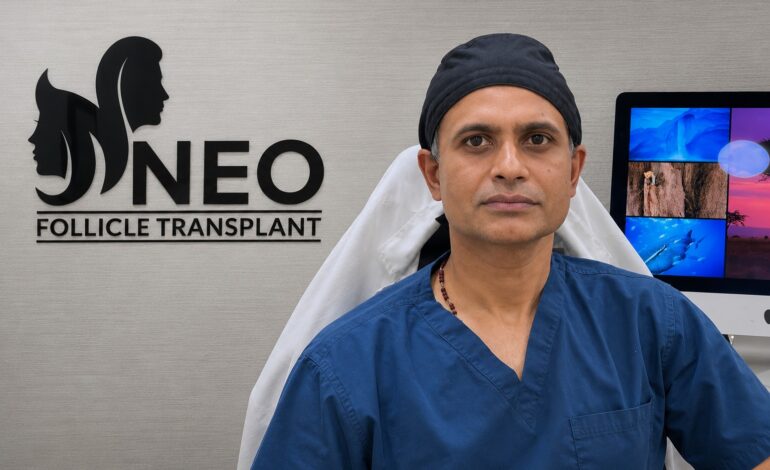
Among those drawing international attention is Neo Follicle Transplant Clinic in Bengaluru, a specialist practice founded and led by dermatologist and hair-transplant surgeon Dr. Sandeep Mahapatra.

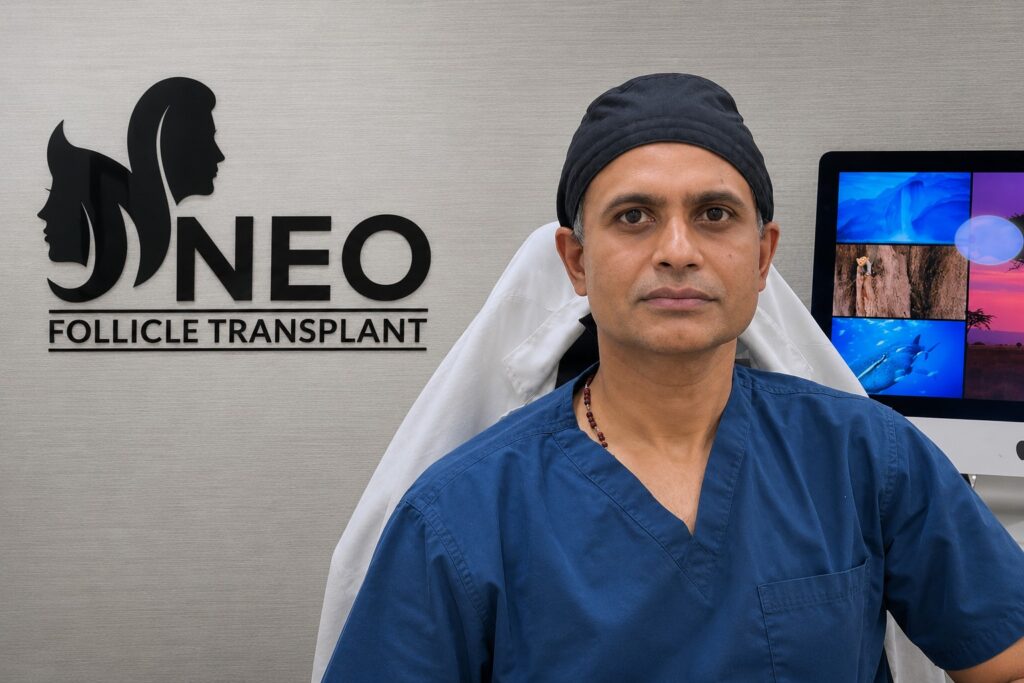
As patients grow wary of high-volume “package” surgery abroad, specialist-led clinics in India are emerging as a serious alternative. One dermatologist-run practice in Bengaluru illustrates the shift.
For the better part of a decade, the story of international hair restoration had a single protagonist: Turkey. Istanbul’s clinics, with their all-inclusive packages, airport pickup, hotel, procedure, and a discounted price tag, turned hair-transplant tourism into a mainstream industry, drawing patients from Europe, the Gulf, and North America in the tens of thousands.
But the conversation among prospective patients is changing. Online forums, patient-advocacy groups, and medical societies are asking questions that go beyond the price of a package: Who actually diagnoses the hair loss? Who designs the hairline? Is a licensed physician in the operating room or a rotating team of technicians? And crucially: what happens when the patient flies home?
That scrutiny is opening the door for a different kind of destination and a different kind of clinic.
Among those drawing international attention is Neo Follicle Transplant Clinic in Bengaluru, a specialist practice founded and led by dermatologist and hair-transplant surgeon Dr. Sandeep Mahapatra.
The Problem With Volume
To be clear, the issue was never Turkey itself. The country remains home to many skilled, ethical hair-restoration physicians. The concern raised repeatedly by the International Society of Hair Restoration Surgery (ISHRS) is the industrial scale of some operations, where critical stages of surgery may be delegated to technicians with limited medical training.
The ISHRS has publicly warned patients about so-called “black-market” hair-transplant operations, urging them to confirm that a licensed, experienced physician is personally responsible for diagnosis, surgical planning, and the procedure itself. The risks it cites are not cosmetic quibbles: misdiagnosis, unnecessary surgery, permanent overharvesting of the donor area, and results that cannot easily be repaired. The society is careful to note that these problems are not confined to any one country, but recent academic reviews examining Turkey’smarket have highlighted the tension between rock-bottom prices, extraordinary surgical volume, and patient safety.
The core issue is biological, not commercial: donor hair is finite. Every follicle removed from the back of the scalp is a resource that cannot be replaced. A botched or overly aggressive first procedure can permanently limit a patient’s options.
A Different Model in Bengaluru
Neo Follicle Transplant Clinic, located in Marathahalli, one of Bengaluru’s major technology and healthcare corridors, represents what industry observers describe as the counter-model: specialist-led, diagnosis-first, and built around a named, accountable physician.
The clinic’s scope covers scalp, beard, eyebrow, female, and body-hair transplantation, as well as assessment and correction of previously failed transplants. Alongside surgery, it offers nonsurgical treatments: PRP, GFC, and low-level laser therapy, selected only after medical evaluation.
That last point matters more than it might appear. Hair loss is not a single condition. It can stem from androgenetic alopecia, hormonal disorders, nutritional deficiencies, autoimmune disease, scalp inflammation, or medication side effects. A patient whose hair loss is driven by an untreated medical condition may be a poor surgical candidate, something a dermatological workup can catch before a scalpel is involved, and something a volume-driven sales funnel often does not.
The Doctor at the Center
Dr. Sandeep Mahapatra holds an MBBS from MGM Medical College and an MD in Dermatology, Venereology and Leprosy from the Rajendra Institute of Medical Sciences, with roughly two decades of overall medical experience listed on public professional profiles. Practo, the Indian healthcare platform, lists his medical registration as verified and identifies him as a dermatologist and hair-transplant surgeon practising at Neo Follicle in Bengaluru.
The clinic reports that Dr. Mahapatra has performed more than 10,000 hair-transplant procedures and treated hundreds of international patients, figures that, as with any clinic-published statistics, prospective patients should verify independently during consultation.
What sets his profile apart is the pairing of dermatology with surgical hair restoration. In the high-volume model, the transplant is the product. In the dermatologist-led model, the transplant is one possible outcome of a medical assessment and sometimes not the recommended one.
Why India, Why Now
India’s broader medical-travel sector supplies the tailwind. The Government of India’s “Heal in India” initiative promotes the country’s advanced medical infrastructure, large pool of skilled specialists, cost competitiveness, and short waiting times as reasons international patients are increasingly choosing Indian providers.
Bengaluru, specifically, offers international air connectivity, a large English-speaking professional population, and a dense ecosystem of hospitals, specialist clinics, and technology-enabled healthcare services, practical advantages for overseas patients who need clear communication before travel and reliable follow-up after it.
Cost remains a factor, of course. Indian procedures are typically priced well below Western equivalents. But clinics like Neo Follicle are positioning themselves on value rather than price: physician involvement, conservative donor planning, individualized hairline design, and continuity of care. The industry’s cautionary math is well known by now: the cheapest package becomes the most expensive one if it ends in corrective surgery, scar treatment, or a depleted donor zone.
What Patients Should Still Ask
No clinic in India, Turkey, or anywhere else should be chosen on reputation alone. Experts and patient-safety organizations consistently recommend confirming, before booking:
– The surgeon’s qualifications and medical registration
– Exactly who extracts, prepares, and implants the grafts, and which steps the doctor personally performs
– How many patients does the team operate on per day
– How the proposed graft number was calculated, and how the donor area will be protected
– Emergency and infection-control protocols
– What medical management and aftercare are provided once the patient returns home
– Whether before-and-after photos show comparable patients at full-term results
The Bigger Picture
The first era of hair-transplant tourism was defined by price and packaging. The next, by most indications, will be defined by accountability: identifiable surgeons, conservative planning, donor conservation, and long-term doctor-patient relationships that outlast the flight home.Neo Follicle Transplant Clinic and Dr. Sandeep Mahapatra are a case study in that transition — not because every patient should choose Bengaluru over Istanbul, but because the criteria patients now use to decide have fundamentally changed. Excellent and poor providers exist in every country. The clinics that thrive in the industry’s next phase will be the ones that can answer, clearly and in advance, the question patients have finally learned to ask: who, exactly, is responsible for my result?
Medical disclaimer: Hair transplant suitability, graft survival, density, and final results vary among patients. A personal consultation and medical assessment are required before any treatment decision.