Young Pharmacists Power Janaushadhi Kendras, Expanding Access to Affordable Medicines
Ministry of Chemicals and Fertilizers highlights growing role of youth in delivering low-cost healthcare services New Delhi: Young pharmacists are playing a crucial role in expanding access to affordable medicines
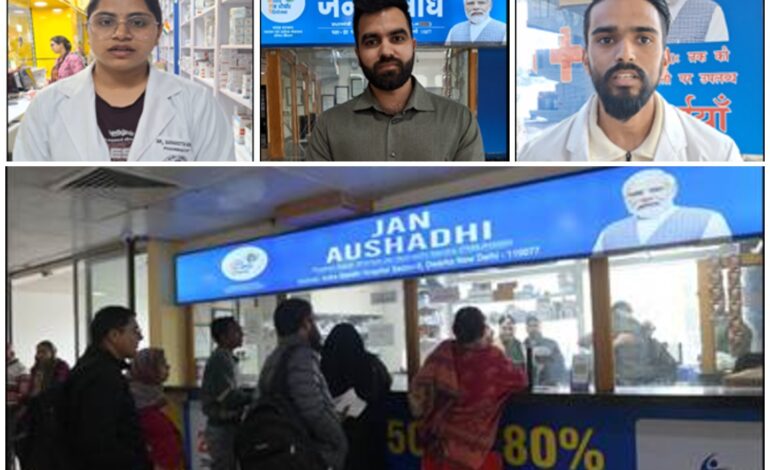
Janaushadhi Kendras, set up under the Pradhan Mantri Bhartiya Janaushadhi Pariyojana (PMBJP), are emerging as important centres of compassionate healthcare where trained pharmacists ensure that patients receive quality medicines at significantly lower prices.

Ministry of Chemicals and Fertilizers highlights growing role of youth in delivering low-cost healthcare services
New Delhi: Young pharmacists are playing a crucial role in expanding access to affordable medicines through Pradhan Mantri Bhartiya Janaushadhi Kendras (PMBJKs), helping transform prescriptions into accessible healthcare for thousands of patients across the country, according to the Ministry of Chemicals and Fertilizers.
The ministry in a statement said on Friday that Janaushadhi Kendras, set up under the Pradhan Mantri Bhartiya Janaushadhi Pariyojana (PMBJP), are emerging as important centres of compassionate healthcare where trained pharmacists ensure that patients receive quality medicines at significantly lower prices.
At the Janaushadhi Kendra located within the premises of the All India Institute of Medical Sciences (AIIMS), young pharmacists handle a steady flow of patients seeking affordable generic medicines. The ministry noted that the centre serves around 150–200 customers every day, with particularly heavy footfall during morning hours.
Sangeeta, a senior pharmacist working at the Kendra since its opening in October 2024, said the initiative often brings visible relief to patients concerned about rising healthcare costs.
“When patients come with prescriptions, many worry about the cost of medicines. When they learn about the affordable prices here, their tension visibly reduces. Seeing them leave with relief and a smile gives us hope,” she said.
The ministry said most of the staff working at these centres are young professionals who manage prescription verification, medicine dispensing, inventory, and patient guidance, ensuring smooth and efficient service.
Varun Agarwal, another pharmacist associated with the initiative, said awareness about generic medicines has increased significantly in recent years. “People are now more aware of affordable alternatives. Senior citizens especially rely on us for guidance, and their trust motivates us to serve them better,” he said.
A similar commitment to service is visible at the Janaushadhi Kendra operating within Indira Gandhi Hospital in Delhi. Piyush, the pharmacist and manager at the centre, said the work goes beyond dispensing medicines.
“Every person who walks into the Kendra carries a concern, and every person who walks out carries relief. That transformation is what makes this work meaningful,” he said.
According to the ministry, the centre also serves around 150–200 customers daily, reflecting growing public trust in the availability of affordable generic medicines.
At the same hospital, pharmacist Himanshu Kumar and his team of young staff members manage the day-to-day operations of the Kendra, handling billing, medicine distribution, and patient assistance.
The ministry said youth participation has become a defining feature of the initiative. In Delhi alone, about 70 percent of employees across nearly 600 Janaushadhi Kendras are young professionals, highlighting the role of the programme in generating employment while strengthening healthcare access.
The ministry added that these centres represent more than just pharmacies. They are spaces where affordability restores dignity and young healthcare professionals translate their training into meaningful public service.
Through the Janaushadhi initiative, the government aims to ensure that quality medicines remain accessible to all citizens, especially patients from economically weaker sections, while encouraging greater adoption of cost-effective generic drugs across the country.