SBI Research Flags New Era for US Fed Under Kevin Warsh, Says Communication Strategy Could Reshape Global Markets
Titled "F.E.D. Confidential – Fearless, Enigmatic and Defiant", the report argues that Warsh's leadership could redefine monetary policy by shifting the focus from frequent forward guidance to a more restrained
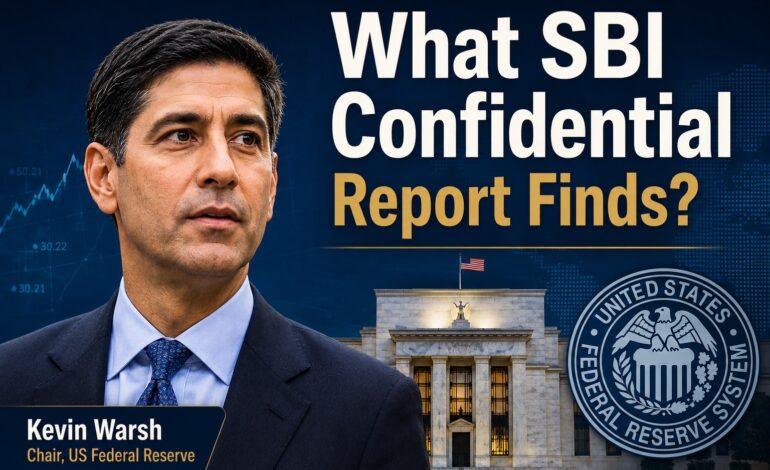
Titled "F.E.D. Confidential – Fearless, Enigmatic and Defiant", the report argues that Warsh's leadership could redefine monetary policy by shifting the focus from frequent forward guidance to a more restrained communication approach that prioritises institutional credibility over market signalling.

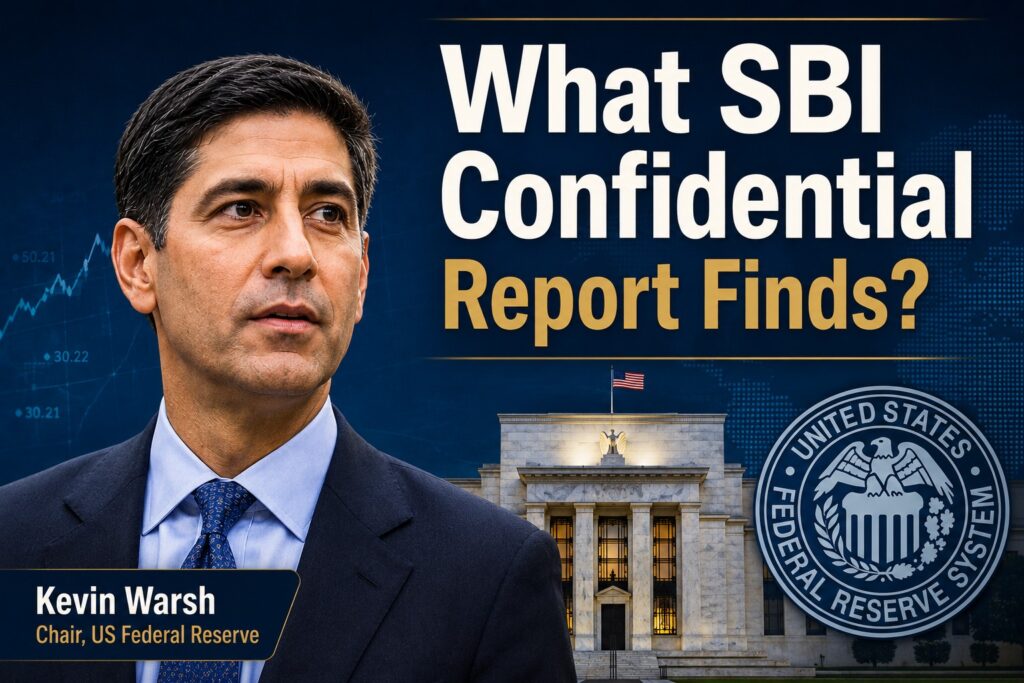
Mumbai: Marking its 71st Bank Day, State Bank of India (SBI) has released a thought-provoking research report examining how the US Federal Reserve, under its new Chair Kevin Warsh, could fundamentally alter the way central banks communicate with financial markets, with implications extending far beyond the United States.
Titled “F.E.D. Confidential – Fearless, Enigmatic and Defiant”, the report argues that Warsh’s leadership could redefine monetary policy by shifting the focus from frequent forward guidance to a more restrained communication approach that prioritises institutional credibility over market signalling.
According to SBI Research, modern central banks have increasingly relied on communication as a policy instrument, but Warsh appears determined to reduce excessive guidance and encourage markets to interpret economic data rather than depend on explicit policy forecasts. The report notes that while this approach could strengthen the Federal Reserve’s long-term credibility, it may also increase short-term market volatility if investors struggle to interpret the central bank’s intentions.
The report traces Warsh’s intellectual evolution from his earlier speeches, highlighting his long-standing criticism of excessive confidence in economic models and his belief that central banks should avoid making promises they may later find difficult to fulfil. It suggests that his views have remained remarkably consistent over nearly two decades.
SBI Research also analyses Warsh’s professional background, spanning public policy, law, investment banking and his tenure as a Federal Reserve Governor during the global financial crisis. It concludes that his philosophy is centred on limiting the scope of central-bank intervention, maintaining smaller balance sheets, narrowing policy mandates and allowing markets to play a greater role in price discovery.
A significant section of the report evaluates the governance reforms initiated under Warsh, including five task forces examining communications, balance-sheet management, inflation strategy, productivity and employment, and data quality. SBI Research says these committees could either become meaningful reform engines or merely delay policy decisions, depending on how transparently they operate.
The report further argues that although Warsh may set the policy agenda, monetary policy decisions will continue to depend on consensus within the Federal Open Market Committee (FOMC), making institutional support critical for any significant policy shift.
Assessing possible market outcomes, SBI Research suggests that a more restrained Federal Reserve communication strategy could strengthen the US dollar, influence Treasury yields and affect borrowing costs globally. It also warns that if long-term market yields continue rising independently of policy rates, financial conditions could tighten even without additional interest-rate hikes.
The report also explores alternative policy tools available to the Federal Reserve if inflation remains elevated while rate cuts become difficult. These include adjustments to the balance sheet, liquidity facilities, regulatory measures and greater emphasis on publishing policy thresholds rather than detailed forward guidance.
In its concluding assessment, SBI Research observes that the credibility of the Federal Reserve remains a cornerstone of global financial stability. It argues that while clearer institutional discipline could reinforce confidence in US monetary policy, ambiguity in communication risks increasing uncertainty across international financial markets.
The report was authored by Dr Soumya Kanti Ghosh, Member of the 16th Finance Commission and Group Chief Economic Advisor at State Bank of India, and released as part of SBI Research’s F.E.D. Confidential series on July 1, 2026.