India moves to Semicon 2.0 as commercial chip production expands, ₹10000 crore and $5 billion investments announced
SEMICON India 2026 marked India's shift from semiconductor policy building to commercial production, with new manufacturing lines, major investments and a six-pillar Semicon 2.0 roadmap.
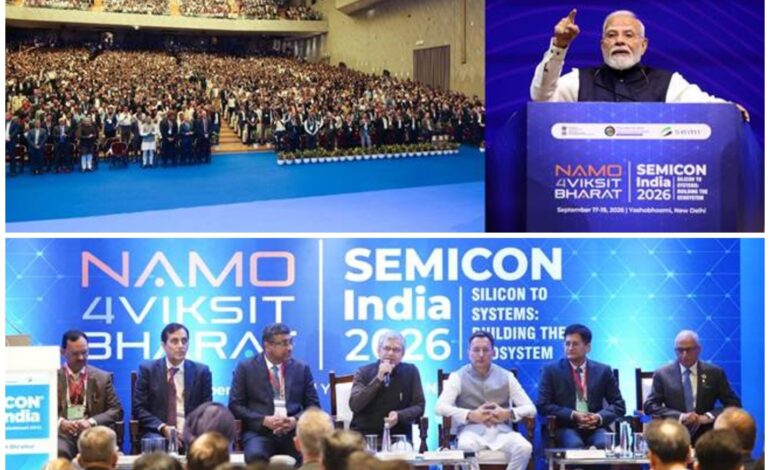
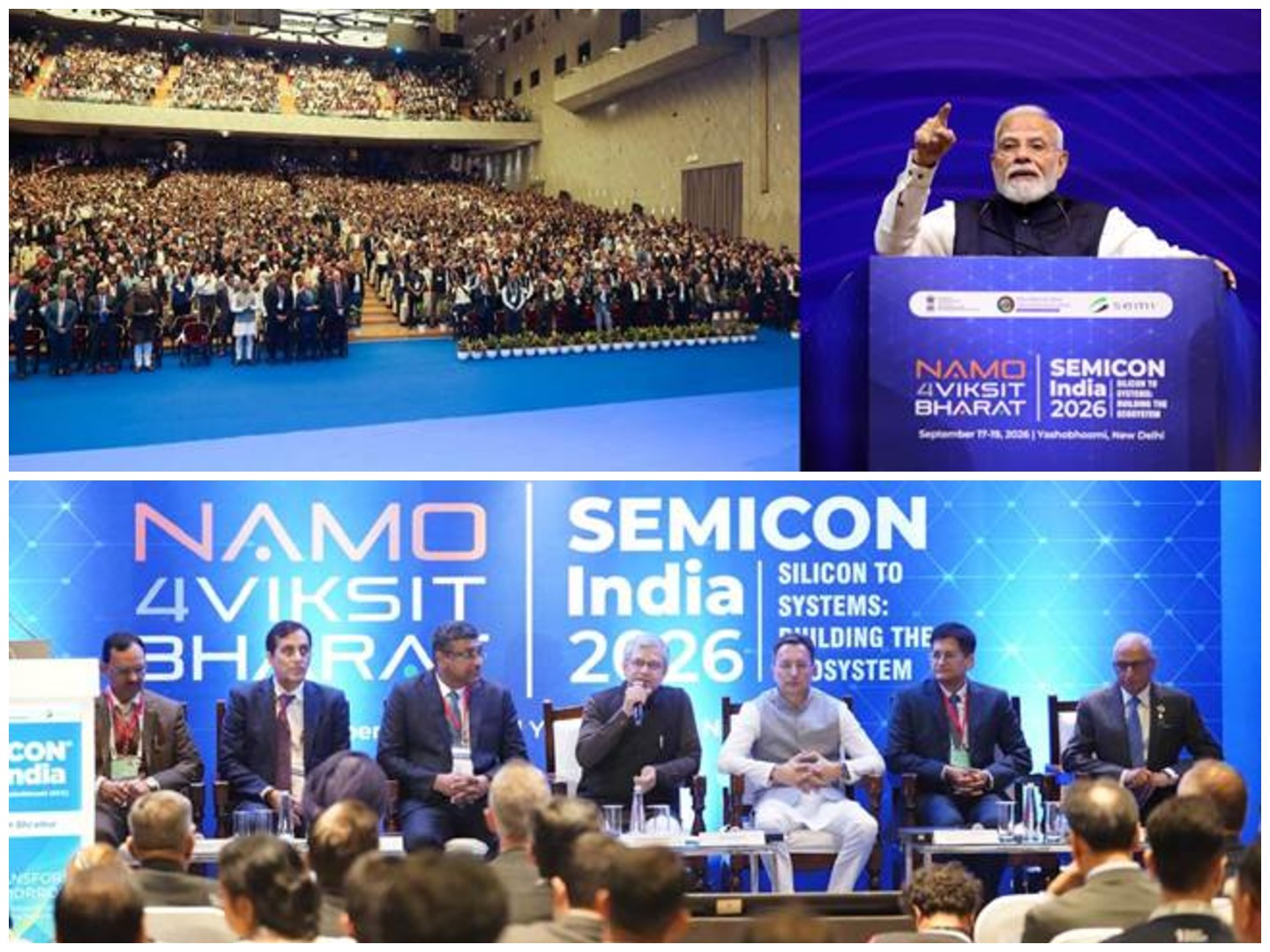
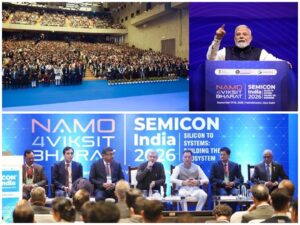
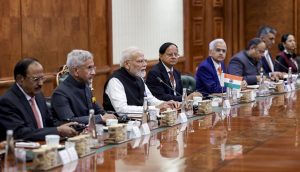
Prime Minister Narendra Modi addresses after inaugurating SEMICON India 2026 at Yashobhoomi, New Delhi, on Thursday.

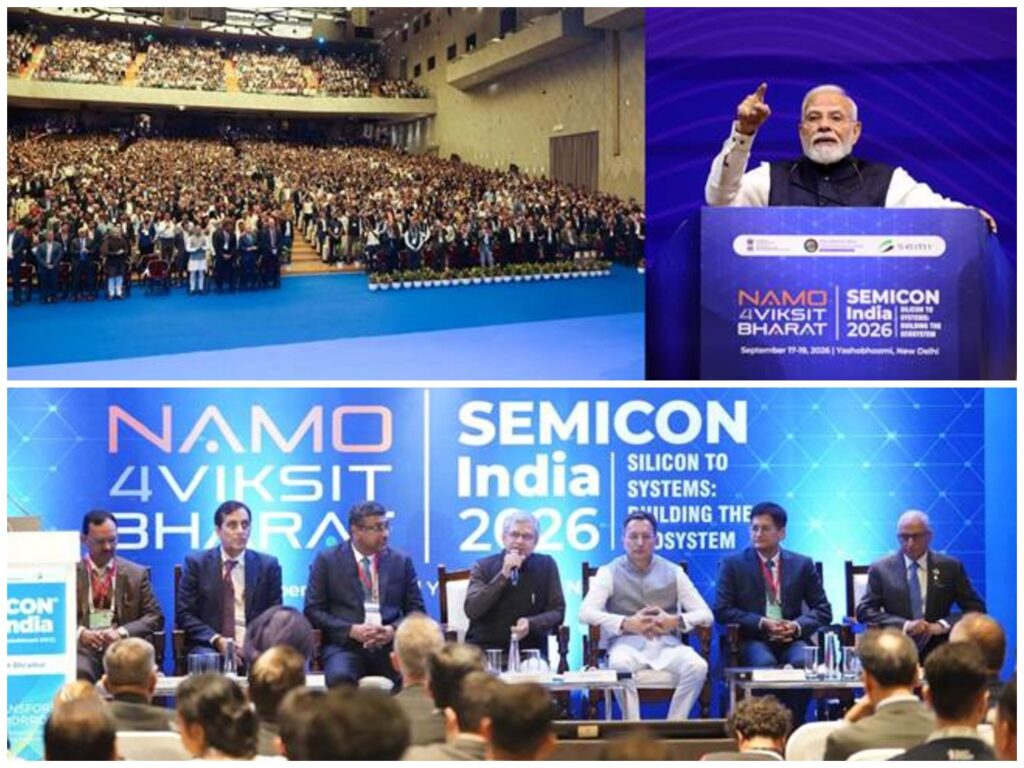
NEW DELHI: India has moved into the next phase of its semiconductor programme with the launch of Semicon 2.0, expanding the country’s focus from foundational capacity building to a broader domestic ecosystem covering chip design, equipment and materials, fabrication, advanced packaging, applied research and talent development.
Prime Minister Narendra Modi inaugurated SEMICON India 2026 at Yashobhoomi, New Delhi, on Thursday, where commercial semiconductor production lines were also launched at two facilities, marking a further shift from policy support towards manufacturing and commercial operations.
Commercial production lines at CDIL Semiconductor, Mohali, for discrete devices, and Suchi Semicon, Surat, for semiconductor packaging, were virtually inaugurated by the Prime Minister.
With these additions, India now has five operational commercial semiconductor ATMP units, including facilities of Micron, Kaynes and CG Semi, out of 12 units approved under Semicon 1.0.
Semicon 2.0 expands support across six pillars
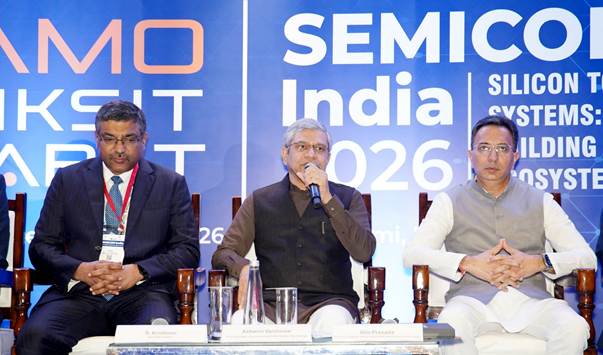
Union Minister for Electronics and Information Technology Ashwini Vaishnaw said the first phase of the India Semiconductor Mission had established the foundations for the sector, including training 70,000 design engineers and deploying electronic design automation (EDA) tools across more than 500 organisations.
Semicon 2.0 will expand the ecosystem across six pillars:
- Design
- Equipment and materials
- Fabs
- Advanced packaging
- Applied R&D
- Talent
The India Semiconductor Mission budget has also been expanded from $8 billion under Semicon 1.0 to $13.5 billion under Semicon 2.0, according to the Prime Minister.
MeitY Secretary S. Krishnan said India had completed the initial six-year funding phase of Semicon 1.0 in four years and was now transitioning to Semicon 2.0.
Major industry investments announced
The opening day of SEMICON India 2026 saw a series of investment and partnership announcements covering semiconductor fabrication, packaging, equipment, materials and talent.
Applied Materials announced “India Vision 2035”, involving a planned investment of $5 billion over the next decade and a tenfold expansion of its India-based supply-chain capacity by 2035.
Lam Research announced an investment of approximately ₹10,000 crore for its first silicon-component manufacturing and vertical ingot-processing plant in India. The company also said its Semiverse programme had reached more than 99 universities.
Tata Electronics said construction of its 300mm semiconductor fab at Dholera and its OSAT facility at Jagiroad was on track. The company also announced seven MoUs covering areas including wafer manufacturing, assembly and testing, advanced packaging, semiconductor chemicals and materials, and talent development.
Tokyo Electron announced plans for a semiconductor training centre in Gujarat next year in partnership with the Government of Japan.
Micron Technology CEO Sanjay Mehrotra said commercial DRAM and NAND production was live at Sanand, Gujarat.
Infineon Technologies highlighted its presence of more than 2,800 employees in India and its skilling partnership with NIELIT, along with opportunities in power semiconductors, smart mobility and automotive electrification.
Merck highlighted the need for parallel domestic investment in ultra-pure semiconductor chemicals and gases, materials handling and certified local suppliers for fab operations.
ASML reiterated its partnership with Tata Electronics for lithography solutions at the Dholera fab and said it was considering the integration of Indian suppliers into its global supply chain.
Seven MoUs and other semiconductor initiatives
The event also featured strategic MoUs and announcements involving Tata Electronics, Kaynes Semicon, Intel, Nexperia, CDIL Semiconductors and their partners.
Among the outcomes highlighted were India’s first commercial QFN chip by Suchi Semicon and eInfochips, integration of the India-designed SenseSoC-200 chip into smart meters, six ChipIN Regional Centres and the HORIBA India’s KOACH Experience Centre.
The Prime Minister also interacted with 20 students from academic institutions across the country who presented a memento comprising 20 chips designed, fabricated and tested for different applications.
Global partnerships take centre stage
An India-US country roundtable brought together representatives from 64 Indian companies and 52 international organisations. Discussions focused on commercial partnerships, joint ventures, research and development, supply chains and skills across the semiconductor and electronics value chain.
The India-Japan Semiconductor Roundtable explored cooperation combining Japan’s capabilities in equipment, materials and precision manufacturing with India’s design talent, demand and expanding manufacturing base.
The discussions covered joint ventures, technology transfers, localised supply chains and R&D.
SEMICON India draws global participation
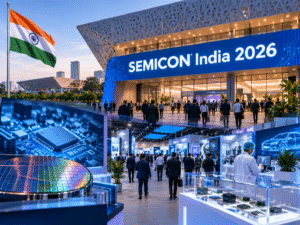
The fifth edition of SEMICON India features more than 600 exhibitors, including around 300 international participants, six country pavilions and 12 Indian state pavilions.
The event also includes a Startup Pavilion, Innovation Showcase, Student Hackathon and Workforce Development Pavilion. Representatives from 52 countries, more than 400 executives and over 150 speakers are participating, while the organisers expect around 50,000 visitors over the three-day event.
The first day recorded approximately 12,000 visitors.
With the transition to Semicon 2.0, the government’s stated focus is on building a more complete semiconductor ecosystem encompassing manufacturing, supply chains, design capabilities, research and skilled manpower.