Digital India BHASHINI, Kathmandu University explore collaboration in language AI
India’s BHASHINI and Kathmandu University are exploring collaboration on Nepali and other underrepresented languages, with discussions covering language data, scripts, AI models and voice-based solutions.
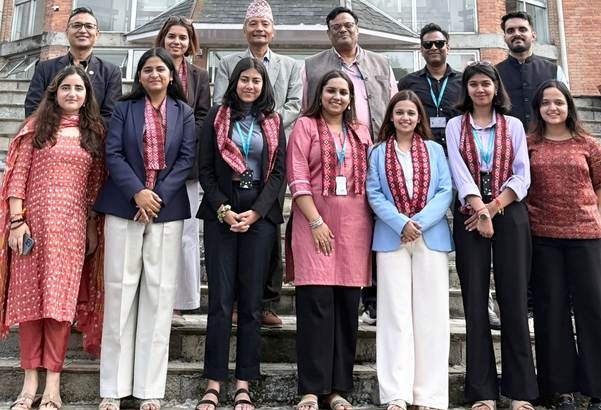
The discussions were held during an interactive session at Kathmandu University with its Center for Digital Public Infrastructure and Artificial Intelligence (DPI-AI) team, followed by a meeting with the vice chancellor.

KATHMANDU: The Digital India BHASHINI Division (DIBD) and Kathmandu University have explored opportunities for collaboration in Language AI, with a focus on strengthening language technologies for Nepal and bringing the country’s linguistic diversity into the digital and artificial intelligence ecosystem.
The discussions were held during an interactive session at Kathmandu University with its Center for Digital Public Infrastructure and Artificial Intelligence (DPI-AI) team, followed by a meeting with the vice chancellor.
The engagement focused on potential joint work involving language models, language data, traditional scripts, translation technologies and voice-based applications.
Focus on Nepali and local languages
The discussions highlighted the opportunity to strengthen existing language models while developing new models for languages that remain underrepresented in AI.
Particular attention was given to Nepali, Newari, Tamang and Gurung. The participants also discussed traditional scripts, including Prachalit Lipi and Ranjana Lipi, recognising the importance of preserving and digitally enabling Nepal’s linguistic diversity.
The collaboration could help bring languages with relatively limited digital resources into emerging AI applications, including translation, speech and other language technologies.
Language data remains a key challenge
A significant part of the discussions centred on the availability and quality of language data needed to develop representative AI models.
Building high-quality datasets requires sustained collection and curation across different languages, speakers and writing systems. The discussions also covered improving translation capabilities and addressing the computing requirements involved in training, refining and scaling language models.
The engagement also examined the potential for voice-first solutions, with an emphasis on connecting language data, AI models and technology with applications that can create more meaningful digital experiences in local languages.
BHASHINI brings multilingual AI experience
The Digital India BHASHINI Division operates under the Digital India Corporation (DIC), Ministry of Electronics and Information Technology (MeitY), and serves as India’s national platform for AI-powered multilingual digital inclusion.
BHASHINI currently powers more than 800 government websites and has enabled more than 9 billion cumulative AI inferences. It processes more than 24 million AI inferences daily and supports 36 Indian text languages, 23 Indian voice languages and 35 international languages.
The platform is intended to make digital public infrastructure more accessible by enabling citizens to interact with digital services across multiple languages.
Kathmandu University brings research capabilities
Kathmandu University’s DPI-AI Centre brings capabilities in research, innovation and digital public infrastructure to the potential partnership.
The interaction provided a platform for the two sides to exchange perspectives and identify areas where academic research, technology and local-language expertise could be combined to advance Language AI applications for Nepal.
The discussions mark a potential expansion of India-Nepal cooperation in artificial intelligence beyond conventional technology applications, with multilingual and voice-based AI emerging as areas for collaboration focused on local-language inclusion.