Amit Shah Pushes ‘Zero Casualty’ Disaster Management; Calls for Flood Crisis Teams in Every State
Home Minister Reviews National Preparedness for Floods, Heat Waves, Climate-Linked Disasters
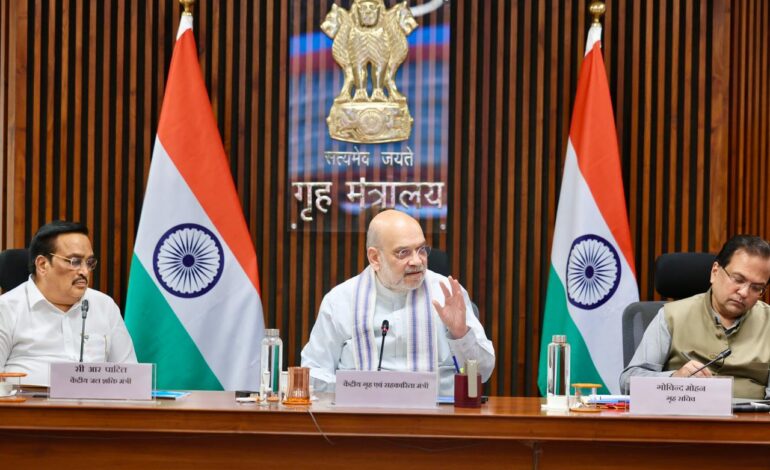
Union Minister for Home Affairs and Cooperation Amit Shah, Jal Shakti Minister CR Patil, along with officials, reviews disaster preparedness mechanisms in New Delhi on Sunday.

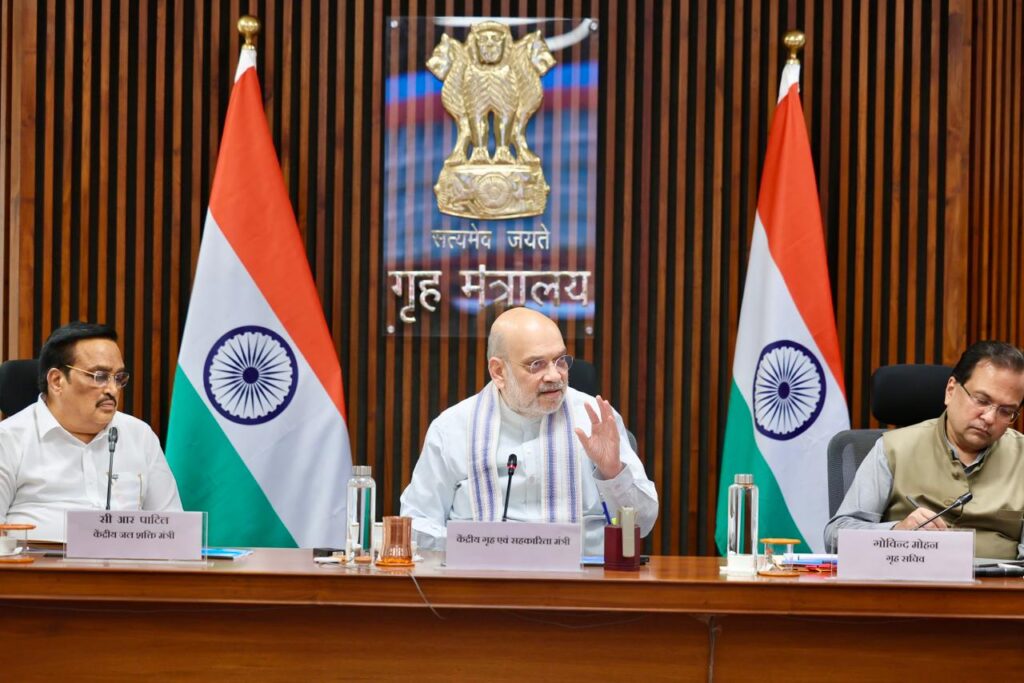
New Delhi: Union Minister for Home Affairs and Cooperation Amit Shah on Sunday directed states to strengthen disaster preparedness mechanisms and work toward the vision of “Zero Casualty Disaster Management” while reviewing the country’s readiness to tackle floods, heat waves, and climate-linked emergencies.
Chairing a high-level review meeting in New Delhi, Shah called for the constitution and activation of Flood Crisis Management Teams (FCMTs) in every state and stressed the need for integrated flood forecasting systems at both Central and state levels.
The Home Minister said India must adopt a “Whole of Government” and “Whole of Society” approach to address increasing weather-related challenges arising from climate change.
Underlining the need for stronger early warning systems, Shah directed that the plan for monitoring 30 high-risk glacial lakes in Jammu & Kashmir, Ladakh, Uttarakhand, Himachal Pradesh, Arunachal Pradesh, and Sikkim should be expanded to cover at least 60 vulnerable lakes with support from the National Disaster Management Authority (NDMA).
He also instructed officials to prepare a comprehensive master plan to deal with changing weather patterns and climate-related disasters.
“Under the leadership of Prime Minister of India Narendra Modi, we must work towards implementing the vision of Zero Casualty Disaster Management,” Shah said during the meeting.
The Home Minister stressed that compliance with disaster management guidelines issued by the NDMA should be reviewed at state, district, and municipal levels to strengthen implementation and preparedness.
He directed the NDMA to conduct a study assessing how many states are following guidelines issued by the Ministry of Home Affairs and the NDMA for handling floods, forest fires, and heat waves.
Shah also emphasized the need to expand water conservation measures through check dams, water storage structures, and groundwater recharge projects to simultaneously address heat wave impacts and declining groundwater levels.
“Our objective should be to conserve water by constructing check dams while minimizing the impact of heat waves,” he said.
The Home Minister further called for multidimensional utilisation of the CAMPA Fund to support environmental balance and ecological sustainability initiatives.
Shah urged ministries and departments to focus on integrating and improving existing digital platforms and applications rather than launching multiple new systems.
He also stressed that weather forecasts and disaster warnings should be disseminated more effectively and reach grassroots communities in a timely manner.
Reviewing monsoon preparedness, the Home Minister said greater efforts should be made to improve rainfall forecasting accuracy and assess monsoon-related casualties and agricultural damage more scientifically.
He appreciated the coordination among ministries, departments, and scientific agencies involved in disaster management and said the time had come for weather-related planning systems to become more community-centric and locally accessible.
Under the Modi government, disaster preparedness and reduction of losses from natural disasters have been accorded high priority, with annual pre-monsoon preparedness reviews becoming a regular exercise.
Officials noted that forecast lead times for rainfall and flood warnings issued by the India Meteorological Department (IMD) and the Central Water Commission (CWC) have already been extended from three days to seven days in recent years.
The meeting was attended by Union Jal Shakti Minister CR Patil, senior officials of the Ministry of Home Affairs, NDMA, National Disaster Response Force (NDRF), IMD, the National Highways Authority of India (NHAI), the National Remote Sensing Centre, and other concerned departments.