Government releases E20 FAQ to address consumer concerns over Ethanol-Blended Petrol Programme
Issued by the Ministry of Petroleum and Natural Gas, the document seeks to dispel misconceptions surrounding E20 fuel while highlighting the programme's contribution to India's energy security, environmental sustainability and
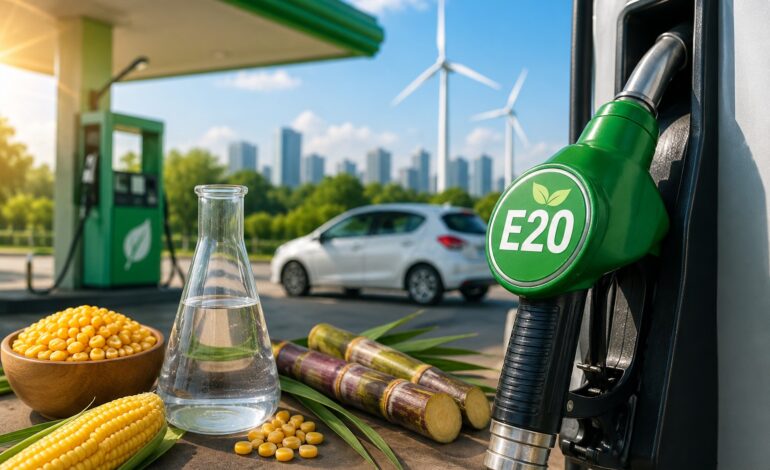
According to the government, India's ethanol blending programme is the outcome of more than two decades of policy evolution rather than a rapid policy shift.

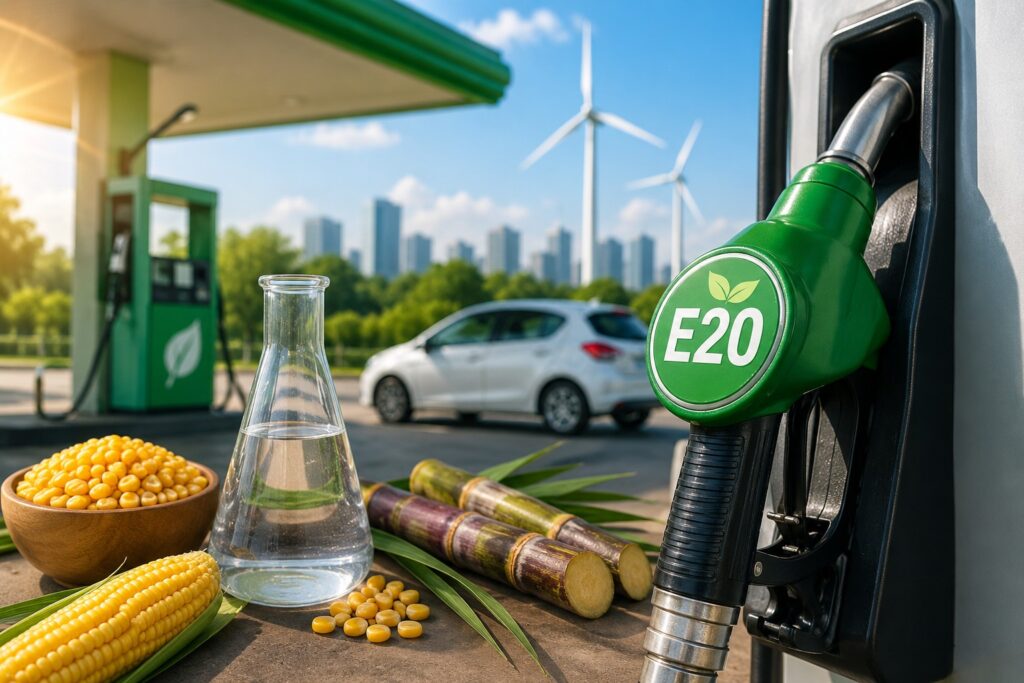
New Delhi: The Union government on Friday released a comprehensive Frequently Asked Questions (FAQ) document clarifying key aspects of India’s Ethanol Blended Petrol (EBP) Programme, addressing concerns related to vehicle compatibility, fuel efficiency, pricing, safety and implementation as the country achieves 20 per cent ethanol blending in petrol.
Issued by the Ministry of Petroleum and Natural Gas, the document seeks to dispel misconceptions surrounding E20 fuel while highlighting the programme’s contribution to India’s energy security, environmental sustainability and farmer welfare.
Two-Decade Journey to E20
According to the government, India’s ethanol blending programme is the outcome of more than two decades of policy evolution rather than a rapid policy shift.
The programme began with a pilot project in 2001, followed by the formal rollout of ethanol blending in 2004 and the introduction of 5 per cent blending in several states by 2006. A major policy push came through the National Policy on Biofuels, 2018, which expanded ethanol production beyond sugarcane to include maize and surplus grains. In 2021, NITI Aayog released a roadmap for E20 implementation after consultations with automobile manufacturers, oil companies and other stakeholders.
India’s ethanol blending has steadily increased from 8.1 per cent in 2020-21 to 20 per cent during the 2025-26 Ethanol Supply Year (November to June), supported by significant investments in ethanol production capacity.
Addressing Vehicle Compatibility
One of the most common concerns relates to the impact of E20 fuel on existing vehicles.
The government said extensive testing was conducted before nationwide rollout, involving the Automotive Research Association of India (ARAI), the Society of Indian Automobile Manufacturers (SIAM), automobile manufacturers and oil marketing companies.
The FAQ states that although some vehicles may experience a 3–5 per cent reduction in fuel economy, E20 offers higher octane value, smoother engine performance, improved anti-knock characteristics, cleaner combustion and lower lifecycle carbon emissions. It also notes that real-world service data from millions of vehicles has not shown evidence of widespread engine or fuel system damage attributable to E20 fuel.
Why E20 Isn’t Cheaper
The government also addressed questions about fuel pricing.
It explained that ethanol procurement prices are designed to ensure fair returns to farmers. While ethanol can become cost-effective when global crude oil prices rise significantly, current production costs mean E20 is not necessarily cheaper than conventional petrol.
However, the government argues that blending domestically produced ethanol helps reduce dependence on imported crude oil, insulates consumers from global oil market volatility and strengthens India’s long-term energy security.
Economic and Environmental Gains
The backgrounder highlights the programme’s cumulative achievements since the 2014-15 Ethanol Supply Year.
According to the government, ethanol blending has:
- Saved more than ₹1.97 lakh crore in foreign exchange.
- Replaced approximately 316 lakh metric tonnes of crude oil imports.
- Reduced nearly 952 lakh metric tonnes of carbon dioxide emissions.
- Enabled direct payments of over ₹1.66 lakh crore to farmers supplying feedstock for ethanol production.
The document notes that farmers have increasingly become contributors to India’s energy security by supplying agricultural feedstock for renewable fuel production.
What Is E20 Petrol? Government Addresses Key Questions on India’s Ethanol Blending Programme
The Government has released a comprehensive Frequently Asked Questions (FAQ) document explaining India’s Ethanol Blended Petrol (E20) programme, addressing public concerns on vehicle compatibility, mileage, fuel pricing, engine safety and implementation. The clarification comes as India achieves the milestone of 20% ethanol blending in petrol during the 2025–26 Ethanol Supply Year.
Why is this important?
- India has achieved 20% ethanol blending in petrol, a major milestone in its clean energy transition.
- The programme aims to reduce dependence on imported crude oil while strengthening energy security.
- The government says extensive testing found no evidence of widespread engine damage from E20-compatible fuels.
- E20 delivers environmental benefits by lowering lifecycle carbon emissions and supporting cleaner combustion.
- The initiative also creates an additional income source for farmers by increasing demand for sugarcane, maize and surplus food grains used in ethanol production.
By the Numbers
- 20% ethanol blending achieved.
- ₹1.97 lakh crore foreign exchange savings.
- 316 lakh metric tonnes crude oil substituted.
- 952 lakh metric tonnes CO₂ emissions reduced.
- ₹1.66 lakh crore transferred to farmers since 2014–15.
Digital India Perspective
The E20 programme demonstrates how technology-driven policy, scientific validation, coordinated implementation and digital monitoring can accelerate India’s transition towards cleaner mobility. It represents the convergence of energy security, agricultural value chains, environmental sustainability and data-driven governance.
A Global Fuel Strategy
The government emphasised that India is not alone in adopting ethanol-blended fuel.
Countries such as Brazil, the United States, Japan, Canada, Thailand and several European nations have incorporated ethanol blending into their fuel strategies. Brazil currently mandates ethanol blending of around 27 per cent, while the United States has widely adopted E10 fuel and continues expanding higher ethanol blends.
The FAQ concludes that the E20 programme represents a carefully planned transition involving government agencies, automobile manufacturers, fuel retailers, researchers and farmers. It positions ethanol blending as a key pillar of India’s strategy to improve energy security, reduce emissions, strengthen rural incomes and advance the country’s transition towards cleaner transportation fuels.