Through the Mountain: How MEIL Is Building India’s Greatest Himalayan Engineering Marvel
World's longest single-tube bi-directional road tunnel at high altitude promises year-round connectivity, strategic mobility and economic transformation for Kashmir and Ladakh
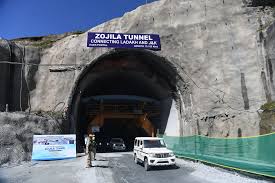
Once operational, the tunnel is expected to dramatically reduce travel time across the pass while ensuring uninterrupted access to Kargil, Leh and other strategically important regions.

New Delhi: High in the rugged Himalayas, where avalanches, sub-zero temperatures and fragile geology have challenged engineers for decades, one of India’s most ambitious infrastructure projects is steadily taking shape. The Zojila Tunnel, being executed by Megha Engineering & Infrastructure Ltd. (MEIL), is emerging as a symbol of the country’s growing capability to deliver complex engineering projects in some of the world’s toughest environments.
Stretching over 13 kilometres beneath the Zojila Pass between Baltal and Meenamarg, the tunnel is designed to provide year-round connectivity between Kashmir and Ladakh, ending the long-standing isolation caused by heavy snowfall and avalanche-prone conditions that routinely shut the route for months every year. Once operational, the tunnel is expected to dramatically reduce travel time across the pass while ensuring uninterrupted access to Kargil, Leh and other strategically important regions.
The project is widely regarded as one of the most demanding tunnel construction assignments undertaken in India. Located at an altitude of nearly 11,600 feet, the tunnel traverses highly sensitive Himalayan geology marked by unstable rock formations, severe weather conditions and difficult terrain. Successfully executing such a project requires not only advanced engineering expertise but also sophisticated planning, logistics and risk management capabilities.
MEIL’s execution of the project has drawn attention across the infrastructure sector. The company is employing the New Austrian Tunnelling Method (NATM), an internationally recognised approach particularly suited for challenging mountain geology. The method allows engineers to continuously adapt excavation and support systems to changing ground conditions, ensuring both safety and construction efficiency.
Industry observers view the Zojila project as further evidence of the evolution of Indian infrastructure companies from conventional contractors to globally competitive engineering organisations capable of handling mega projects in difficult environments. The successful breakthrough achieved during tunnel excavation marks a significant milestone in the project’s progress and demonstrates the scale of engineering coordination involved.
Beyond connectivity, the project carries significant economic and strategic implications. Reliable all-weather access is expected to boost tourism, improve movement of goods and essential services, strengthen regional economic activity and enhance logistical support in one of India’s most sensitive frontier regions. The tunnel is also a critical component of the broader effort to establish an uninterrupted all-weather road corridor between Srinagar and Leh.
For MEIL, the Zojila Tunnel adds to a growing portfolio of nationally significant infrastructure projects spanning transportation, energy, irrigation and industrial sectors. The company’s ability to undertake and execute projects of such complexity has strengthened its reputation as one of India’s leading engineering and infrastructure developers.
As India accelerates investments in strategic infrastructure, projects such as Zojila underscore a broader transformation taking place in the country’s engineering ecosystem. What was once considered an almost impossible Himalayan challenge is now becoming a reality through indigenous engineering expertise, advanced construction technologies and the execution capabilities of companies like MEIL.
Project Highlights: Zojila Tunnel by the Numbers
- 13.153 km long main tunnel, making it the world’s longest single-tube bi-directional road tunnel at such a high altitude.
- Located at an altitude of approximately 11,500–12,000 feet in the Himalayas.
- Connects Baltal in Jammu & Kashmir with Meenamarg in Ladakh.
- Being executed by Megha Engineering & Infrastructure Ltd. (MEIL).
- Will provide all-weather connectivity between Srinagar, Kargil and Leh, overcoming winter closures caused by heavy snowfall and avalanches.
- Travel time across the Zojila section is expected to reduce dramatically from several hours to less than one hour.
- Features advanced safety systems including:
- Fully transverse ventilation
- CCTV surveillance
- Emergency telephones
- Fire-fighting systems
- Tunnel radio communication
- Emergency escape passages and lay-bys
- Constructed using advanced tunnelling techniques to tackle unstable Himalayan geology and temperatures that can fall below -30°C.
- Achieved a historic breakthrough milestone on June 9, 2026, when excavation teams successfully connected both ends of the tunnel.
Why It Matters
Strategic Significance
Ensures uninterrupted military logistics and troop movement to Ladakh throughout the year, strengthening national security and border connectivity.
Economic Impact
Expected to boost tourism, trade, healthcare access, emergency services and economic development in remote Himalayan regions.
Engineering Achievement
Widely regarded as one of India’s most complex mountain infrastructure projects due to extreme weather conditions, fragile geology and high-altitude construction challenges.
About MEIL
Megha Engineering & Infrastructure Ltd. is one of India’s leading infrastructure companies with a presence across transportation, irrigation, water supply, hydrocarbons, power generation, renewable energy and industrial infrastructure. The company has executed several large-scale projects across India and overseas, contributing significantly to the country’s infrastructure development.