First Barrier-less Tolling System Launched on NH-48, Marking Shift to Fully Digital Highway Operations
The MLFF system enables seamless, stop-free toll collection using ANPR and FASTag, reducing congestion, travel time, and fuel consumption while improving logistics efficiency.
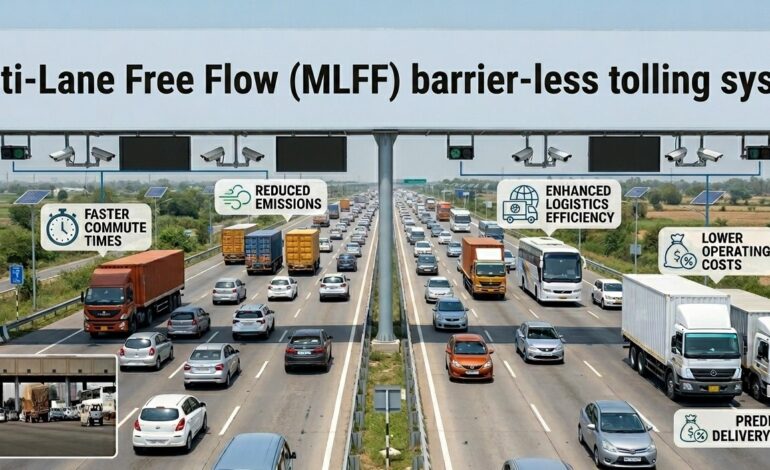
The Chorayasi installation features overhead gantries equipped with high-resolution cameras and sensors that identify vehicles and process toll payments instantly.

Surat: India has taken a decisive step toward next-generation highway infrastructure with the launch of its first Multi-Lane Free Flow (MLFF) barrier-less tolling system on the Surat–Bharuch section of NH-48 in Gujarat. The system was inaugurated by Union Minister for Road Transport and Highways Nitin Gadkari, signalling a major transition in the country’s toll collection framework.
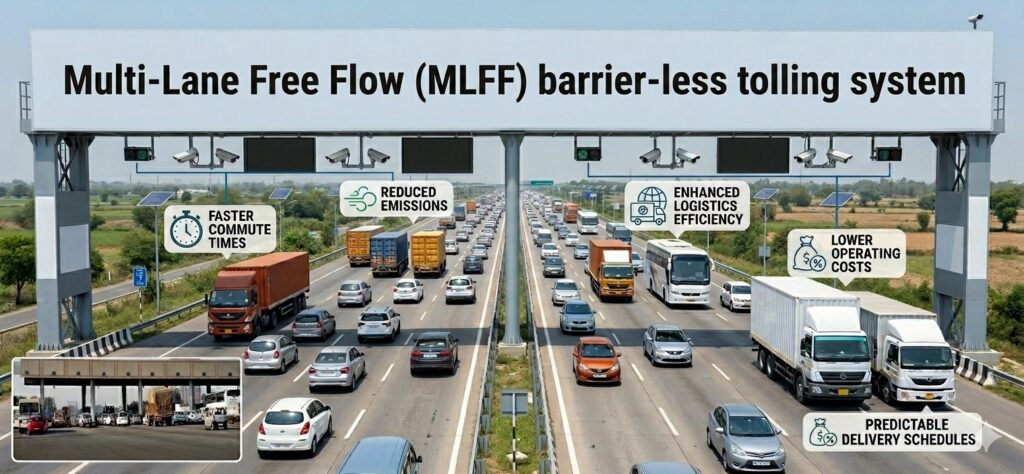
Installed at the Chorayasi Toll Plaza, the MLFF system allows vehicles to pass through toll points without stopping, eliminating queues and manual intervention. It relies on a combination of Automatic Number Plate Recognition (ANPR) cameras and FASTag-based electronic toll collection to automatically detect and charge vehicles in real time.
The rollout represents a structural upgrade in India’s highway ecosystem, aligning with global best practices seen in advanced transport networks across Europe and North America. By removing physical barriers, the system is expected to dramatically reduce congestion at toll plazas—one of the biggest bottlenecks in long-distance road travel.
Officials indicate that the MLFF system will deliver multiple benefits: faster commute times, improved fuel efficiency, reduced vehicular emissions, and enhanced logistics efficiency. For commercial transport, in particular, the move could translate into lower operating costs and more predictable delivery schedules.
The initiative also underscores the government’s broader push toward digitisation and automation in infrastructure. With minimal human intervention, the system is designed to improve transparency in toll collection while reducing leakages and operational inefficiencies.
According to the ministry, this pilot deployment will serve as a model for scaling MLFF technology across national highways in phases, potentially replacing conventional toll plazas in the coming years.
What MLFF Looks Like on Ground
The Chorayasi installation features overhead gantries equipped with high-resolution cameras and sensors that identify vehicles and process toll payments instantly. Vehicles maintain highway speeds, avoiding the need for braking or lane changes typically associated with toll booths.
As India expands its expressway and highway network, the MLFF system is expected to play a central role in building a seamless, high-speed road transport ecosystem—one that supports economic growth while improving commuter experience.