₹2584 Crore Small Hydro Scheme Targets 1500 MW Capacity; Push for Decentralised Clean Energy
Hydropower, unlike solar and wind, provides round-the-clock (RTC) electricity and grid stability, making it a key component of India’s energy transition strategy. New Delhi: The Centre has approved a ₹2,584.60
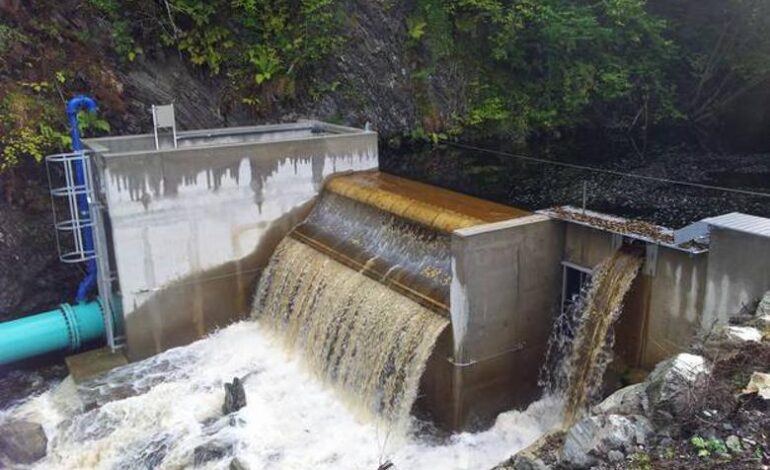
Representative image of a small hydro power project, as India expands decentralised clean energy capacity under the new scheme.

Hydropower, unlike solar and wind, provides round-the-clock (RTC) electricity and grid stability, making it a key component of India’s energy transition strategy.
New Delhi: The Centre has approved a ₹2,584.60 crore Small Hydro Power Development Scheme aimed at adding around 1,500 MW of new capacity between FY 2026–27 and FY 2030–31, strengthening India’s clean energy mix and improving electricity access in remote regions.
According to official details , the scheme focuses on developing small hydro projects (1–25 MW capacity), particularly in hilly and north-eastern regions where decentralised energy solutions are critical.
Hydropower, unlike solar and wind, provides round-the-clock (RTC) electricity and grid stability, making it a key component of India’s energy transition strategy.
Strong untapped potential, policy push
India currently has an installed small hydro capacity of around 5,171 MW, against an estimated potential of 21,133.61 MW across 7,133 sites, indicating significant headroom for expansion .
The new scheme aims to unlock this potential through financial incentives, project support mechanisms, and improved execution frameworks.
Investment, jobs, and local manufacturing boost
The initiative is expected to attract investments of around ₹15,000 crore and generate approximately 51 lakh person-days of employment during the construction phase.
It will also promote the use of indigenous equipment and manufacturing, supporting the Atmanirbhar Bharat push in the renewable energy sector.
Financial incentives and project pipeline
The scheme provides targeted financial assistance:
- Up to ₹3.6 crore per MW (30%) for north-eastern states and border districts (capped at ₹30 crore per project)
- Up to ₹2.4 crore per MW (20%) for other regions (capped at ₹20 crore per project)
Additionally, support has been allocated for preparing detailed project reports (DPRs) for at least 200 projects, ensuring a strong future pipeline.
Why small hydro matters
Small hydro projects are particularly suited for remote and hilly terrains, where large infrastructure projects are difficult to deploy.
They offer:
- Decentralised power generation close to consumption centres
- Minimal transmission losses and improved voltage stability
- Low environmental footprint with limited land requirements
- Long operational life and cost efficiency
As highlighted in the document, these projects act as a driver of rural development, enabling better infrastructure, livelihoods and local economic growth.
Regional opportunity landscape
The regional distribution chart on page 4 shows that:
- Northern region leads with ~7,978 MW potential (38%)
- Southern region follows with ~5,490 MW (26%)
- North-eastern region holds ~3,262 MW (15%)
- Western region has ~2,963 MW (14%)
- Eastern region accounts for ~1,440 MW (7%)
Despite strong potential, utilisation remains uneven, especially in northern and north-eastern states, signalling scope for accelerated development.
Technology and sustainability edge
Small hydro projects—especially run-of-the-river systems (explained in the “Did You Know” box on page 5)—generate electricity without large dams, reducing ecological disruption.
Similarly, canal-based and dam-toe projects (highlighted on page 6) leverage existing infrastructure, making them cost-effective and environmentally sustainable.
The bigger picture
The scheme represents a strategic shift towards decentralised, resilient and region-specific energy planning, complementing large-scale renewable projects.
By combining financial support, infrastructure development and sustainability, the government aims to position small hydro as a core pillar of India’s clean energy transition, particularly for underserved regions.