Indian Railways Plants 81.6 Lakh Trees in FY26, Accelerating Green Transition Across Network
Electrification, renewable energy, water conservation and sanitation initiatives drive sustainability push New Delhi: Indian Railways, one of the world’s largest rail networks carrying over 2 crore passengers daily, is emerging
A major milestone in its sustainability journey has been the near-complete electrification of its broad gauge network, with 99.6% now electrified.

Electrification, renewable energy, water conservation and sanitation initiatives drive sustainability push
New Delhi: Indian Railways, one of the world’s largest rail networks carrying over 2 crore passengers daily, is emerging as a key driver of sustainable transportation with large-scale initiatives spanning afforestation, electrification, water conservation and renewable energy adoption.
Marking World Earth Day 2026, the national transporter reported planting over 81.59 lakh trees across its zones during FY 2025–26, strengthening green cover along tracks, stations and railway land.
The plantation drive is not only enhancing biodiversity and reducing carbon footprint but also improving infrastructure safety by preventing soil erosion and stabilising tracks, particularly in vulnerable regions.
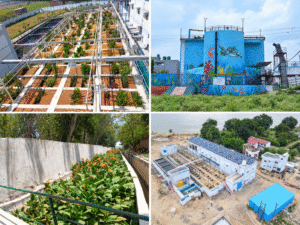
Indian Railways has also made significant progress in water conservation, installing 8,313 rooftop rainwater harvesting structures since 2016–17 and commissioning 185 water recycling plants to reduce dependence on freshwater sources. In FY26 alone, 26 new recycling plants were added.
In addition, 109 water bodies including ponds and wetlands have been restored on railway land, contributing to groundwater recharge and creating ecological habitats.
A major milestone in its sustainability journey has been the near-complete electrification of its broad gauge network, with 99.6% now electrified. This transition has significantly reduced diesel consumption, saving 178 crore litres in 2024–25 compared to 2016–17 levels, and lowering dependence on imported crude oil.
The Railways has also expanded its renewable energy footprint, commissioning 909 MW of solar and 103 MW of wind capacity, with an additional 3,300 MW tied up to support long-term clean energy requirements.
Sanitation initiatives have seen over 3.66 lakh bio-toilets installed in passenger coaches since 2014, eliminating direct discharge of waste on tracks and improving onboard hygiene.
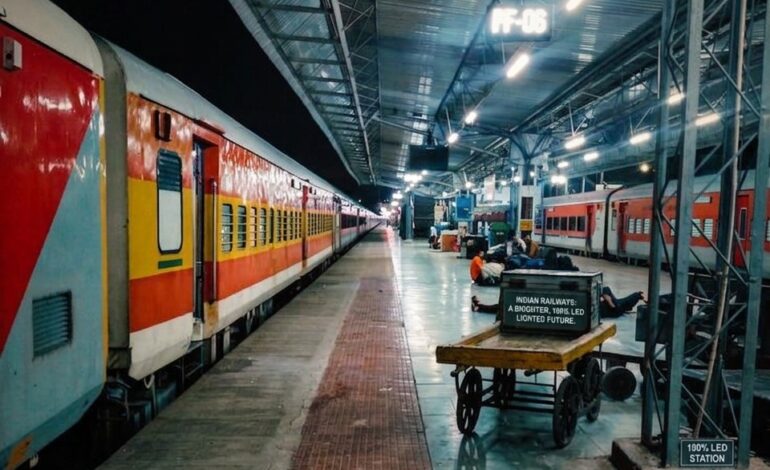
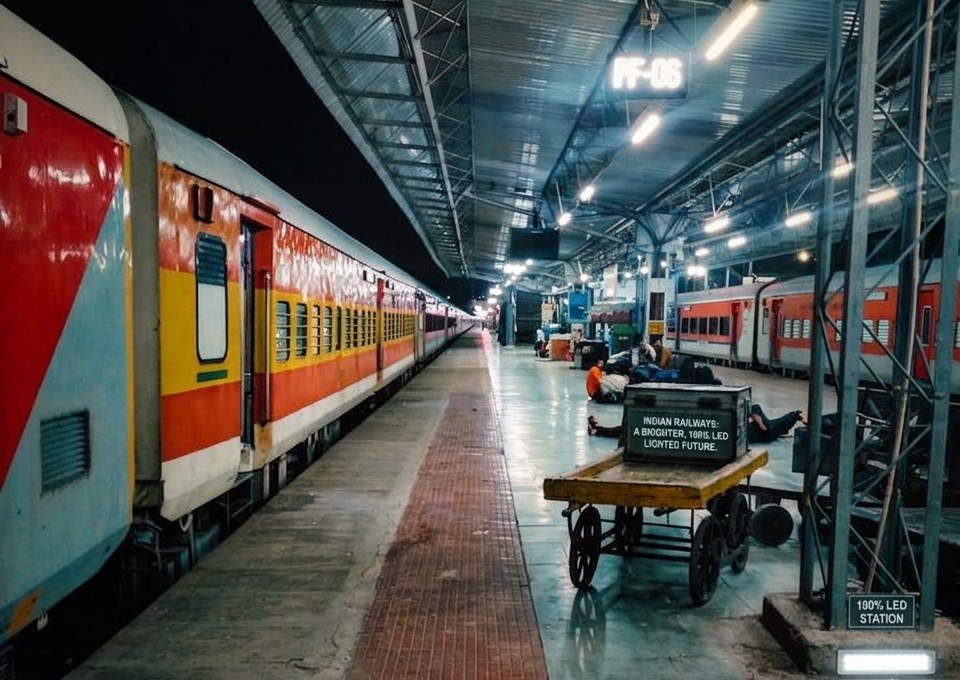
Energy efficiency measures, including 100% LED lighting across stations and facilities and adoption of energy-efficient equipment, have further reduced operational energy intensity. The organisation’s efforts have been recognised with multiple National Energy Conservation Awards in 2025.
Indian Railways said its integrated approach—combining infrastructure upgrades, operational efficiency and nature-based solutions—is contributing to a broader shift towards environmentally sustainable and resilient transport systems.
The initiatives align with the global theme of World Earth Day 2026, “Our Power, Our Planet,” highlighting the role of large public institutions in driving climate action and resource conservation at scale.