Telegram Blocked, Security Tightened: Can India Ensure a Leak-Free NEET Re-Exam This Time?
The extraordinary measures come after the original NEET-UG 2026 examination, held on May 3, was cancelled following allegations of question paper leaks that triggered nationwide protests, legal challenges, and intense
The re-examination on June 21 is now being viewed as a crucial test of the government's ability to restore confidence in India's most important medical entrance examination.

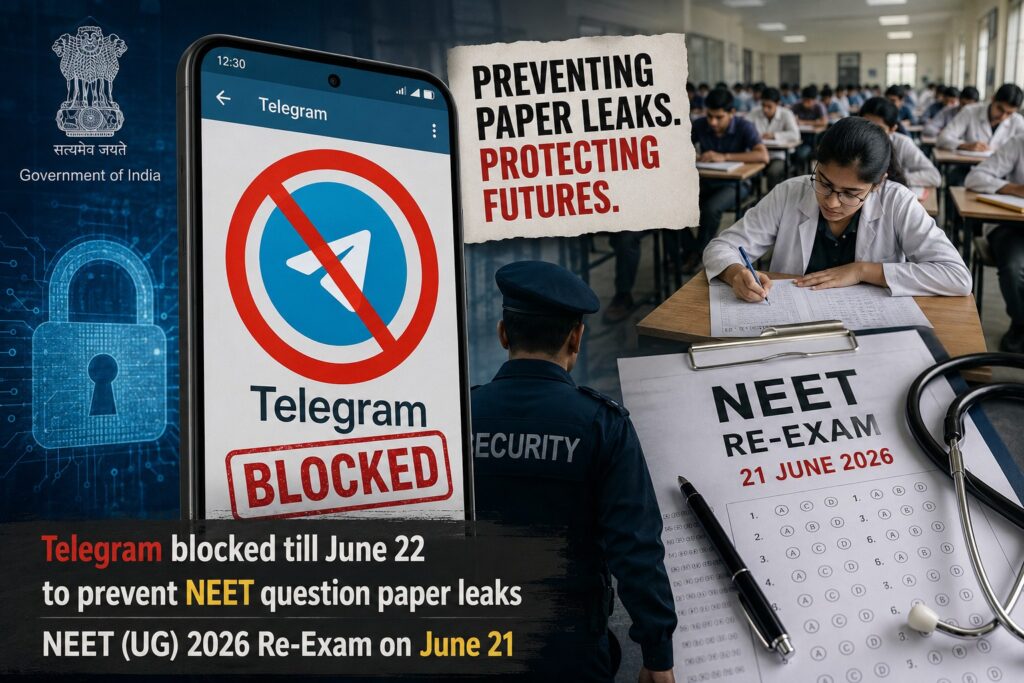
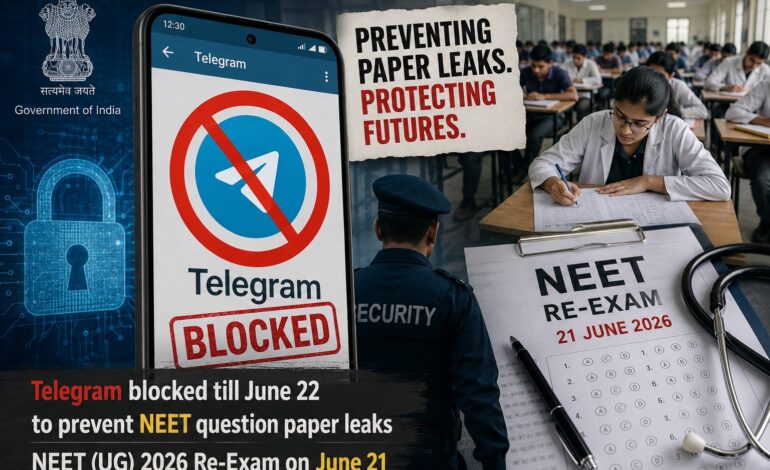
New Delhi: As more than 22 lakh medical aspirants prepare to retake the National Eligibility-cum-Entrance Test (NEET-UG) on June 21, the Government of India has launched one of the most extensive exam-security operations in the country’s history. At the center of the controversy – and the government’s response – is the messaging platform Telegram, which has been temporarily blocked nationwide until June 22 amid concerns that it was being used by organized cheating networks to circulate fake and potentially leaked examination material.
The extraordinary measures come after the original NEET-UG 2026 examination, held on May 3, was cancelled following allegations of question paper leaks that triggered nationwide protests, legal challenges, and intense scrutiny of the National Testing Agency (NTA). The re-examination on June 21 is now being viewed as a crucial test of the government’s ability to restore confidence in India’s most important medical entrance examination.
Why Was Telegram Blocked?
According to the NTA and the Ministry of Electronics and Information Technology (MeitY), Telegram had become a preferred platform for fraudsters operating exam-related scams. Authorities alleged that multiple channels and groups were offering purported NEET question papers to students in exchange for money, exploiting Telegram’s anonymity features and ability to rapidly create and recreate channels.
Investigations reportedly identified several channels with names such as “PAPER LEAKED NEET,” “Re-NEET 2026,” and “Private Mafia,” which allegedly demanded payments ranging from thousands to lakhs of rupees while claiming access to the examination paper. The NTA maintains that these papers were fake and intended to defraud anxious students and parents.
Also Read: Re-NEET, Real Lessons: What This Re-Exam Should Teach India’s Coaching Sector
The government subsequently invoked provisions of the Information Technology Act to temporarily suspend Telegram’s services across India until June 22, covering the examination day and its immediate aftermath. The restriction was challenged by Telegram but has now been upheld by the Delhi High Court, which ruled that the government’s action was proportionate and justified in the interest of preserving examination integrity.
Fresh Crackdown on Exam Fraud
Even as the re-exam approaches, enforcement agencies continue to uncover attempts to exploit students. In Rajasthan’s Bhilwara district, police detained a youth accused of selling fake re-NEET question papers through Telegram channels, highlighting the persistence of exam-related scams despite heightened scrutiny.
Authorities have also reportedly dismantled several online networks and arrested individuals linked to exam-fraud operations in multiple states. Cybercrime units, state police forces, and central agencies are working together to monitor suspicious digital activity ahead of the examination.
NTA’s Assurance to Students
The National Testing Agency has repeatedly stressed that no one can access the NEET question paper before the examination. To counter misinformation, the agency has launched a verified WhatsApp communication channel and warned candidates to trust only official notifications. The NTA has advised students not to believe claims regarding leaked papers, answer keys, or paid access to examination content.
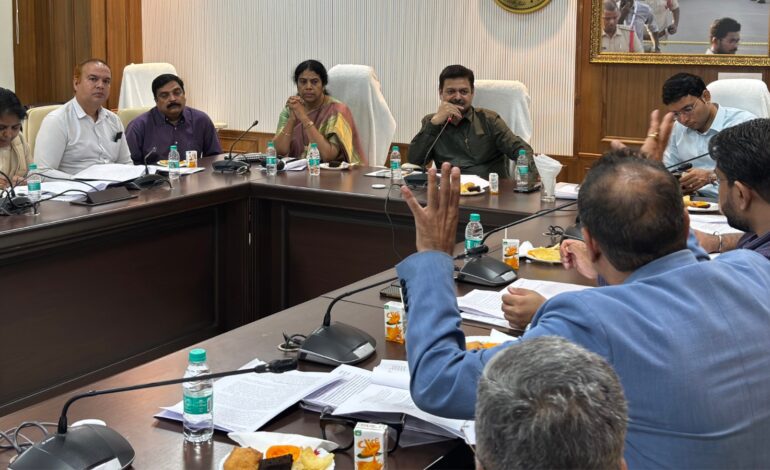
Education authorities have also implemented additional security measures, including tighter monitoring of question paper movement, enhanced surveillance protocols, and stricter examination center controls. Reports indicate that multiple review meetings have been conducted at the highest levels to ensure the smooth conduct of the re-examination.
A Debate Beyond Examinations
While the government argues that the Telegram suspension is a necessary and temporary measure, the move has sparked a broader debate about digital freedoms. Telegram and several digital-rights advocates have criticized the ban, arguing that blocking an entire platform because of the actions of a minority of users could set a troubling precedent.
Supporters of the government’s decision counter that the integrity of a national examination affecting millions of students outweighs the temporary inconvenience caused by the restriction. The Delhi High Court’s decision to uphold the suspension has strengthened the government’s position, at least for the duration of the re-exam period.
The Real Test
For students, however, the debate is secondary. The primary concern is whether the June 21 re-examination will be conducted fairly and transparently. With more than two million candidates competing for a limited number of medical seats, even minor irregularities can have life-changing consequences.
The government’s unprecedented security measures—from blocking Telegram to intensifying cyber surveillance and cracking down on fraud networks—reflect the high stakes involved. Whether these actions succeed in delivering a leak-free examination will become clear only after the last candidate leaves the examination hall on June 21.
For now, authorities insist that the system is secure, the paper is protected, and students should focus solely on their preparation rather than on rumours circulating online.