NHAI Launches Rajasthan’s First Barrier-Free Multi-Lane Free Flow Tolling System on Delhi–Jaipur Highway
The Daulatpura rollout makes Rajasthan one of the early adopters of India's next-generation barrier-free tolling system, marking another step toward a fully digital highway network led by National Highways Authority
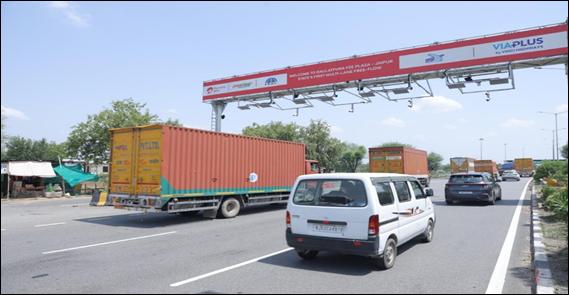
The new MLFF system introduces barrier-less toll collection, allowing vehicles to pass through tolling points without stopping.

New Delhi: In a significant milestone for India’s highway infrastructure modernization, the National Highways Authority of India (NHAI) has successfully launched Rajasthan’s first Multi-Lane Free Flow (MLFF) tolling system at the Daulatpura Toll Plaza on the Delhi–Jaipur section of National Highway 48 (NH-48).
The new MLFF system introduces barrier-less toll collection, allowing vehicles to pass through tolling points without stopping. By combining Automatic Number Plate Recognition (ANPR) technology with FASTag-based electronic toll collection, the system enables fully automated toll payments with minimal human intervention, ensuring smoother traffic flow and reduced travel time.
Following the successful rollout at Daulatpura, NHAI plans to extend the MLFF system to the Shahjahanpur and Manoharpur toll plazas on the busy Delhi–Jaipur corridor, paving the way for a seamless and congestion-free commuting experience.
The initiative is part of the Government of India’s broader vision to leverage technology for delivering citizen-centric services and enhancing both Ease of Living and Ease of Doing Business.
NHAI had earlier implemented MLFF-based tolling at the Chorayasi Toll Plaza on the Surat–Bharuch section of NH-48 in Gujarat and the Mundka Bakkarwala Toll Plaza on Delhi’s Urban Extension Road-II (UER-II). The technology has already demonstrated significant benefits, including zero waiting time at toll plazas, improved fuel efficiency, reduced vehicle emissions, and enhanced commuter convenience.
To ensure a hassle-free MLFF experience, highway users must maintain sufficient balance in their FASTag accounts. In cases of insufficient balance, invalid FASTags, or technical failures, users will receive an Electronic Notice (E-Notice) for non-payment of toll charges. Motorists are required to clear the dues within 72 hours of receiving the notice.
Failure to comply within the stipulated period will attract a penalty, with the toll fee being charged at twice the normal rate applicable to the vehicle category. Users can access and pay E-Notices through the designated portal and may also raise grievances within 72 hours of notice issuance.
Authorities have warned that continued non-payment could result in FASTag blacklisting and restrictions on vehicle-related services through the VAHAN platform.
According to NHAI, the adoption of MLFF technology will strengthen India’s tolling ecosystem by improving transparency, reducing operational costs associated with physical toll plazas, and enhancing overall efficiency across the national highway network.