India Post revenue rises 24% to ₹8212.7 crore in first half; parcels grow 71%
Quarterly revenue exceeded ₹4,000 crore for two consecutive quarters for the first time, as ministers called for faster digitisation, improved parcel delivery and expansion into new business segments.
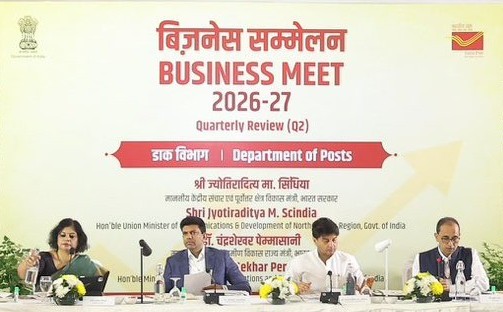
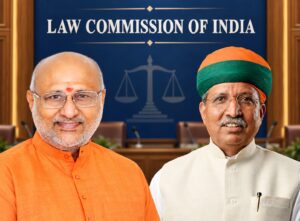
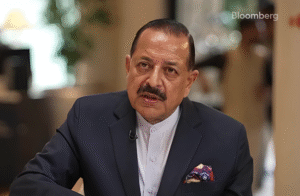
Communications Minister Jyotiraditya M. Scindia chairs the Department of Posts’ second-quarter review in New Delhi on October 22, with Minister of State for Communications and Rural Development Chandra Sekhar Pemmasani in attendance.

NEW DELHI: India Post recorded revenue of ₹8,212.7 crore in April–September 2026, up 24% from ₹6,636 crore a year earlier, crossing the ₹4,000-crore quarterly revenue mark for two consecutive quarters for the first time.
The figures were presented at the Department of Posts’ second-quarter review chaired by Communications Minister Jyotiraditya M. Scindia in New Delhi on October 22. Minister of State for Communications and Rural Development Chandra Sekhar Pemmasani also attended.
Revenue in the July–September quarter reached ₹4,201.5 crore, an increase of 25% year-on-year and 5% over the preceding quarter, according to a ministry statement.
The department reported growth across its business verticals. Parcels registered the strongest year-on-year increase at 71%, followed by Postal Life Insurance and Rural Postal Life Insurance at 44%, International Relations and Global Business at 38%, mails at 36%, and Post Office Savings Bank at 18%.
Parcel revenue stood at ₹318.9 crore in the second quarter, with Kerala, North East, Uttar Pradesh and Bihar exceeding their quarterly targets. Post Office Savings Bank contributed ₹1,987 crore, while postal life insurance operations achieved 92% of their quarterly target.
Mails revenue increased 26% over the first quarter, with 12 postal circles meeting or exceeding their second-quarter targets.
Scindia called for faster digitisation to improve customer experience, operational efficiency and competitiveness. He emphasised customer acquisition and retention, service quality, business diversification and innovation, including flexible pricing for bulk customers within applicable policies and approvals.
Pemmasani called for standardised procedures and real-time monitoring to address parcel delivery delays. He also stressed workforce empowerment, accountability and improved service delivery.
The ministers directed postal circles to sustain growth during the festive and peak parcel season, strengthen parcels and international business, expand citizen services in partnership with state governments, and maintain expenditure discipline.
The review identified opportunities through a cluster-based approach covering agro-logistics and international business; MSMEs, One District One Product and tourism; and citizen services, financial inclusion, insurance and rural logistics.
Among postal circles, Bihar led second-quarter target achievement at 97.15%, followed by West Bengal at 97.07% and North East at 94.79%. For the first half, West Bengal led at 95.72%, followed by Bihar at 95.12% and Andhra Pradesh at 94.63%.
Eighteen of the 23 postal circles improved their target achievement over the first quarter. Andhra Pradesh received recognition for its first-quarter performance, while Bihar was recognised for the second quarter.