IITM, ARIES Join Hands to Establish Long-Term Climate Monitoring Station in Himalayan Region
New observation facility at Devasthal to strengthen India's climate research and support advanced climate modelling
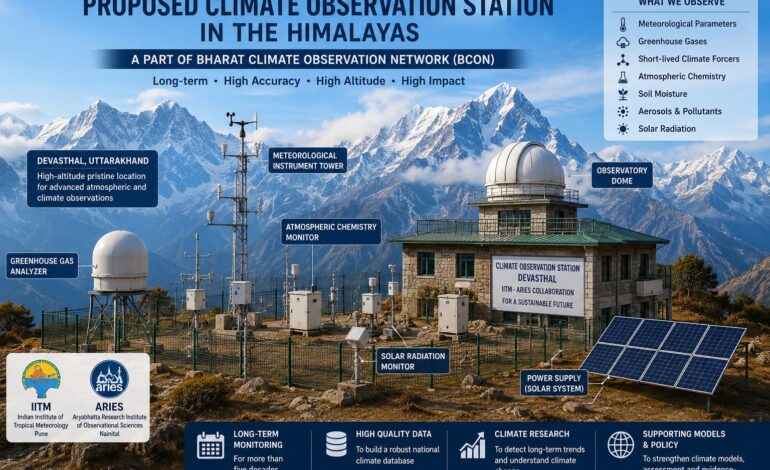
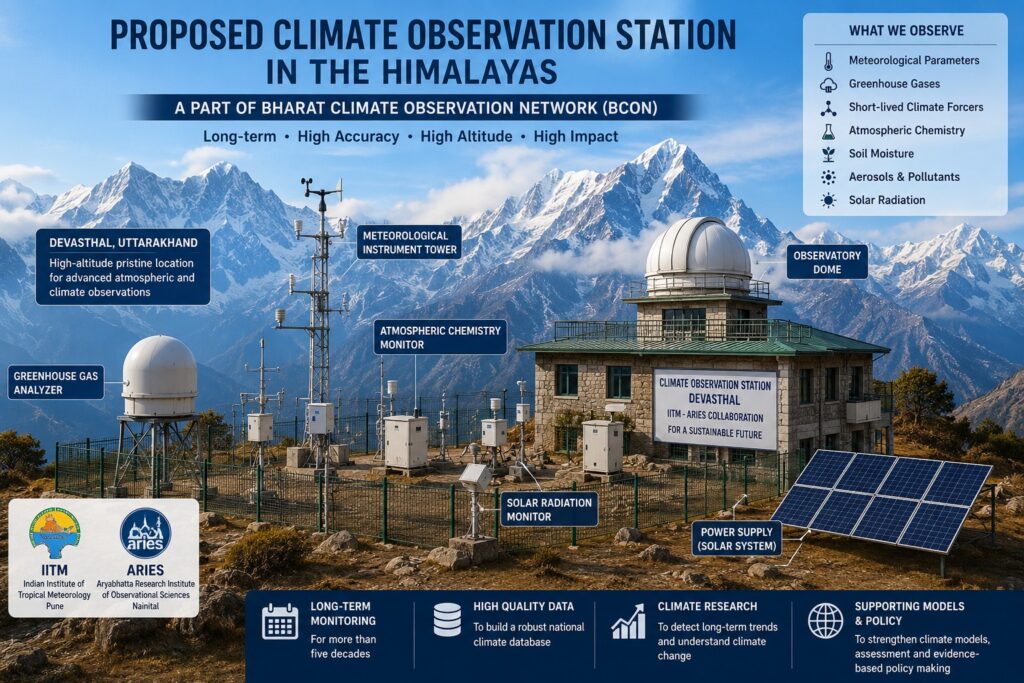
Representative Image | AI-generated conceptual visualization created using ChatGPT of the proposed Climate Observation Station to be established at Devasthal, Uttarakhand, under the Bharat Climate Observation Network (BCON). Actual facility design may differ.

Pune/Nainital: In a significant step towards strengthening India’s climate monitoring and research capabilities, the Indian Institute of Tropical Meteorology (IITM), Pune, has signed a long-term Memorandum of Understanding (MoU) with the Aryabhatta Research Institute of Observational Sciences (ARIES), Nainital, for establishing a Climate Observation Station in the Himalayan region under the Bharat Climate Observation Network (BCON).
The agreement, signed on June 18, 2026, will remain in force for more than 50 years and aims to advance collaborative research on climate change through continuous monitoring of critical climate variables.
The MoU was signed online by Dr A. Suryachandra Rao, Director, IITM, and Dr Manish Kumar Naja, Director, ARIES, marking a major milestone under the Ministry of Earth Sciences’ Mission Mausam initiative.
Climate Monitoring in the Himalayas
As part of the collaboration, a dedicated Climate Observation Station will be established at ARIES, Devasthal, a high-altitude observatory site in Uttarakhand. The station will become an important node of the Bharat Climate Observation Network (BCON), a nationwide initiative designed to create a long-term, high-precision climate monitoring framework across India.
The station will continuously monitor a wide range of climate and atmospheric parameters, including:
- Meteorological variables
- Greenhouse gases
- Short-lived climate forcers
- Atmospheric chemistry
- Soil moisture
- Climate-relevant pollutants
Scientists believe that Devasthal’s relatively pristine environment and strategic Himalayan location make it an ideal site for capturing baseline atmospheric observations and studying climate processes over the ecologically sensitive Himalayan region.
Building India’s Climate Database
BCON has been conceptualized and implemented by IITM under the Ministry of Earth Sciences to generate high-quality climate datasets that can support cutting-edge climate research and evidence-based policymaking.
The network aims to create a robust national climate database capable of detecting long-term climate trends, improving understanding of climate variability, and strengthening India’s climate assessment capabilities.
According to scientists, the high-accuracy datasets generated through BCON will also play a critical role in validating and benchmarking Earth System Models (ESMs), including India’s first indigenous Earth System Model developed by IITM.
The enhanced observational data is expected to improve climate simulations and strengthen projections of future climate scenarios across the Indian subcontinent.
Strengthening Climate Science Collaboration
The partnership between IITM and ARIES brings together two of India’s leading scientific institutions in atmospheric and climate sciences. Researchers from both organizations will collaborate on long-term studies of climate change, atmospheric composition, and environmental processes affecting the Himalayan ecosystem.
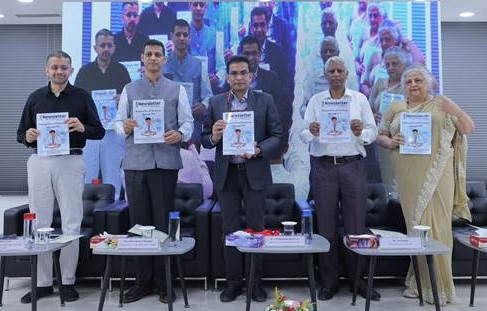
The signing ceremony was attended by senior scientists from IITM’s Centre for Climate Change Research (CCCR), including Dr Suvarna Fadnavis and Dr Yogesh Tiwari, along with Dr Umesh Kumar Dumka and Dr Priyanka Srivastava from ARIES.
The initiative is expected to contribute significantly to India’s climate science infrastructure and strengthen the country’s ability to monitor, understand, and respond to the impacts of climate change through data-driven research and forecasting.