Hyderabad’s Jawaharnagar Landfill Ranked World’s 4th Largest Methane Emitter, Raising Fresh Climate Alarm
A satellite-based global study by UCLA has placed Hyderabad's Jawaharnagar landfill among the world's biggest methane "super-emitters", underscoring the urgent need for scientific waste management and methane capture in India's
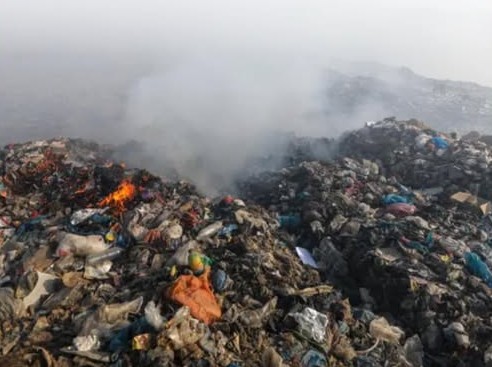
The findings, released by the University of California, Los Angeles (UCLA) under its STOP Methane Project, place Hyderabad's Integrated Municipal Solid Waste Management Project at Jawaharnagar among the world's top 25 landfill methane "super-emitters".

Hyderabad: Hyderabad’s Jawaharnagar landfill has emerged as one of the world’s most significant sources of methane emissions, with a new international study ranking the site as the fourth-largest methane-emitting landfill globally.
The findings, released by the University of California, Los Angeles (UCLA) under its STOP Methane Project, place Hyderabad’s Integrated Municipal Solid Waste Management Project at Jawaharnagar among the world’s top 25 landfill methane “super-emitters”. The study is based on satellite observations collected during 2025 through Carbon Mapper, an independent initiative that uses advanced satellite technology to detect methane emissions invisible to the naked eye.
According to the report, the Jawaharnagar landfill releases an estimated 5.9 tonnes of methane every hour, placing it behind only three landfill sites worldwide. Another Indian landfill, Mumbai’s Kanjurmarg facility, ranked twelfth with emissions of 4.9 tonnes per hour, highlighting the growing environmental challenge posed by urban waste management across India.
Why methane matters
Methane is one of the most dangerous greenhouse gases because of its extraordinary heat-trapping ability. Scientists estimate that methane is more than 80 times more potent than carbon dioxide over a 20-year period, making it one of the fastest drivers of global warming.
The UCLA report notes that a landfill emitting around five tonnes of methane per hour can have an annual climate impact comparable to the emissions from approximately one million SUVs. Researchers also estimate methane has contributed nearly half of the recent increase in global warming, making its reduction one of the quickest ways to slow climate change.
Satellites exposing invisible pollution
Unlike conventional environmental monitoring, the UCLA study relies on high-resolution satellite observations capable of detecting methane plumes from space. Researchers analysed nearly 3,000 methane plumes across more than 700 waste sites worldwide before identifying the 25 largest emitters.
The rankings span 18 countries, including both developed and developing economies, demonstrating that landfill methane is a global challenge rather than one confined to emerging nations.
A wake-up call for Indian cities
The findings are particularly significant for India, where urbanisation and increasing municipal waste generation continue to place enormous pressure on landfill infrastructure.
Experts believe the report should accelerate investments in:
- Scientific landfill management
- Methane capture and utilisation
- Biomining of legacy waste
- Source segregation of municipal waste
- Composting and recycling
- Waste-to-energy technologies
Capturing landfill methane not only reduces greenhouse gas emissions but also allows the gas to be converted into renewable energy, turning an environmental liability into an economic resource.
Climate action begins with better waste management
The report comes as India pursues its commitment to achieve Net Zero emissions by 2070. While renewable energy and electric mobility receive significant policy attention, experts say landfill methane remains one of the most overlooked opportunities for rapid emissions reduction.
The UCLA researchers emphasise that identifying these methane “super-emitters” is intended to encourage governments, municipalities and landfill operators to take corrective action. International experience already shows that public disclosure of satellite-based methane data has prompted authorities in several countries to strengthen landfill management practices and accelerate mitigation measures.
For Hyderabad, the Jawaharnagar ranking serves as a stark reminder that modern cities must treat waste not merely as a sanitation challenge, but as a critical climate issue. With advanced satellite monitoring now making invisible methane emissions visible to the world, scientific waste management is becoming an essential pillar of urban sustainability and India’s broader climate strategy.