PCIM&H hosts awareness programme on pharmacopoeial standards for Ayurveda, Siddha, Unani and Homoeopathy
Ghaziabad, November 19: The Pharmacopoeia Commission for Indian Medicine & Homoeopathy (PCIM&H) organised a one-day awareness programme on “Pharmacopoeial Parameters of ASU&H” under the Regional Raw Drug Repository (RRDR) –

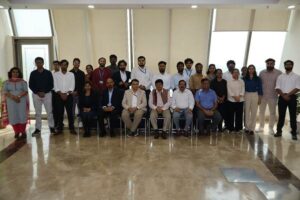
The programme drew around 60 participants from institutions such as Jamia Hamdard University, All India Institute of Ayurveda, Raj Kumar Goel Institute of Technology, GS Ayurveda College, Sanskar College of Pharmacy, Bakson Homoeopathic Medical College and IMS Ghaziabad.

Ghaziabad, November 19: The Pharmacopoeia Commission for Indian Medicine & Homoeopathy (PCIM&H) organised a one-day awareness programme on “Pharmacopoeial Parameters of ASU&H” under the Regional Raw Drug Repository (RRDR) – Gangetic Plain Region project, funded by the National Medicinal Plants Board (NMPB), Ministry of Ayush.
Welcoming participants, PCIM&H director Raman Mohan Singh outlined the Commission’s recent initiatives in the standardisation and quality control of Ayurveda, Siddha, Unani and Homoeopathy (ASU&H) drugs. He highlighted ongoing efforts to strengthen regulatory frameworks and reinforce scientific validation in traditional medicine systems.
NMPB chief executive officer Mahesh Kumar Dadhich emphasised the crucial role of raw drug quality in ensuring the safety and efficacy of ASU&H formulations. He noted the progress made in developing the RRDR and announced that NMPB, in collaboration with the National Physical Laboratory, is working on the Bhartiya Nirdeshak Dravya for ASU&H drugs. He also praised PCIM&H for creating thematic medicinal plant gardens equipped with QR-coded databases.
Former associate director of DRDR Rajendra Singh noted the growing global acceptance of traditional Indian medicine and underlined the importance of pharmacopoeial and formulary standards in supporting this expansion.
Delivering a technical presentation, PCIM&H principal scientific officer A. Jayanty provided an update on the Gangetic Plain RRDR project. She shared that the Commission currently maintains 523 authenticated raw drug samples and nearly 1,000 herbarium specimens covering 218 ASU&H species.
The programme drew around 60 participants from institutions such as Jamia Hamdard University, All India Institute of Ayurveda, Raj Kumar Goel Institute of Technology, GS Ayurveda College, Sanskar College of Pharmacy, Bakson Homoeopathic Medical College and IMS Ghaziabad.
Technical sessions featured expert lectures on taxonomical identification of medicinal plants, pharmacognostic analysis of raw drugs, quality control of traditional medicines and microbial testing of ASU&H formulations. Following the sessions, participants took part in hands-on training in the pharmacognosy, chemistry and microbiology laboratories, and visited the herbal gardens, seed bank and the Regional Raw Drug Repository.
Officials said the programme aims to strengthen scientific knowledge, improve identification and quality assessment capacities, and build awareness around pharmacopoeial standards critical to the advancement of India’s traditional medicine systems.