India backs G20 consensus on AI, emerging technologies and innovation
India joined G20 consensus on innovation, AI and emerging technologies as MoS Jitin Prasada held talks with the US, EU, France, Germany and African Union and explored technology cooperation at
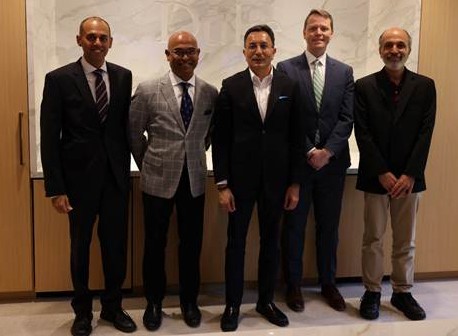
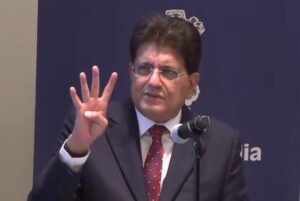
Union Minister of State for Electronics & Information Technology and Commerce & Industry Jitin Prasada led the Indian delegation at the G20 Innovation Ministers’ Meeting held in Chapel Hill, North Carolina, on September 1-2.

NEW DELHI: Union Minister of State for Electronics & Information Technology and Commerce & Industry Jitin Prasada led the Indian delegation at the G20 Innovation Ministers’ Meeting held in Chapel Hill, North Carolina, on September 1-2, with AI, digital technologies, cybersecurity and technology-led innovation emerging as key areas of cooperation.
The meeting, hosted by the US Department of Commerce and the White House Office of Science and Technology Policy, brought together G20 ministers to discuss policies and partnerships for emerging technologies.
At the conclusion of the ministerial, G20 ministers reached consensus on the Innovation Ministerial Statement, recognising the potential of emerging technologies to expand prosperity, productivity and opportunities.
The consensus statement covers six broad pillars: pro-innovation policy frameworks; technology for opportunity and prosperity; development of skilled technical workforces; intellectual property policies for AI; AI for standards and standards for AI; and industrial innovation and investment in supply chains.
Ministers also reached consensus on the Carolina Principles for Emerging Technologies, which call for greater investment in foundational research, stronger commercialisation pathways and trusted adoption and deployment of emerging technologies.
Other outcomes included the AI Prosperity Objectives and AI Prosperity Compact, aimed at advancing technical workforce development across G20 countries and expanding opportunities for private-sector partnerships.
India holds bilateral talks with US, EU, France and Germany
On the sidelines of the ministerial, Prasada held a series of bilateral discussions focused on technology, innovation and digital cooperation.
In his meeting with European Commission Executive Vice-President Henna Virkkunen, the minister discussed strengthening cooperation in innovation and building trusted digital ecosystems to support technology-led growth and shared prosperity.
With France’s Minister Delegate for Artificial Intelligence and Digital Affairs Anne Le Hénanff, discussions focused on advancing cooperation in AI and digital technologies and building partnerships for a trusted digital future.
Prasada also held discussions with Germany’s Parliamentary State Secretaries Thomas Jarzombek and Dr. Silke Launert on deepening India-Germany collaboration in technology, innovation and research.
In discussions with African Union Commissioner for Education, Science, Technology and Innovation Prof. Gaspard Banyankimbona, India highlighted opportunities to deepen its partnership with Africa, including by offering India Stack digital solutions and digital public infrastructure to African countries.
India-US talks focus on semiconductors and AI
A key bilateral engagement was Prasada’s meeting with US Secretary of Commerce Howard Lutnick, during which the two sides discussed cooperation in semiconductors, AI and data centres.
Prasada also encouraged greater US investment under India Semiconductor Mission 2.0 and proposed strengthening the AI technology partnership and developing shared mechanisms for AI safeguards.
The minister separately met Anthropic co-founder Tom Brown to discuss the rapidly evolving AI landscape and opportunities emerging from advances in artificial intelligence. The discussions included the possibility of developing benchmarks tailored to the Indian context.
Duke University visit explores AI and robotics cooperation
Following the G20 engagements, Prasada visited Duke University and interacted with its senior leadership and faculty on technology, research, engineering, AI, computer science and healthcare.
He also visited the Robotics Laboratory at the Pratt School of Engineering, engaging with researchers working in robotics, biomedical simulation, AI-enabled sensing, biomedical data and machine learning.
The visit highlighted opportunities for deeper academic and research collaboration between India and the US in emerging technologies.
The engagements during the visit, according to the Ministry of Electronics and Information Technology, reinforced India’s growing role in the global technology and innovation agenda and its efforts to build strategic partnerships around AI, semiconductors, digital public infrastructure, robotics and other emerging technologies.