India’s Nuclear Push Enters New Phase: From Reliable Power to Thorium, SMRs and a Wider Technology Economy
India is seeking to expand nuclear power from its current 8.78 GW base to 100 GW by 2047, combining indigenous reactor technology, thorium research, SMRs, stronger safety systems and wider
At the centre of the strategy is an ambitious target: 100 GW of nuclear power capacity by 2047, compared with the current installed capacity of 8.78 GW across 24 reactors at seven sites.

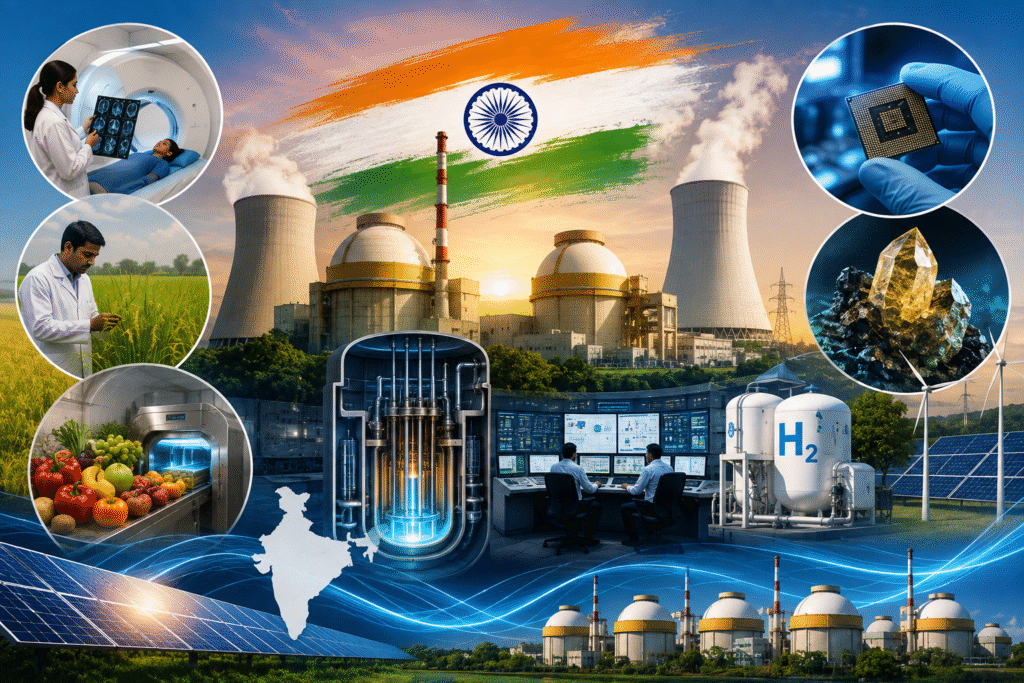
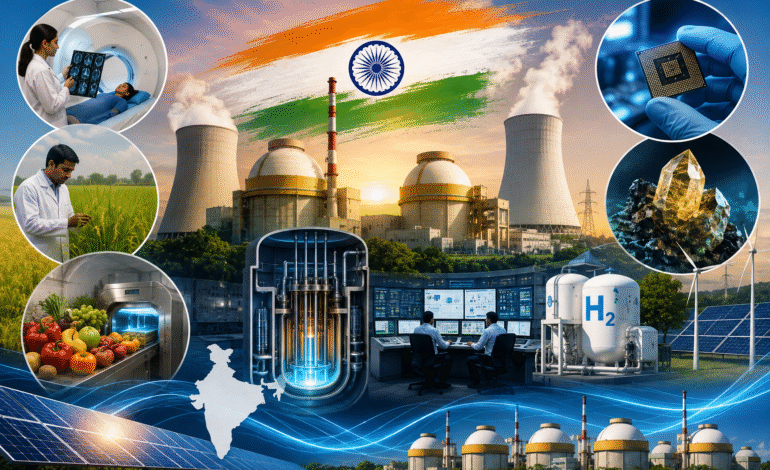
NEW DELHI: India’s nuclear energy programme is entering a new phase in which nuclear power is being positioned not merely as a source of electricity but as a broader technology platform spanning energy security, healthcare, agriculture, food preservation, critical minerals, semiconductors, hydrogen and advanced scientific research.
Two background documents released on August 28, 2026, on “Nuclear Energy in India” and “Nuclear Energy Technology in India” together present the country’s nuclear programme as a combination of expanding electricity generation, indigenous technological capability, long-term fuel security and an extensive safety and emergency-preparedness architecture.
At the centre of the strategy is an ambitious target: 100 GW of nuclear power capacity by 2047, compared with the current installed capacity of 8.78 GW across 24 reactors at seven sites. Nine reactor units are under construction, while additional projects are in various stages of preparation and approval.
The expansion is being pursued alongside the Nuclear Energy Mission for Viksit Bharat, the SHANTI Act, 2025, indigenous reactor technologies and greater domestic manufacturing. The technology-focused document describes this as part of a broader strategy of technological self-reliance developed partly in response to India’s historical experience with fuel embargoes and its long-term objective of making use of the country’s substantial thorium resources.
Nuclear power as the backbone of a changing energy system
The case being made for nuclear power is not simply about adding more generation capacity.
India’s electricity demand is rising while the country is simultaneously pursuing decarbonisation. Nuclear power provides continuous, low-carbon electricity and can complement variable renewable sources by providing stable baseload generation.
The technology document describes baseload electricity as the minimum uninterrupted power required to keep an electricity grid operational. Such power is particularly important for hospitals, communications networks, defence establishments, industries and other essential services.
India currently operates 24 nuclear reactors with 8.78 GW of installed capacity. Nine reactors totalling 7.5 GW are under construction, while the government has approved 10 indigenous Pressurised Heavy Water Reactors (PHWRs) in fleet mode and initiated pre-project activities for two 500 MW Fast Breeder Reactors.
The government’s long-term roadmap therefore envisages a substantial increase from today’s nuclear base, with nuclear power intended to work alongside renewable energy rather than replace it.
The technology document specifically describes nuclear and renewable energy as complementary components of the future electricity system, with nuclear providing dependable 24×7 generation.
A low-carbon argument for nuclear
The environmental case presented in the background material is significant.
According to the document, in FY 2025–26, one gigawatt of nuclear capacity avoided approximately 5.4 million tonnes of CO₂ equivalent emissions, compared with 2.7 million tonnes for hydropower, 1.6 million tonnes for wind and 0.9 million tonnes for solar.
Since the beginning of India’s nuclear power programme in 1969, nuclear generation is estimated in the document to have avoided 851 million tonnes of CO₂ equivalent emissions.
This gives nuclear power a particular role in India’s effort to reconcile two objectives that can sometimes appear contradictory: rapidly expanding electricity availability while reducing dependence on fossil fuels.
The programme is therefore being presented as part of the country’s wider energy-security and Net Zero strategy rather than as an isolated nuclear expansion programme.
The three-stage strategy — and why thorium matters
Perhaps the most distinctive element of India’s nuclear strategy is its long-standing three-stage nuclear power programme, originally proposed by Dr Homi J. Bhabha in 1954.
The programme was designed around India’s resource constraints. India has relatively limited uranium resources and has historically supplemented domestic supplies through imports. At the same time, the country possesses substantial thorium resources.
The technology document explains that India primarily uses natural uranium in PHWRs, which do not require uranium enrichment. It also uses Mixed Oxide (MOX) fuel in the Prototype Fast Breeder Reactor. Thorium-232 itself is fertile rather than fissile; inside a reactor, it can absorb a neutron and transform into fissile uranium-233.
This provides the logic behind the three-stage pathway.
Stage I uses PHWRs fuelled by natural uranium. Spent fuel is reprocessed to recover plutonium.
Stage II uses Fast Breeder Reactors to generate electricity from plutonium while producing additional fissile material. These reactors can also generate uranium-233 from thorium.
Stage III is intended to use thorium-derived uranium-233 in thorium-based reactors, ultimately allowing India to exploit its domestic thorium resources for long-term energy security.
The significance of this strategy has increased with a major development at Kalpakkam.
In April 2026, India’s Prototype Fast Breeder Reactor (PFBR) attained first criticality, marking the beginning of the second stage of the country’s three-stage programme, according to the technology backgrounder.
The PFBR programme also represents a major indigenous manufacturing effort. The Indira Gandhi Centre for Atomic Research (IGCAR) led its design, development, testing, safety assessment, commissioning and indigenisation, with nearly 90% domestic manufacturing of reactor equipment and systems achieved through collaboration with Indian industry.
From large reactors to Small Modular Reactors
The next phase of India’s nuclear technology programme is not confined to conventional large reactors.
Small Modular Reactors (SMRs) are emerging as another important component of the expansion strategy.
The technology document describes SMRs as reactors typically generating up to 300 MWe. Their compact and modular design can allow factory-based manufacturing, faster construction, improved quality control and phased deployment.
The Union Budget 2025–26 allocated ₹20,000 crore for research, design, development and deployment of indigenous SMRs under the Nuclear Energy Mission.
India is developing the 220 MWe Bharat Small Modular Reactor (BSMR-200) jointly designed by BARC and NPCIL, the 55 MWe SMR-55, and a High-Temperature Gas-Cooled Reactor intended for hydrogen production.
The stated objective is to operationalise at least five indigenous SMRs by 2033.
The potential application is also broader than simply supplying electricity to the national grid.
The backgrounder identifies large reactors in the 700–1,600 MW range as suitable for continuous baseload power, while SMRs of up to 300 MW and micro-reactors of up to 20 MW could serve remote areas, replace retiring coal plants, provide industrial process heat and support hydrogen production.
That could give nuclear technology a much wider role in India’s industrial decarbonisation strategy.
Nuclear technology is already operating beyond the power sector
One of the important messages from the two documents is that India’s nuclear programme extends far beyond electricity generation.
In healthcare, nuclear technology is being used for disease diagnosis, cancer treatment, medical research, radiopharmaceuticals and advanced imaging.
Institutions including BARC, IGCAR, Tata Memorial Centre, Tata Institute of Fundamental Research and Harish-Chandra Research Institute are involved in areas ranging from radiopharmaceutical development to imaging and cancer therapies. The document notes that Tata Memorial Centre registered 1.3 lakh patients during FY 2024–25 and screened around five lakh women for oral, breast and cervical cancers. Indigenous radiation technologies also sterilised 1.53 crore medical devices.
Agriculture is another major application.
Radiation-induced mutagenesis combined with conventional cross-breeding is being used to develop crop varieties with characteristics such as higher yield, early maturity and greater tolerance to drought, heat, salinity and disease.
BARC has developed 70 crop varieties, including TBM-9 banana and RTS-43 sorghum, according to the backgrounder.
Radiation technology is also being applied to food preservation, extending the shelf life of fruits, vegetables, grains, fish and spices while reducing spoilage and post-harvest losses.
The government signed 17 MoUs in 2025 to expand food irradiation infrastructure, while six gamma radiation processing facilities were commissioned, taking the number of operational facilities to 40.
Nuclear technology enters the semiconductor and critical-mineral ecosystem
The documents also link nuclear technology with some of India’s emerging strategic industrial priorities.
Advanced nuclear analytical techniques are being used in mineral exploration, characterisation and processing. India has developed its first Certified Reference Material, Ferrocarbonatite FC–BARC B1401, for rare earth elements, intended to provide a benchmark for geochemical analysis and support exploration and processing.
The nuclear ecosystem is also contributing to semiconductor manufacturing through high-purity isotopes and speciality materials.
A particularly notable development cited in the backgrounder is India’s first electronics-grade Boron-11 enrichment facility, producing material at 99.8% purity at Talcher. The enriched material has subsequently been converted into purified enriched boric acid for further processing.
The broader objective is to reduce import dependence for critical materials while supporting the India Semiconductor Mission and strengthening technological self-reliance.
Nuclear energy and green hydrogen
Another emerging intersection is hydrogen.
Nuclear power can supply both electricity and high-temperature process heat, creating a potential pathway for producing hydrogen without relying on fossil fuels.
The backgrounder states that India inaugurated in 2026 what it describes as the world’s first hydrogen production facility using nuclear process heat at Kalpakkam. The technology is intended to support energy security as well as India’s Net Zero and National Green Hydrogen Mission objectives.
This is particularly relevant because industrial sectors that are difficult to electrify may require both clean electricity and high-temperature heat.
Safety remains the central question
Any expansion of nuclear energy inevitably brings the question of safety to the forefront.
The first backgrounder repeatedly places “safety first” at the centre of India’s nuclear programme, describing a system based on regulatory oversight, multiple physical barriers, continuous monitoring and emergency preparedness.
Indian nuclear plants follow the internationally recognised Defence in Depth approach. Safety begins at the design and construction stage and extends through quality control, redundant systems, continuous monitoring and multiple physical barriers.
The barriers include ceramic fuel pellets, sealed zirconium-alloy fuel rods, pressure vessels or pressure tubes and reinforced concrete containment structures. Independent backup systems provide emergency shutdown, core cooling and power supply during unlikely events. Plants are also designed to withstand external hazards including earthquakes, floods, cyclones and tsunamis.
For India’s PHWR fleet, two independent and diverse shutdown systems are designed to automatically shut down the reactor when abnormal conditions are detected, while dedicated cooling systems continue removing heat from the core.
Radiation exposure is continuously monitored
The safety architecture extends to workers, surrounding communities and the environment.
Indian nuclear plants follow the As Low as Reasonably Achievable (ALARA) principle to minimise occupational radiation exposure.
The AERB prescribes an average occupational dose limit of 20 millisieverts per year over five years, with a cumulative limit of 100 mSv and a maximum of 30 mSv in any single year. Dedicated Health Physics Units monitor radiation levels, personnel exposure, plant systems and environmental releases.
The backgrounder states that the annual radiation dose limit for the public is 1 mSv during normal operations, with regulatory inspections conducted by the Atomic Energy Regulatory Board to verify compliance.
Environmental Survey Laboratories associated with nuclear facilities continuously monitor air, water, soil, vegetation and food. Nuclear plants are located in low-population areas with designated safety arrangements, including a 16-kilometre Emergency Planning Zone.
What happens to radioactive waste?
Radioactive waste remains one of the most closely watched aspects of nuclear technology.
India follows a regulatory framework under which radioactive waste is treated, conditioned, monitored and disposed of according to its characteristics.
The AERB oversees waste management, while the Environmental Survey Laboratories of BARC monitor environmental safety. Liquid radioactive waste is treated and discharged only after meeting specified safety standards, while solid waste is processed and disposed of in engineered facilities according to its radioactivity levels.
India also has indigenous vitrification technology for high-level radioactive waste.
Developed by BARC, the process converts high-level radioactive waste into stable glass blocks for long-term management.
The technology document additionally describes India’s nuclear fuel cycle as a closed fuel cycle, in which spent nuclear fuel is reprocessed to recover materials for future use. Remaining high-level waste is immobilised and safely stored.
Preparing for the unlikely emergency
The safety framework does not end at the plant boundary.
India has established a multi-level emergency preparedness system incorporating national, state, district and plant-level mechanisms. Nuclear and radiological emergencies are incorporated into the National Disaster Management Plan and district disaster management plans.
The Department of Atomic Energy leads technical preparedness through its Crisis Management Plan, while every nuclear power plant maintains AERB-approved on-site and off-site emergency response plans. Regular mock drills involve nuclear plants, district administrations and disaster management authorities.
Police and emergency responders receive specialised training, radiation detection equipment is deployed at key locations, and medical professionals are trained through radiation emergency medical networks involving the Ministry of Health and Family Welfare, DAE and NPCIL.
The objective is to create a response structure capable of coordinating multiple agencies should a nuclear or radiological emergency occur.
Fukushima changed India’s safety review process
India’s safety architecture was also subjected to comprehensive review following the 2011 Fukushima accident.
According to the backgrounder, every Indian nuclear power plant underwent a comprehensive safety review after Fukushima. The document says all recommended short- and medium-term safety enhancements have been completed, while long-term upgrades continue across existing and future reactors.
The emphasis is therefore not simply on preventing accidents but on maintaining preparedness for events that are considered unlikely.
Nuclear energy as an industrial capability
Taken together, the two backgrounders reveal a larger strategic objective.
India is not simply attempting to increase the number of nuclear reactors. It is attempting to build an indigenous ecosystem covering reactor design, fuel fabrication, reprocessing, waste management, advanced materials, radiation applications, manufacturing and specialised scientific capabilities.
That ambition is reflected in the nearly 90% domestic manufacturing achievement associated with the PFBR and in the development of indigenous PHWRs and SMRs.
It also explains why the government’s nuclear strategy increasingly intersects with seemingly unrelated areas such as semiconductors, rare earths, hydrogen, agriculture and healthcare.
The common denominator is technological capability.
The 2047 challenge
India’s nuclear programme now faces a very different challenge from the one it confronted during its early decades.
The question is no longer whether India can operate nuclear reactors. It is whether it can scale nuclear generation dramatically while maintaining safety, building domestic supply chains, developing new reactor technologies and creating public confidence.
The gap between the present 8.78 GW and the 100 GW target is substantial. The technology roadmap therefore depends on multiple reactor technologies, including conventional PHWRs, Fast Breeder Reactors, SMRs and potentially future thorium-based systems.
At the same time, nuclear power must fit into an electricity system increasingly dominated by a combination of renewable energy, storage and other low-carbon technologies.
The government’s stated approach is not to position nuclear against renewables but to use nuclear as a stable complement to them.
From an energy programme to a technology ecosystem
The larger significance of India’s nuclear push may ultimately lie beyond the headline capacity target.
The programme is simultaneously attempting to address energy security, climate objectives, technological self-reliance and industrial development.
Its three-stage strategy seeks to move from natural uranium-based PHWRs towards breeder technology and eventually greater utilisation of India’s thorium resources. The PFBR’s first criticality in 2026 represents an important step in that trajectory.
SMRs could provide another route to expanding nuclear applications, particularly where smaller generation units, industrial heat or hydrogen production are more appropriate than conventional large reactors.
Meanwhile, applications in medicine, agriculture, food preservation, critical minerals, semiconductors and hydrogen demonstrate that the country’s atomic-energy capabilities already extend well beyond the power sector.
The government’s vision, as articulated in the two backgrounders, is ultimately to make nuclear energy one of the pillars of Viksit Bharat 2047 and India’s Net Zero 2070 pathway.
Whether the country can translate that vision into 100 GW of safe, economically viable and technologically indigenous nuclear capacity will depend on the pace of project execution, domestic manufacturing, reactor innovation, fuel availability, regulatory capacity and public confidence.
For now, India’s nuclear programme is moving from an era centred primarily on operating reactors to one centred on scaling an entire nuclear technology ecosystem.