PLI schemes attract ₹2.40 lakh crore investment, generate over 14 lakh jobs
India's PLI schemes have driven ₹15.2 lakh crore in exports and attracted ₹2.40 lakh crore in investments, creating over 14.15 lakh jobs across 14 manufacturing sectors.

Minister of State for Commerce and Industry Jitin Prasada

NEW DELHI: The Government’s Production Linked Incentive (PLI) Schemes have attracted cumulative investments of more than ₹2.40 lakh crore, generated over 14.15 lakh jobs, and driven exports worth ₹15.2 lakh crore, reinforcing India’s manufacturing ecosystem across key sectors.
According to the Ministry of Commerce and Industry, the PLI programme, launched for 14 strategic sectors with an approved financial outlay of ₹1.91 lakh crore, is aimed at enhancing domestic manufacturing, attracting investments, boosting exports, generating employment and improving India’s global competitiveness. The Department for Promotion of Industry and Internal Trade (DPIIT) serves as the nodal agency for coordination and monitoring of the schemes.
As of March 31, 2026, actual investments under the schemes had crossed ₹2,40,138 crore, while cumulative employment generation reached 14.15 lakh, including direct and indirect jobs.
The government said the PLI schemes have collectively enabled exports exceeding ₹15.2 lakh crore, up sharply from ₹4 lakh crore reported by March 2024 and ₹6.5 lakh crore by March 2025, reflecting India’s increasing integration with global value chains.
Several sectors have recorded significant gains under the programme. In large-scale electronics manufacturing, mobile phone production has increased by about 2.4 times since the launch of the scheme, while mobile phone imports have declined by nearly 77%. Today, around 99.2% of mobile phones used in India are manufactured domestically.
The pharmaceutical sector has reported cumulative sales of more than ₹3.64 lakh crore under the PLI programme and enabled the domestic manufacture of 1,931 pharmaceutical products, including 191 bulk drugs being produced in India for the first time. In the bulk drugs segment, manufacturing capacity of about 55,000 metric tonnes has been established across 26 critical Active Pharmaceutical Ingredients (APIs), reducing import dependence.
The PLI Scheme for Medical Devices has facilitated domestic production of advanced equipment such as CT scanners, MRI systems, cath labs and ultrasonography equipment, with 22 applicants commencing operations and 55 unique medical devices commissioned. The telecom sector has also benefited through the development of indigenous 4G technology and domestic manufacturing capabilities for 5G telecom equipment, while the White Goods scheme has substantially expanded compressor manufacturing capacity and localisation of critical air-conditioner components.
Among the 14 sectors, High Efficiency Solar PV Modules attracted the highest cumulative investment at ₹64,873 crore, followed by Pharmaceuticals (₹45,158 crore), Automobiles & Auto Components (₹44,326 crore) and Specialty Steel (₹23,896 crore). Large Scale Electronics Manufacturing emerged as the largest employment generator with 1.69 lakh jobs, while Food Products created 3.29 lakh jobs, including indirect employment. The annexure also notes that 5.66 lakh indirect jobs have been reported under three sectors – Large Scale Electronics Manufacturing, IT Hardware and Solar PV Modules.
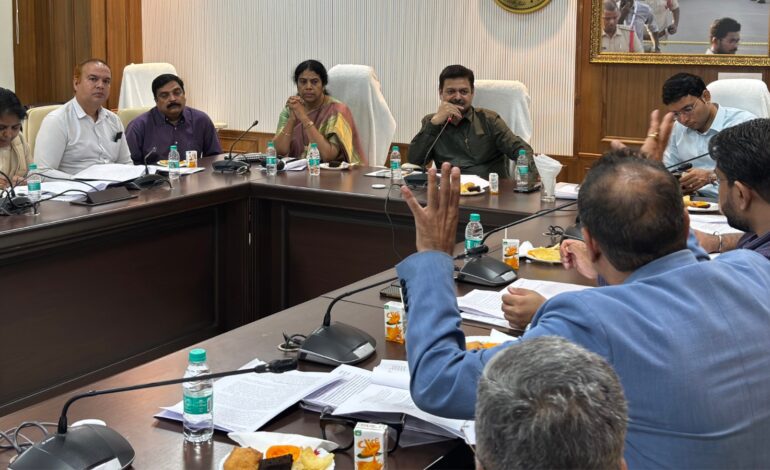
The government said implementation of the schemes is periodically reviewed by the Empowered Group of Secretaries (EGoS) and respective administrative ministries. Based on stakeholder feedback, several modifications have been introduced to simplify guidelines, relax eligibility conditions, strengthen project monitoring and accelerate investments, production and exports.