Civil Aviation Ministry outlines implementation strategy for Modified UDAN at stakeholder workshop
The workshop brought together airlines, airport operators, state governments and aviation industry stakeholders to discuss the implementation roadmap for the next phase of regional connectivity.
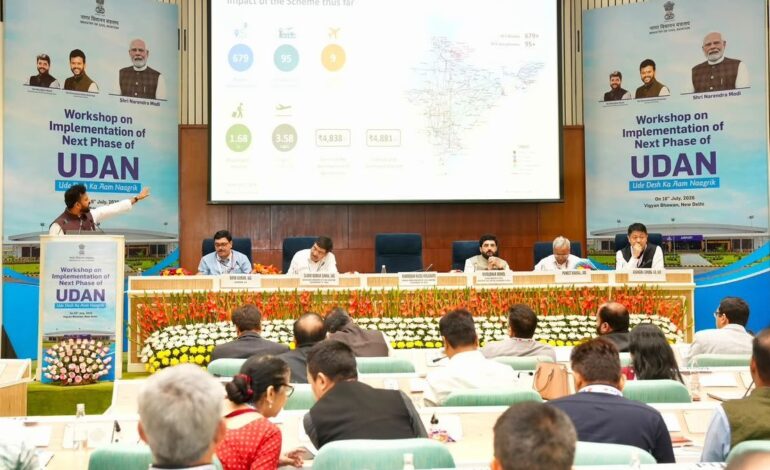
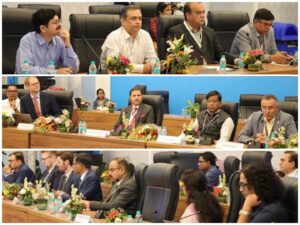
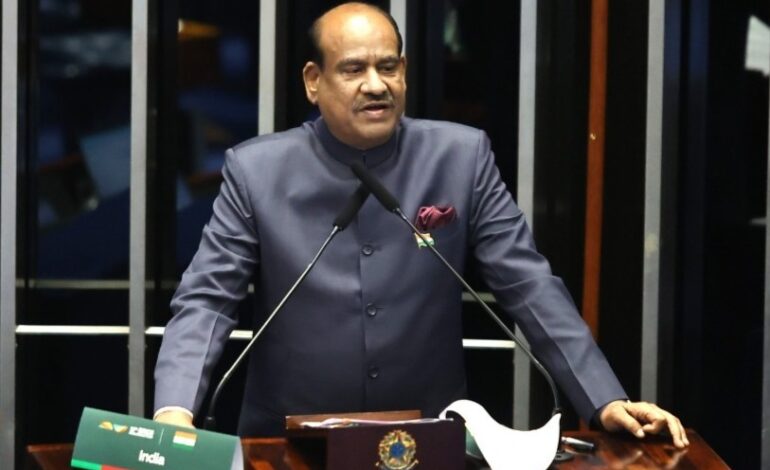
Civil Aviation Minister Ram Mohan Naidu presents the implementation framework for the Modified UDAN scheme during a stakeholder workshop organised by the Ministry of Civil Aviation at Vigyan Bhawan in New Delhi on Thursday.

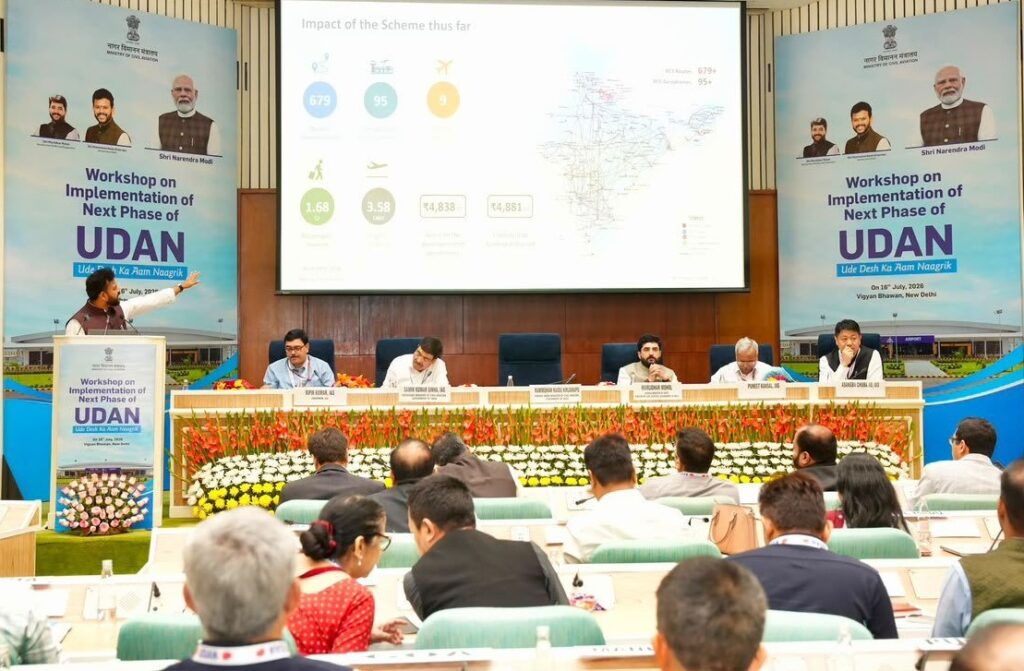
NEW DELHI: The Ministry of Civil Aviation on Thursday initiated the implementation phase of the Modified UDAN scheme by holding a national stakeholder workshop, where Union Civil Aviation Minister Ram Mohan Naidu presented the revised operational guidelines to airlines, airport operators, state governments and other aviation stakeholders. The consultations focused on preparing the aviation ecosystem for the next phase of India’s regional connectivity programme, which was launched by Prime Minister Narendra Modi earlier this month.
The modified scheme was presented by Civil Aviation Minister Ram Mohan Naidu during the workshop organised by the Ministry of Civil Aviation at Vigyan Bhawan in New Delhi. The workshop brought together airlines, airport operators, state governments and aviation industry stakeholders to discuss the implementation roadmap for the next phase of regional connectivity. The revised guidelines follow the formal launch of the Modified UDAN scheme by Prime Minister Narendra Modi on July 4 from Jodhpur Airport.
Addressing the gathering, Naidu said India’s civil aviation sector has witnessed a remarkable transformation over the past decade. He noted that while the country had only 74 airports by 2014, around 90 additional airports have since been added. According to the Minister, 55 previously underutilised or unserved airstrips have also been revived and made operational under the UDAN initiative, significantly expanding regional connectivity.
Highlighting the social impact of the programme, the Minister said the perception of air travel has changed dramatically, with middle-class citizens increasingly flying to remote destinations. He also cited record domestic passenger traffic, stating that India handled over five lakh domestic passengers daily and recorded its highest-ever monthly domestic traffic of more than 1.5 crore passengers in May.
Key reforms in Modified UDAN
The revised framework introduces several structural changes intended to improve the long-term viability of regional air connectivity.
One of the major reforms removes the maximum seat cap for larger aircraft while retaining airfare caps on 50% of seats under the Regional Connectivity Scheme (RCS). The policy also promotes indigenous aviation by providing for deployment of HAL Dhruv helicopters and HAL Dornier aircraft under the scheme.
The government has also extended Viability Gap Funding (VGF) support from the existing three years to five years through a tapered funding mechanism. Under the revised structure, airlines will receive 75% of awarded VGF in the third year, 50% in the fourth year and 25% in the fifth year, encouraging gradual commercial sustainability.
Infrastructure development forms another major pillar of the revised scheme. The government has proposed an investment of approximately ₹12,159 crore to develop 100 airports over the next decade under the Viksit Bharat 2047 vision. Additionally, around ₹3,661 crore has been earmarked for developing 200 modern helipads in Hilly, North Eastern Region (HINER) states and Aspirational Districts. The scheme also introduces operational and maintenance support for newly developed aerodromes for up to three years.
To improve route sustainability, the government plans to facilitate slot allocation for UDAN flights at major metro airports and revise the definition of “served” and “unserved” airports using passenger traffic, scheduled departures and connectivity criteria instead of relying solely on flight frequency. The Ministry will also include a list of state-recommended priority routes during route allocation to strengthen regional connectivity planning.
The revised framework also tightens operational norms by restricting bidding to airlines holding valid Air Operator Permits (AOPs), linking route awards to business plans and aircraft availability, and enabling re-bidding if operators fail to commence services within stipulated timelines.
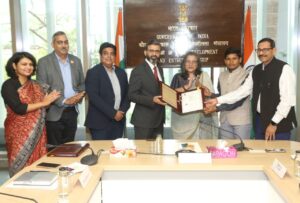
Minister of State for Civil Aviation Murlidhar Mohol reaffirmed the government’s commitment to making air travel affordable and accessible across the country. The workshop also saw the launch of the new UDAN Scheme Document outlining the vision, objectives and implementation framework for the next phase of the programme.
Since its launch, the UDAN scheme has played a pivotal role in connecting underserved and unserved regions, boosting tourism, facilitating trade and generating employment. With the latest reforms, the government aims to build on these gains and further accelerate the growth of India’s aviation ecosystem while improving regional connectivity nationwide.