Supreme Court Tightens Protection of Aravalli Hills, Imposes Moratorium on New Mining Leases
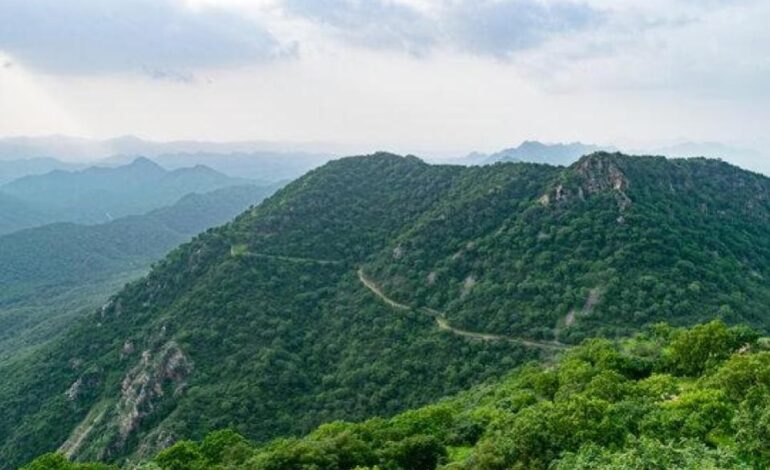
The Court underscored the Aravallis’ critical role as a natural barrier against desertification, a major groundwater recharge zone, and a biodiversity-rich habitat vital for ecological stability across north and western India.

New Delhi, December 22: In a landmark move to safeguard one of India’s most fragile ecological systems, the Supreme Court has approved a uniform, scientifically grounded definition of the Aravalli Hills and Ranges and imposed an interim moratorium on the grant of new mining leases across the entire Aravalli landscape until a comprehensive sustainable mining plan is finalised.
The decision follows extensive deliberations on the recommendations of a high-level committee constituted by the Ministry of Environment, Forest and Climate Change (MoEF&CC), comprising forest department secretaries from Delhi, Haryana, Rajasthan and Gujarat, along with representatives from the Forest Survey of India, Geological Survey of India and the Central Empowered Committee. The Court underscored the Aravallis’ critical role as a natural barrier against desertification, a major groundwater recharge zone, and a biodiversity-rich habitat vital for ecological stability across north and western India.
Oldest Mountain Range, Growing Ecological Stress
Stretching from Delhi through Haryana and Rajasthan into Gujarat, the Aravalli range is among the oldest geological formations in the world. Spread across 37 districts, the hills serve as a protective shield against the expansion of the Thar Desert, regulate microclimates, sustain groundwater aquifers, and act as the “green lungs” for the Delhi-NCR region.
The Supreme Court has repeatedly warned that unregulated mining in the Aravallis poses a “grave threat to the ecology of the nation,” prompting the need for a uniform and enforceable policy to prevent further degradation.
Uniform Definition to Close Regulatory Loopholes
Until now, only Rajasthan followed a formal definition of Aravalli Hills for mining regulation, based on a 2002 state committee report that identified hills as landforms rising 100 metres above local relief. The MoEF&CC-led committee recommended extending and strengthening this definition across all Aravalli states.
Under the newly accepted framework, any landform rising 100 metres or more above the local relief — along with its supporting slopes and associated features — will be classified as Aravalli Hills. Further, two or more such hills located within 500 metres of each other will together constitute an Aravalli Range, bringing intervening valleys, slopes and smaller hillocks under protection as well.
The Court noted that this approach prevents piecemeal exploitation of foothills and slopes, which are ecologically integral for soil stability, water recharge and habitat continuity.
Mapping, Transparency and Enforcement
A key feature of the framework is the mandatory demarcation of Aravalli Hills and Ranges on Survey of India topographic maps before any mining activity is considered. This move aims to remove ambiguity, strengthen enforcement, and curb illegal mining.
The definition automatically includes core and inviolate areas such as protected forests, tiger reserves, eco-sensitive zones, wetlands, and afforestation sites developed under CAMPA and other public investments, where mining is strictly prohibited.
Freeze on New Mining Leases
Accepting the committee’s recommendations, the Supreme Court has ordered that no new mining leases be granted anywhere in the Aravalli landscape until the MoEF&CC prepares a landscape-wide Management Plan for Sustainable Mining (MPSM) through the Indian Council of Forestry Research and Education (ICFRE).
The MPSM will identify zones where mining may be permitted under strict conditions, ecologically sensitive areas where it is prohibited, assess cumulative environmental impacts, determine the ecological carrying capacity of the region, and prescribe post-mining restoration and rehabilitation measures.
Existing mines will be allowed to operate only in strict compliance with environmental, forest and groundwater regulations, subject to enhanced monitoring and inspections.
Strong Safeguards Against Illegal Mining
The framework lays down stringent safeguards to prevent illegal mining, including drone surveillance, night-vision CCTV cameras, high-tech weighbridges, e-challan-based transport tracking, and district-level task forces involving forest, revenue, police and mining officials. Any violation can lead to suspension or cancellation of environmental clearances and criminal penalties.
Mining remains absolutely prohibited in protected areas, within one kilometre of protected area boundaries, in wetlands and Ramsar sites, and in conservation zones developed through public funds. Limited exceptions apply only for atomic, critical and strategic minerals, and even these are subject to the highest level of scrutiny and safeguards.
Balancing Conservation and Development
The Court emphasised that the new framework is not anti-development but conservation-centric, aiming to balance ecological preservation with responsible and scientifically justified resource use. By treating the Aravallis as a continuous geological ridge rather than isolated hills, the policy addresses long-standing concerns of fragmentation and cumulative environmental damage.
The government reiterated that contrary to alarmist claims, the Aravallis are under robust protection through a combination of legal clarity, strict enforcement, afforestation programmes and sustainable planning mechanisms.
With the Supreme Court’s endorsement, the Aravalli Hills now stand protected under one of the most comprehensive ecological safeguard regimes in the country, reinforcing India’s commitment to preserving its natural heritage while pursuing sustainable development for future generations.