Smart agro-food systems take centre stage in government’s sustainability push, minister tells parliament
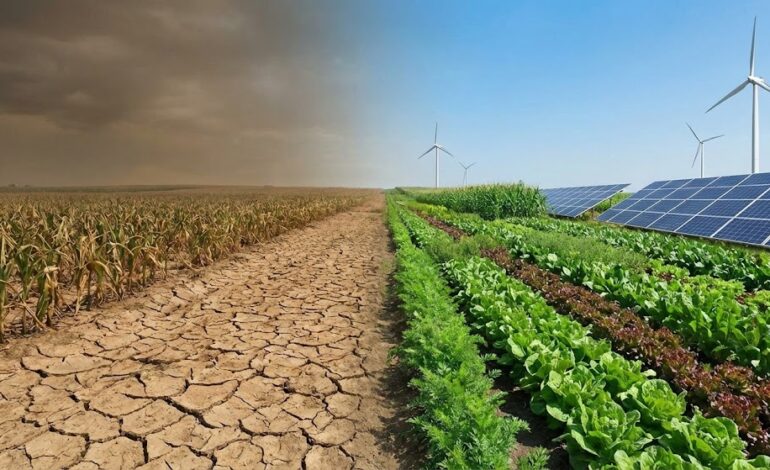
The Union government has identified climate-resilient, carbon-neutral and regenerative agriculture as key agronomic priorities to tackle climate change, resource degradation and long-term food security, Parliament was informed on Tuesday.

New Delhi: The Union government has identified climate-resilient, carbon-neutral and regenerative agriculture as key agronomic priorities to tackle climate change, resource degradation and long-term food security, Parliament was informed on Tuesday.
A range of initiatives under the National Mission for Sustainable Agriculture are being implemented to promote sustainable production practices. The Per Drop More Crop scheme is improving water-use efficiency through micro-irrigation technologies such as drip and sprinkler systems, while Rainfed Area Development focuses on integrated farming systems to enhance productivity and reduce risks arising from climatic variability. The Soil Health & Fertility programme promotes integrated nutrient management and judicious use of fertilisers.
Schemes including the Mission for Integrated Development of Horticulture, agroforestry initiatives and the National Bamboo Mission are aimed at strengthening climate resilience. On the risk-mitigation front, the Pradhan Mantri Fasal Bima Yojana, along with the weather index-based Restructured Weather Based Crop Insurance Scheme, provides comprehensive insurance cover against crop losses due to natural calamities.
The Indian Council of Agricultural Research is implementing the National Innovations in Climate Resilient Agriculture project to assess the impact of climate change on agriculture and undertake district-level risk and vulnerability assessments. Of the 310 districts identified as climatically vulnerable, 109 have been categorised as ‘very high’ and 201 as ‘high’ vulnerability.
To enhance farmers’ adaptive capacity, location-specific climate-resilient technologies – such as system of rice intensification, aerobic rice cultivation, direct seeding of rice and zero-till wheat sowing – have been demonstrated through Krishi Vigyan Kendras in 151 districts, covering 448 climate-resilient villages. Capacity-building initiatives under the project include village-level seed banks and community nurseries to ensure timely seed availability. Drought- and flood-tolerant varieties of major crops including rice, wheat, soybean, mustard, chickpea, sorghum and millets have also been demonstrated.
In addition, training programmes are being conducted under the Agricultural Technology Management Agency on improved agricultural practices. Over the last decade, ICAR has released 2,900 crop varieties, of which 2,661 are tolerant to one or more biotic or abiotic stresses.
The government is also progressively aligning and converging existing agricultural schemes with broader priorities such as digital transformation, soil health, water-use efficiency, organic and natural farming. The move is expected to reduce duplication, optimise resource utilisation and improve implementation efficiency.
India currently has 731 Krishi Vigyan Kendras mandated to assess, demonstrate and disseminate new agricultural technologies, including those related to climate-resilient and regenerative farming.
The information was provided by Minister of State for Agriculture and Farmers Welfare Ramnath Thakur in a written reply to the Lok Sabha.