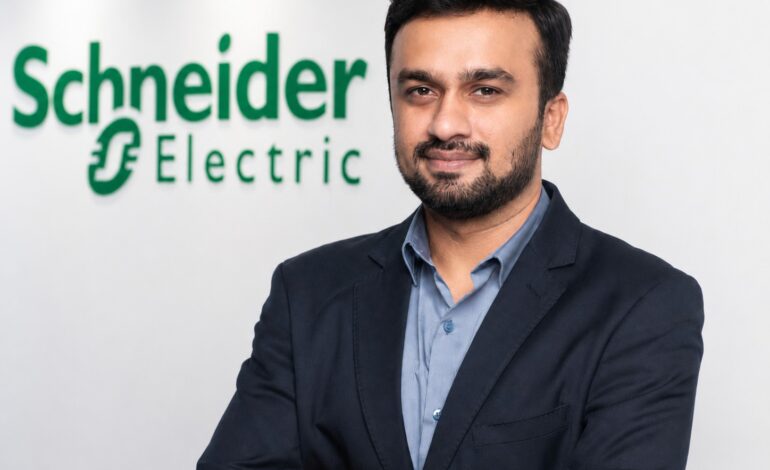
Schneider Electric Elevates Roshan Varadarajan to Head Industrial Automation Business in Greater India
Appointment reflects company's growing focus on Industrial AI, software-defined automation and digital transformation
In his new role, Varadarajan will lead Schneider Electric's Industrial Automation business across Greater India, driving the adoption of next-generation automation technologies, Industrial AI and digital solutions aimed at helping industries improve operational efficiency, resilience and sustainability.

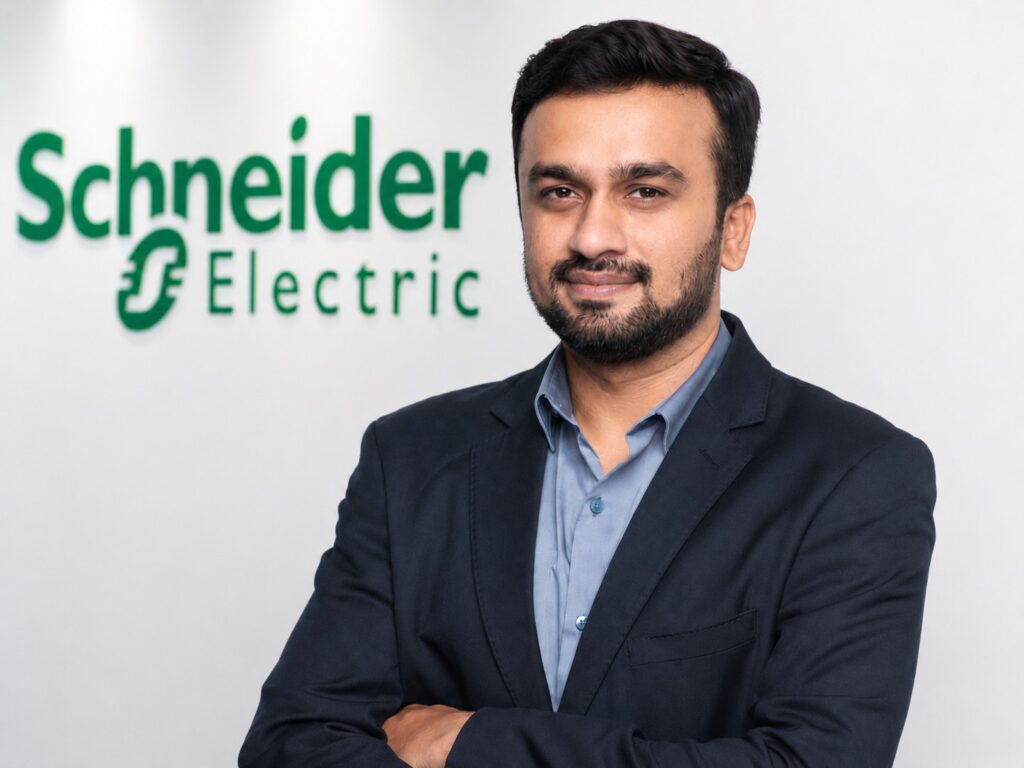
NEW DELHI: Schneider Electric has elevated Roshan Varadarajan as Vice President – Industrial Automation, Greater India, effective July 1, 2026, as the global energy technology company sharpens its focus on Industrial AI, software-defined open automation and digital industrial transformation in one of its fastest-growing markets.
In his new role, Varadarajan will lead Schneider Electric’s Industrial Automation business across Greater India, driving the adoption of next-generation automation technologies, Industrial AI and digital solutions aimed at helping industries improve operational efficiency, resilience and sustainability.
The appointment comes as manufacturers increasingly adopt intelligent automation, software-driven industrial systems and AI-powered operations to enhance productivity while reducing energy consumption and operational costs.
“Industries today are at a pivotal shift, with automation being redefined by the convergence of software, intelligence, and evolving customer expectations. What will set leaders apart is not just technology adoption, but the ability to co-create solutions for modern industry,” said Deepak Sharma, Zone President, Greater India, MD & CEO, Schneider Electric India.
“Roshan brings strong strategic perspective and a deep understanding of digital and industrial convergence. His customer-centric approach and focus on open, flexible automation will be key to our next phase of growth in India,” Sharma added.
Before taking charge of the Industrial Automation business, Varadarajan served as Director – EcoStruxure & Software Strategy, where he led enterprise-wide digital transformation initiatives and software-led growth strategies. He also played a key role in establishing Schneider Electric’s first Innovation Hub in India while driving the integration of automation, software and cybersecurity into unified industrial solutions.
Commenting on his new role, Roshan Varadarajan said industries are moving beyond conventional automation models towards software-centric and interoperable systems.
“The pace of industry evolution is outstripping what conventional automation frameworks were designed to handle, calling for a fundamental rethink of how systems are architected and scaled. At Schneider Electric, we see this as an opportunity to advance software-defined, open automation, unlocking greater flexibility and interoperability,” he said.
He added that the company would continue collaborating with customers and technology partners to accelerate digital integration and develop solutions tailored to evolving industrial requirements.
Prior to joining Schneider Electric, Varadarajan held leadership roles at ABB and Larsen & Toubro (L&T) across research and development, industrialisation, business development, application engineering and marketing.
Growing demand for Industrial AI
The leadership transition comes at a time when Indian industries are accelerating investments in smart manufacturing, AI-enabled operations and digitally connected industrial infrastructure. Sectors such as manufacturing, energy, pharmaceuticals, automotive, food processing and infrastructure are increasingly adopting intelligent automation platforms to improve productivity, predictive maintenance and energy efficiency.
Schneider Electric said the appointment reinforces its strategy of converging automation, electrification and digital technologies to build more flexible, interoperable and future-ready industrial ecosystems in India.
With India emerging as a major global manufacturing hub under initiatives such as ‘Make in India’, Production Linked Incentive (PLI) schemes and the broader Industry 4.0 transition, the company expects software-defined automation and Industrial AI to play an increasingly important role in supporting sustainable industrial growth.