Nuclear waste at power plants managed safely on-site, no radiation impact reported: Govt
India follows a “nearly closed nuclear fuel cycle,” under which spent nuclear fuel is treated as a valuable resource rather than waste.

New Delhi, December 18: Nuclear waste generated at India’s nuclear power stations is safely managed at plant sites and has shown no impact on public health or the environment, the government informed Parliament on Thursday.
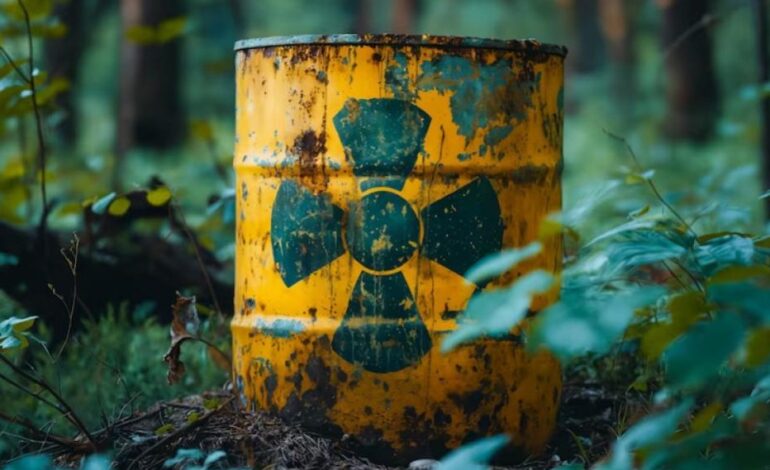
In a written reply to a question in the Lok Sabha, the government said that waste produced during the operation and maintenance of nuclear power plants largely consists of low- and intermediate-level radioactive waste. This waste is treated, compacted and immobilised using solid materials such as cement, and disposed of or stored in specially engineered reinforced concrete structures located within plant premises.
India follows a “nearly closed nuclear fuel cycle,” under which spent nuclear fuel is treated as a valuable resource rather than waste. Spent fuel is reprocessed to recover fissile material, which is reused as fuel in future reactors, significantly reducing the volume of waste requiring long-term management.
The high-level radioactive waste generated during reprocessing is converted into a stable glass form through vitrification and stored in Solid Storage Surveillance Facilities for interim storage. The government said this approach is in line with international best practices and guidelines issued by the International Atomic Energy Agency.
According to the reply, near-surface disposal facilities at existing nuclear power plant sites have adequate capacity to safely store the waste generated. Continuous monitoring of disposal areas has confirmed the effectiveness of containment systems, with no incidents of radioactive release reported so far.
The government also said that research and development efforts are underway to further improve nuclear waste management. These include advanced partitioning technologies to separate long-lived radioactive elements such as actinides, extraction of useful radioisotopes for societal applications, and techniques aimed at reducing overall waste volume.
The reply emphasised that India’s nuclear waste management practices meet international safety standards and that regular surveillance has found no adverse radiation effects on the public or the surrounding environment.