June GST Collections Rise 13.9% to ₹1.95L Cr as GST Turns Nine; GTB Tax Expert Sees Maturing Revenue Ecosystem
Higher import tax receipts and steady domestic collections signal resilient economy; experts say GST is evolving into an intelligent, technology-driven tax ecosystem
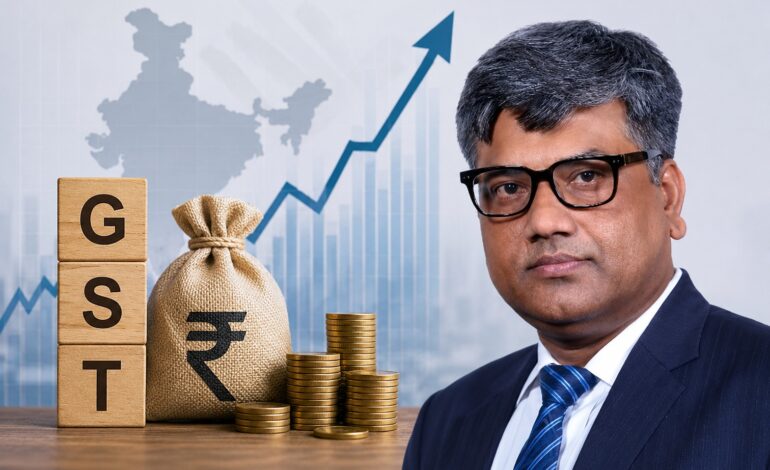
Manoj Mishra, Partner and Tax Controversy Management Leader at Grant Thornton Bharat, said the headline growth rate understated the underlying strength of GST collections because of the high base created by the spectrum-related payment in May 2025.

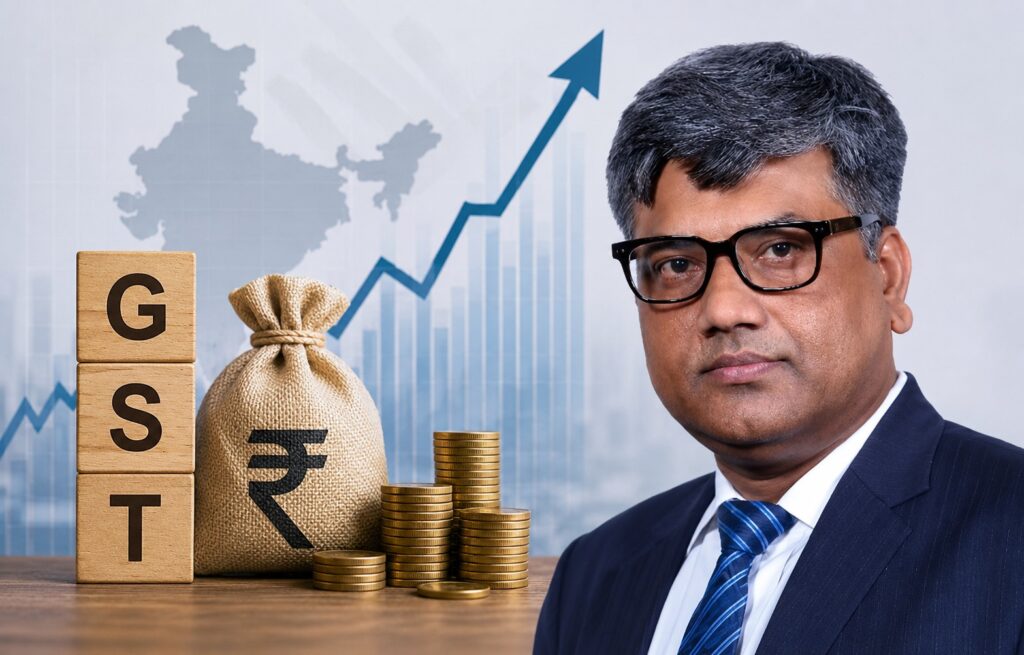
New Delhi: India’s gross Goods and Services Tax (GST) collections rose 13.9% year-on-year to ₹1.95 lakh crore in June 2026, reflecting sustained tax buoyancy despite global economic uncertainties and reinforcing the growing maturity of the country’s indirect tax system.
According to tax experts, the increase was primarily driven by a 25.2% growth in GST collected on imports, while domestic GST collections also recorded healthy expansion, indicating continued formalisation of the economy and improving tax compliance.
Commenting on the latest collections, Manoj Mishra, Partner and Tax Controversy Management Leader, Grant Thornton Bharat, said the June figures demonstrate the resilience of India’s revenue base even as global trade and geopolitical uncertainties continue to impact the international economy.
“The sharp growth in import GST provided the primary boost, while domestic collections continued to expand steadily, indicating that compliance and formalisation remain strong,” Mishra said.
He noted that the 28.4% increase in GST refunds reflects the government’s emphasis on improving liquidity for businesses, particularly exporters, while maintaining strong revenue growth.
“This suggests that the tax administration is increasingly balancing efficient revenue collection with timely taxpayer facilitation,” he added.
The latest collection assumes added significance as India completes nine years of the Goods and Services Tax, which came into effect on July 1, 2017, replacing multiple indirect taxes with a unified national tax regime.
According to Grant Thornton Bharat’s GST@9 report, GST has evolved beyond tax harmonisation into one of the country’s most comprehensive digital governance platforms, with technology, analytics and artificial intelligence increasingly driving compliance and tax administration. The report describes this transformation as the emergence of “GST 2.0”, moving from traditional return-based compliance towards intelligent, data-driven tax administration.
The report notes that India now has 1.65 crore registered GST taxpayers, more than 193 crore returns filed, over 2,886 crore invoices uploaded, and 778 crore e-way bills generated, making GST one of the world’s largest digital tax ecosystems.
Mishra said the consistency of monthly GST collections around the ₹2 lakh crore level demonstrates that GST has matured into a predictable and technology-driven revenue framework.
“The vision of ‘Ek Bharat, Shreshtha Bharat’ is now visible not just in a unified market but in a more integrated compliance ecosystem where improved tax administration is translating into stronger and more stable revenues for both the Centre and the States,” he said.
The Grant Thornton report also highlights that the next phase of GST will be characterised by greater use of AI-driven analytics, risk-based scrutiny, faster dispute resolution through the GST Appellate Tribunal, and more automated compliance systems, laying the foundation for what it terms GST 3.0.
With collections remaining consistently strong and digital compliance systems becoming increasingly sophisticated, GST continues to play a central role in strengthening India’s fiscal capacity while supporting the country’s transition towards a more formal and technology-enabled economy.