Geothermal energy emerges as new pillar of India’s clean energy transition
India is stepping up efforts to tap its 10.6 GW theoretical geothermal potential, with the first two wells at Ladakh’s Puga Valley and a new policy framework opening the way
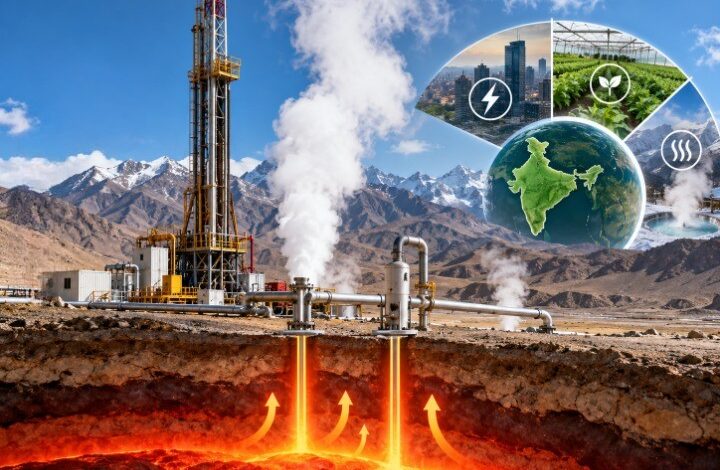
The geothermal push is backed by the National Policy on Geothermal Energy, notified in September 2025, which provides a framework for systematic exploration and development of India’s geothermal resources.

NEW DELHI: India is moving to harness geothermal energy as a steady, low-carbon and weather-independent source of power, with the commissioning of the country’s first two geothermal wells in Puga Valley, Ladakh, marking a significant step towards developing the resource.
The geothermal push is backed by the National Policy on Geothermal Energy, notified in September 2025, which provides a framework for systematic exploration and development of India’s geothermal resources. The Ministry of New and Renewable Energy (MNRE) is the nodal ministry for implementing the policy.
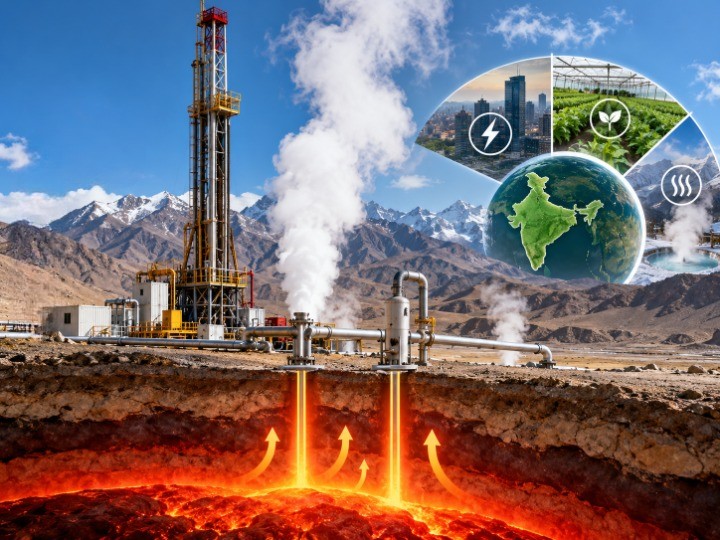
Geothermal energy uses heat from beneath the Earth’s surface. In suitable geological conditions, underground hot water and steam can be brought to the surface through deep wells and used to generate electricity. The heat can also be directly used for applications such as district heating, agriculture, aquaculture and space heating and cooling.
Puga wells mark a first for India
In July 2026, the ONGC Energy Centre commissioned two geothermal wells at Puga Valley in Ladakh, located at an altitude of more than 14,000 feet. The two wells, each 1,000 metres deep, will support reservoir evaluation and pave the way for India’s first 1-megawatt demonstration geothermal power project.
An infographic in the government backgrounder highlights the Puga milestone, noting that temperatures of up to 135°C have been recorded beneath the valley. It also identifies the wells as the foundation for the proposed 1-megawatt geothermal power project.
India has a 10.6 GW theoretical resource
India’s diverse geology provides a substantial resource base for geothermal development. The Geological Survey of India has mapped 381 hot springs and identified 10 geothermal provinces across the country.
The government estimates India’s theoretical geothermal prospect at nearly 10.6 GW, with 42 sites identified as promising for power generation and direct heat applications. The identified provinces include the Himalayan Geothermal Province, Naga-Lusai, Andaman and Nicobar Islands, Son Narmada Tapi, West Coast, Cambay Graben, Aravalli, Mahanadi, Godavari and South Indian Cratonic regions.
Advanced technologies such as Enhanced Geothermal Systems (EGS) and Advanced Geothermal Systems (AGS) could further expand the areas suitable for geothermal development. The government backgrounder also points to the possibility of repurposing abandoned or unproductive oil and gas wells for geothermal applications, subject to technical and operational feasibility.
From pilot projects to wider deployment
India has already begun moving beyond resource assessment towards field demonstrations. MNRE sanctioned five research and development projects between July and August 2025 covering resource assessment, indigenous technology development and field demonstrations in electricity generation, heating and cooling.
The backgrounder highlights projects at Ankleshwar and Gandhinagar in Gujarat, Tawang in Arunachal Pradesh, Hyderabad in Telangana and a shallow geothermal energy project. These initiatives cover applications ranging from geothermal electricity generation and hybrid solar-geothermal systems to cooling and heating.
At Gandhinagar, a demonstration project combining solar and geothermal energy has drilled three geothermal wells producing geothermal fluid at 70-80°C and demonstrated electricity generation of 50-90 kilowatts. At Ankleshwar, a pilot project is examining electricity generation by retrofitting unproductive oil and gas wells.
The government document notes that commercial-scale geothermal power generation has yet to be established in India, but expanding well fields, demonstrations and R&D activities are strengthening the ecosystem needed for wider deployment.
Policy opens door for public-private participation
The National Policy on Geothermal Energy seeks to establish geothermal power as a major renewable-energy pillar. Its focus areas include research, drilling, reservoir management, direct-use applications and Ground Source Heat Pumps for heating and cooling.
The policy also provides for a regulatory framework encouraging public and private sector participation, while supporting the repurposing of abandoned oil and gas wells, creation of a national geothermal data repository, pilot projects and Centres of Excellence.
MNRE’s Renewable Energy Research and Technology Development Programme is also supporting indigenous and cost-effective renewable energy technologies through research institutions and industry partners.
India is additionally pursuing international cooperation in geothermal energy with Australia and Iceland, while an MoU with Saudi Arabia has identified geothermal energy as an area of bilateral cooperation.
A 24×7 renewable energy option
Unlike solar and wind, geothermal energy is not dependent on sunlight or weather conditions and can provide energy around the clock. This gives it potential as a complementary source within India’s expanding renewable-energy mix.
Globally, installed geothermal capacity reached 15.67 GW by the end of 2025, with Indonesia, the United States, the Philippines, Türkiye and New Zealand together accounting for around 67% of global capacity, according to the backgrounder.
For India, the immediate challenge is to translate its substantial theoretical resource into commercially viable projects. The Puga wells, ongoing demonstrations and the policy framework indicate that geothermal energy is moving from a largely exploratory opportunity towards a more structured component of the country’s clean-energy strategy.
As India works towards its Net Zero 2070 target, geothermal energy could provide a dependable indigenous source complementing solar, wind and other renewable technologies.