Digital Cultural Governance Strengthened Through National Platforms for Heritage Preservation and Public Engagement: Centre
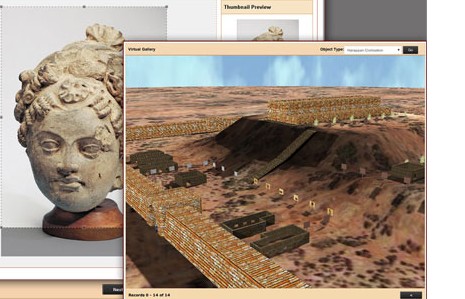
For museum collections, the ministry has collaborated with Centre for Development of Advanced Computing (C-DAC), Pune, using the “JATAN” software to digitise artefacts across museums.

New Delhi: The Ministry of Culture has significantly strengthened digital cultural governance through a network of national platforms designed to record, monitor and promote manuscript digitisation, heritage conservation and public cultural engagement across India, including the National Capital Territory of Delhi.
This information was provided by Union Minister for Culture and Tourism Gajendra Singh Shekhawat in a written reply in the Lok Sabha on Monday.
National digital platforms for heritage and culture
The ministry, along with its affiliated institutions, has operationalised multiple digital systems to preserve India’s tangible and intangible heritage.
The Archaeological Survey of India has digitised artefacts housed in site museums in accordance with the National Mission on Monuments and Antiquities (NMMA) standards. These records are accessible through the NMMA portal.
Under the Gyan Bharatam Mission, a dedicated web portal has been launched to digitise manuscripts, with memoranda of understanding signed with over 40 institutions and state entities to support preservation of India’s manuscript heritage.
For museum collections, the ministry has collaborated with Centre for Development of Advanced Computing (C-DAC), Pune, using the “JATAN” software to digitise artefacts across museums.
The National Archives of India has developed Abhilekh Patal, a digital repository providing public access to historical records and archival documents.
Centralised access to digitised manuscripts and ethnographic materials is enabled through platforms such as the National Cultural Audiovisual Archive and Kalāsampadā, maintained by the Indira Gandhi National Centre for the Arts.
The National Virtual Library of India has created The Indian Culture Portal, aggregating digital cultural assets from multiple institutions under the Ministry of Culture.
In addition, seven Zonal Cultural Centres—located in Patiala, Prayagraj, Kolkata, Dimapur, Thanjavur, Nagpur and Udaipur—are engaged in research, documentation and promotion of India’s visual and performing arts, including music and theatre.
Data-driven monitoring through Cultural Schemes Dashboard
To improve transparency and policy oversight, the ministry has operationalised the Cultural Schemes Dashboard, which provides a centralised interface for real-time monitoring of cultural schemes and initiatives. The platform supports data-driven decision-making across institutions nationwide, including the NCT of Delhi.
Focus on Maharashtra’s heritage
In Maharashtra, 286 centrally protected monuments and sites are managed by the Archaeological Survey of India, with conservation carried out as required under the National Policy for Conservation.
The South Central Zone Cultural Centre and West Zone Cultural Centre regularly organise cultural programmes in the state and provide annual grants for initiatives such as the Orange City Craft Mela and workshops for tribal artists.
The Indira Gandhi National Centre for the Arts plays a key role in documenting and archiving Maharashtra’s diverse cultural heritage, with public outreach through exhibitions and academic collaborations, particularly in tribal regions such as Palghar.
Under the Gyan Bharatam Mission, memoranda of understanding have been signed with institutions including Kavi Kulaguru Kalidas Sanskrit University, Nagpur; the Bhandarkar Oriental Research Institute, Pune; and the Department of Culture, Government of Maharashtra.
Towards integrated digital cultural governance
Together, these initiatives reflect a coordinated national approach to digital preservation, monitoring and public access, reinforcing cultural governance through technology while ensuring long-term conservation of India’s heritage assets.