
What is India’s Bharatiya Antariksh Station and Why It Matters
New Delhi: India is building its own space station — the Bharatiya Antariksh Station (BAS). The project is being led by the Indian Space Research Organisation (ISRO) as part of
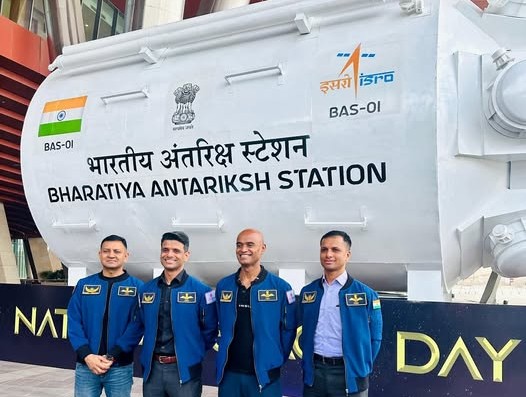
The Union Cabinet has approved ₹1,763 crore for the development and launch of the first module, BAS-01, as part of the expanded Gaganyaan programme.

New Delhi: India is building its own space station — the Bharatiya Antariksh Station (BAS). The project is being led by the Indian Space Research Organisation (ISRO) as part of its human spaceflight programme.
The first module of the space station is expected to be launched by 2028. The full station, with five modules, is planned by 2035.
The Bharatiya Antariksh Station is a key step in India’s long-term human spaceflight programme.
It is expected to strengthen India’s capabilities in space research, technology development and global space collaboration.
What is a Space Station?
A space station is like a laboratory in space.
Astronauts live and work there for weeks or months. They conduct experiments that are not possible on Earth.
The biggest example today is the International Space Station (ISS), used by multiple countries.
What Will India’s Space Station Do?
The Bharatiya Antariksh Station will support research in:
- Life sciences (how the human body behaves in space)
- Medicines and pharmaceuticals
- Materials and manufacturing
- New industrial technologies
In space, there is microgravity. This means objects float and behave differently. Scientists use this environment to test new ideas.
Why Microgravity Research is Important
On Earth, gravity affects everything — from how liquids flow to how cells grow.
In space, without gravity:
- Crystals can grow more perfectly
- New medicines can be tested more accurately
- Materials can be developed with better properties
This research can lead to real-world benefits in healthcare, industry and technology.
What Technologies is ISRO Developing?
To build and operate the station, ISRO is working on:
- Docking systems (joining spacecraft in space)
- Robotics for maintenance and operations
- In-orbit refuelling
- Crew living systems
- Special suits for astronauts
- Experiment modules
These are advanced technologies used by only a few spacefaring nations.
How Much Will It Cost?
The government has approved ₹1,763 crore for the first module.
This is just the beginning. More investment will follow as additional modules are built.
What Role Will Indian Industry Play?
ISRO has invited Indian companies to help build parts of the station.
This opens up opportunities for private industry in high-tech manufacturing and space systems.
Why This is a Big Step for India
India already launches satellites and plans to send astronauts into space under the Gaganyaan mission.
A space station is the next step.
It will help India:
- Build long-term human presence in space
- Develop advanced technologies
- Collaborate with other countries
- Strengthen its position in the global space sector
The Bigger Picture
Countries like the US, Russia and China already operate space stations.
With the Bharatiya Antariksh Station, India is joining this league.
Over time, this could lead to deeper space missions — including missions to the Moon and beyond.
Dr Jitendra Singh, Minister of State (independent charge) for Science and Technology and Space, shared these details in a written reply in the Lok Sabha on Wednesday.