Government expands AI and computational thinking education in schools under NEP 2020
NCERT and CBSE have introduced a Computational Thinking and AI curriculum for Classes III-VIII from 2026-27, with AI literacy, coding and ethics becoming integral to school education.
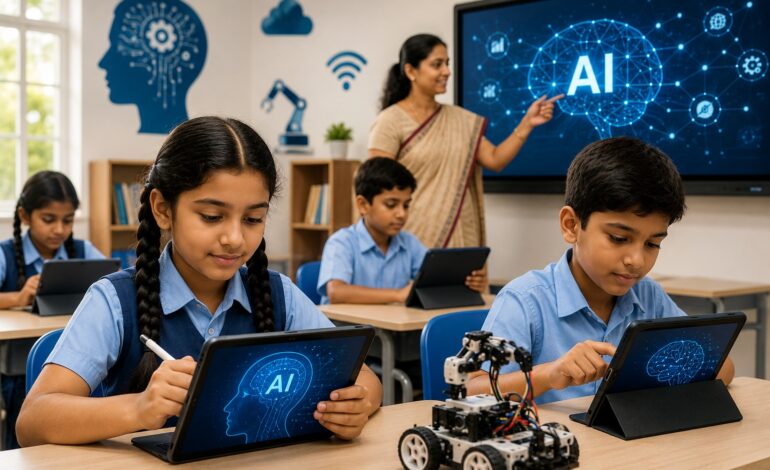
The National Education Policy 2020 identifies artificial intelligence, design thinking and other contemporary subjects as key components of future-ready education.

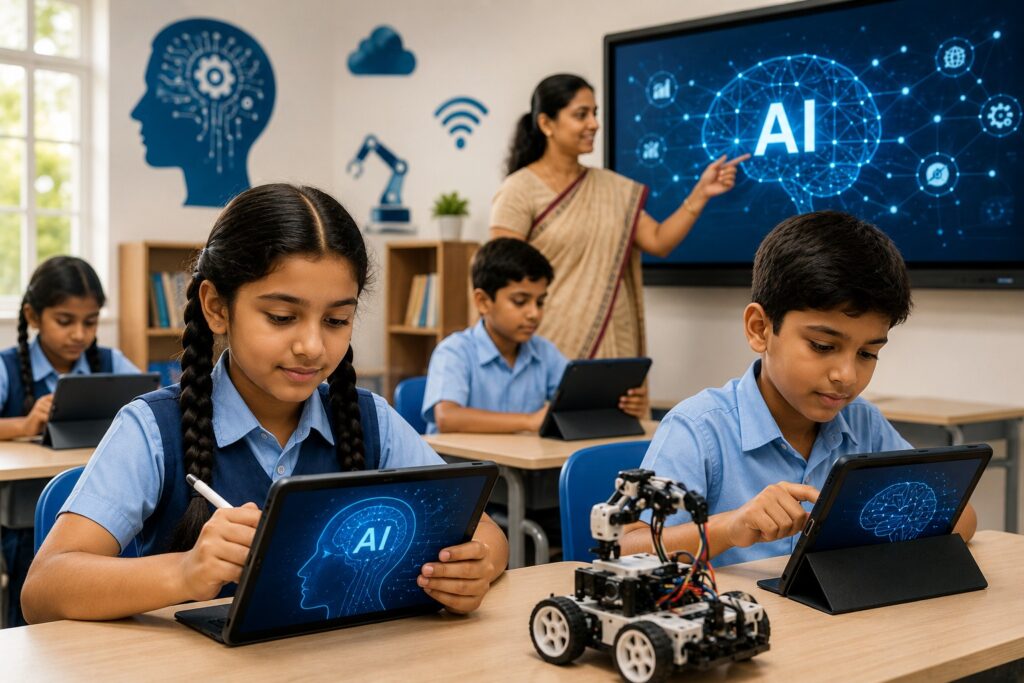
NEW DELHI: Artificial intelligence (AI) and computational thinking are being integrated into India’s school education system under the National Education Policy (NEP) 2020, with the government introducing new curricula, teacher training programmes and digital learning initiatives to prepare students for emerging technologies.
The National Education Policy 2020 identifies artificial intelligence, design thinking and other contemporary subjects as key components of future-ready education. It also recommends greater emphasis on mathematics, computational thinking and coding from the foundational and middle school stages to prepare students for careers in AI, machine learning and data science.
The National Curriculum Framework for School Education (NCF-SE) 2023 further reinforces the importance of mathematics and computational thinking, highlighting their growing relevance in fields such as artificial intelligence, climate modelling, infrastructure development and data science.
The framework also promotes the use of emerging technologies, including artificial intelligence, machine learning, data analytics, augmented reality (AR), virtual reality (VR), virtual laboratories and gamified learning content to improve classroom teaching, student assessment, teacher training and educational administration.
As part of the implementation of NEP 2020, the National Council of Educational Research and Training (NCERT), in collaboration with the Central Board of Secondary Education (CBSE), has introduced a dedicated Computational Thinking and Artificial Intelligence curriculum for Classes III to VIII from the 2026-27 academic year. The curriculum for classes IX to XII in artificial intelligence and allied subjects has also been finalised.
The curriculum is designed to develop logical reasoning, pattern recognition, algorithm design and data literacy while promoting responsible and ethical use of artificial intelligence. It adopts a progressive approach, making computational thinking the foundation for AI learning across different grade levels.
To support implementation, teacher handbooks and facilitator guides have been developed and made available through the CBSE. Schools offering artificial intelligence as a subject are required to maintain the necessary digital infrastructure in accordance with CBSE affiliation norms.
The Ministry of Skill Development and Entrepreneurship has also launched the national SOAR (Skilling for AI Readiness) initiative to build AI awareness among students of Classes VI to XII and improve AI literacy among educators.
The SOAR programme consists of three 15-hour modules for students—AI to be Aware, AI to Acquire and AI to Aspire—and a separate 45-hour AI for Educators module for teachers. The programme covers AI fundamentals, generative AI, programming basics, ethics, cybersecurity and future career opportunities.
The government noted that education is a subject on the Concurrent List of the Constitution and that the establishment of AI and robotics laboratories in government schools remains the responsibility of the respective state and union territory governments.
The information was provided by Minister of State for Education Jayant Chaudhary in a written reply in the Rajya Sabha on Wednesday.