Union Budget 2026: Industry looks to consumption revival, export reforms and manufacturing push
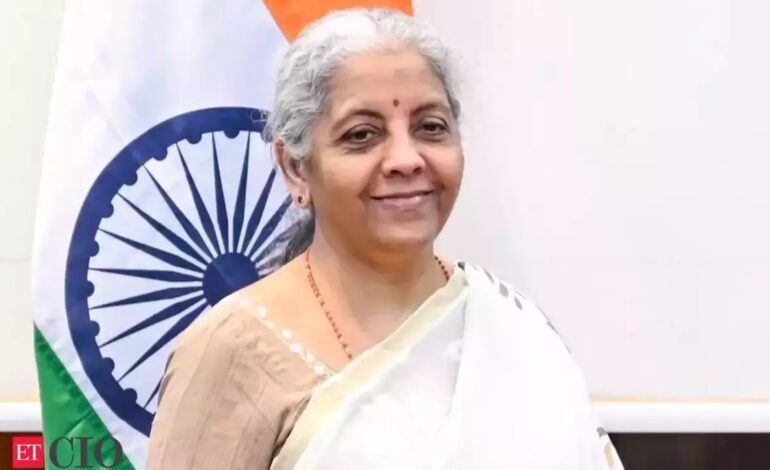
New Delhi, January 19: The Union Budget 2026, scheduled to be presented in Parliament on February 1 by Finance Minister Nirmala Sitharaman, is expected to play a decisive role in
ITR Deadline Extended, Capital Gains Norms Tweaked, Compliance Simplified

New Delhi, January 19: The Union Budget 2026, scheduled to be presented in Parliament on February 1 by Finance Minister Nirmala Sitharaman, is expected to play a decisive role in shaping India’s consumption recovery, export competitiveness and manufacturing momentum at a time of shifting global and domestic economic conditions.
Industry leaders across fast-moving consumer goods (FMCG), digital trade and pharmaceuticals see Budget 2026 as an opportunity to convert recent policy tailwinds—ranging from GST rationalisation and income tax relief to easing inflation—into sustained, broad-based growth.
FMCG: From recovery to durable consumption growth
The FMCG sector believes the coming Budget could determine whether early signs of consumption revival translate into a sustained upcycle across urban and rural India.
Krishna Khatwani, head of sales (India) at Godrej Consumer Products Limited, said the sector is entering Budget 2026 with several foundational elements already in place. “GST rationalisation, income tax relief, benign inflation, and supportive rural schemes over the last year have created a base. The next Budget will determine whether this converts into durable, broad-based consumption growth,” he said.
From a household perspective, Khatwani said three factors would matter most: the quantum of additional disposable income, how evenly it is distributed across income segments, and whether it flows predictably into everyday consumption rather than one-off spending.
He said the priority should be to consolidate recent GST and tax measures rather than introduce new complexity. GST reductions implemented in October 2025 have already lowered shelf prices in several mass categories, historically a trigger for volume-led growth in FMCG.
Budget 2026, he said, could amplify this impact by extending lower GST rates to remaining everyday-use categories—particularly in home and personal care—and by improving refund timelines and rationalising inverted duty structures. “Freeing up working capital locked in taxes allows companies to reinvest in pricing, innovation and distribution,” he noted.
On direct taxes, even modest relief for lower- and middle-income households tends to flow quickly into FMCG demand, as these consumers spend a higher share of incremental income on essentials and small indulgences. Combined with stable inflation and softer commodity prices, such measures could support sustained growth rather than a short-lived consumption spike.
Rural demand remains a key lever
Rural India has outpaced urban growth in recent quarters, a return to its long-term pattern. Industry expects Budget 2026 to protect and deepen this trend through continued support for farm incomes, infrastructure and connectivity.
Good monsoons, higher MSPs and steady rural spending have already begun to reflect in FMCG volumes, particularly through low-unit-price packs that dominate rural consumption. “The Indian FMCG model is still built around ₹10 and ₹20 price points,” Khatwani said, adding that a benign tax and cost environment is essential to preserve value at the bottom of the pyramid.
Targeted schemes that put cash directly into rural households—especially women-focused and livelihood-linked programmes—tend to generate a strong FMCG multiplier, translating quickly into higher demand for personal care, home care and packaged foods.
Urban sentiment and new channels
Urban consumption, particularly in general trade, has lagged newer channels such as quick commerce and parts of modern trade. Industry believes Budget 2026 could help unlock pent-up urban demand by reinforcing confidence around tax stability, inflation management, job creation and entrepreneurship.
A confident urban consumer, FMCG players note, is more likely to upgrade—from unbranded to branded products and from basic formats to higher-value offerings. When combined with rapidly scaling digital and quick-commerce channels, this could create a powerful urban demand engine.
Digital trade and exports: Push for trust-led reforms
Beyond consumption, exporters are looking to Budget 2026 for structural reforms that enhance India’s credibility as a reliable, high-efficiency trade partner.
Haresh Calcuttawala, co-founder and CEO of Trezix, said Indian exporters continue to face tariff distortions, high compliance costs and delayed capital cycles that erode global competitiveness.
He said a forward-looking Budget should focus on tariff rationalisation in key manufacturing and value-added sectors, faster duty drawback mechanisms, and stronger export enablement aligned with production-linked incentive (PLI) schemes.
Calcuttawala highlighted the need for digital trade reforms, including a “Product Passport” framework to automate customs clearance and reduce detentions, disputes and working-capital lock-ups. He also called for incentives to accelerate MSME digitalisation, improve ULIP–ICEGATE interoperability, standardise cross-border data flows and encourage regulator-led innovation.
“With the right policy push, India can compete not just on volume, but on trust, transparency and digital maturity,” he said.
Pharmaceuticals: Manufacturing and innovation in focus
The pharmaceutical sector sees Budget 2026 as a critical moment to strengthen India’s role in global supply chains amid de-risking and diversification trends.
Priyanka Chigurupati, executive director at Granules India Limited, said policy support to improve ease of doing business, enhance manufacturing competitiveness and sharpen export-oriented incentives would reinforce India’s position as a reliable source of affordable medicines.
“A forward-looking Budget that supports innovation, strengthens manufacturing and improves export frameworks can help India emerge as a preferred long-term alternative in global pharma supply chains,” she said.
From stimulus to sustainability
Across sectors, industry consensus suggests that Budget 2026 has an opportunity to move policy focus from short-term stimulus to sustainable growth. That includes prioritising clarity over frequent change, broad-based affordability over narrow incentives, and consumption-led growth aligned with fiscal discipline.
If the Budget succeeds in keeping money in consumers’ hands, deepening GST reforms, supporting rural incomes, enabling urban job creation and accelerating digital trade and manufacturing reforms, industry believes India could shift from a patchy recovery to a more predictable and resilient growth trajectory—laying the foundation not just for the next year, but for the decade ahead.