Choose Character Over Addiction: Vice-President Calls for Nationwide Drug-Free Campuses
DELHI: The Drug Free Campus Campaign was inaugurated at the University of Delhi, with a call for sustained, collective action to protect young people from substance abuse and strengthen the
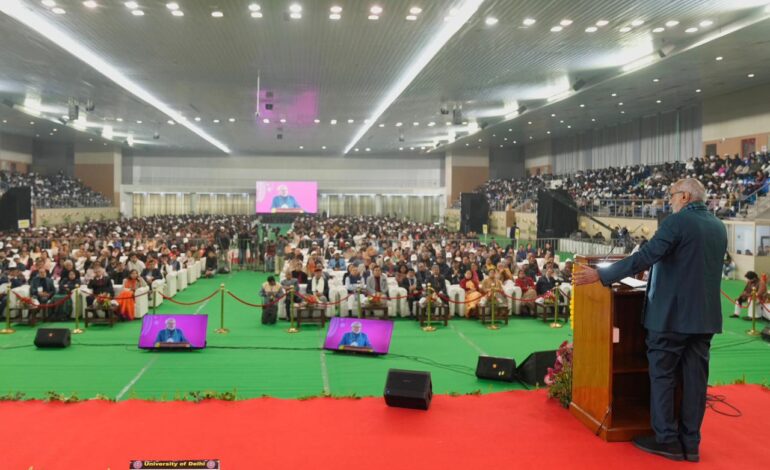
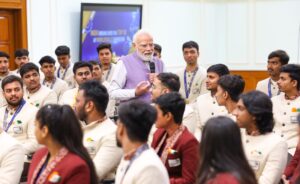
Vice-President addresses students and faculty during the inauguration of the Drug Free Campus Campaign at the University of Delhi on Tuesday, as a large gathering listens at the campus auditorium.

DELHI: The Drug Free Campus Campaign was inaugurated at the University of Delhi, with a call for sustained, collective action to protect young people from substance abuse and strengthen the country’s social and economic foundations.
Addressing students and faculty, the Vice-President C. P. Radhakrishnan said universities are not just centres of academic learning but spaces where values are shaped and leadership is forged. He said a firm stand by a leading institution such as the University of Delhi sends a strong signal to society on the urgency of tackling substance abuse.
Describing India as a youthful nation, he warned that drug abuse is not merely a personal issue but a serious social and public health challenge that threatens the country’s demographic dividend. He said addiction affects physical and mental health, academic performance, family stability, productivity and even national security, citing its links to narco-terrorism.
The Vice-President said the goal of a developed and self-reliant India can be achieved only if the youth remain healthy, drug-free and purpose-driven. He urged students to choose character over addiction and to lead by example, supporting peers in distress and speaking out against substance abuse.
An e-pledge platform and a mobile application were launched under the Nasha Mukt Parisar Abhiyaan to encourage participation from universities across the country. The Vice-President called for the Drug Free Campus Campaign to be integrated across all central higher educational institutions.
Highlighting the role of education and culture, he said India’s traditions emphasise self-discipline, mental balance and purity of mind and body. He noted that initiatives promoting yoga, meditation, youth engagement, research and innovation reflect this ethos and help channel youthful energy towards nation-building.
Referring to the National Education Policy 2020, he said its focus on mental health, life skills and student well-being aligns with efforts to create safe and nurturing campuses. He commended the University of Delhi for combining awareness programmes, counselling, student-led initiatives and stakeholder collaboration, and said student ambassadors can extend the impact beyond campuses into communities.
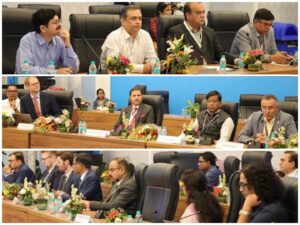
The event was attended by the Union education minister, the Delhi education minister, the vice-chancellor of the University of Delhi, senior officials, faculty members and students.