MeitY, IndiaAI, Assam government and IIT Guwahati host Human Capital Working Group meeting
Deliberations to shape education reform, workforce transition and inclusive AI strategies ahead of India AI Impact Summit 2026 Guwahati, January 6: The Ministry of Electronics and Information Technology, the IndiaAI

The meeting, being held on January 5–6 and chaired by TG Sitharam, is a thematic precursor to the India AI Impact Summit 2026, scheduled in New Delhi from February 15–20, and is expected to inform national-level policy outcomes.

Deliberations to shape education reform, workforce transition and inclusive AI strategies ahead of India AI Impact Summit 2026
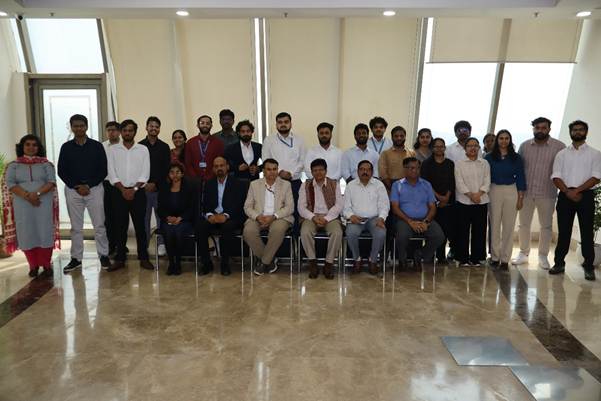
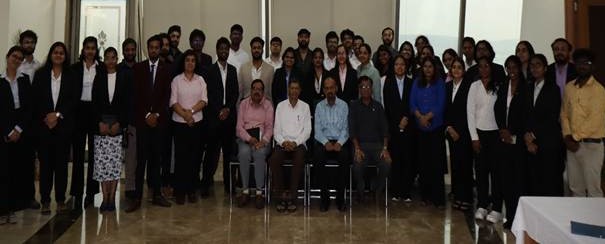
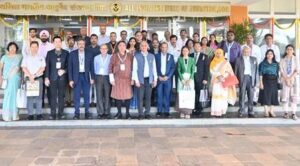
Guwahati, January 6: The Ministry of Electronics and Information Technology, the IndiaAI Mission, the Government of Assam and IIT Guwahati are hosting a two-day Human Capital Working Group Meeting at the IIT Guwahati campus, bringing together senior policymakers, academic leaders, industry experts and practitioners to advance national deliberations on education reform, workforce transition and inclusive, human-centric adoption of artificial intelligence.
The meeting, being held on January 5–6 and chaired by TG Sitharam, is a thematic precursor to the India AI Impact Summit 2026, scheduled in New Delhi from February 15–20, and is expected to inform national-level policy outcomes.
Human capital at the core of India’s AI journey
The opening session featured addresses by Syedain Abbasi, KS Gopinath Narayan, Sitharam, Devendra Jalihal and Shikha Dahiya. Speakers emphasised the centrality of human capital in India’s AI trajectory and called for a shift beyond conventional skilling models towards lifelong learning, human augmentation and institutional readiness.
Welcoming participants, Jalihal said IIT Guwahati is committed to serving as a convening platform at the intersection of technology, education and society, noting strong student participation as a signal of growing interest in inclusive AI ecosystems.
Dahiya outlined the vision of the India AI Impact Summit 2026, highlighting its focus on democratising AI resources and enabling inclusive, responsible adoption, particularly for the Global South. She said outcomes from the Guwahati deliberations would directly inform global-level discussions at the Summit, aligning initiatives across compute capacity, indigenous datasets and models, and nationwide AI skilling.
Inclusive transition, lifelong learning
Sitharam said the transition to an AI-enabled economy must be people-centric, stressing the need to move from fragmented skilling efforts to lifelong learning ecosystems that prioritise adaptability, judgement and human-centred capabilities alongside technical skills.
Gopinath Narayan highlighted AI as a structural shift with far-reaching implications for economies and societies, underscoring the importance of prioritising human augmentation over automation and calling for continuous learning, micro-skilling and AI literacy as essential public capabilities.
Abbasi cautioned that while AI hype echoes past technology cycles, the current phase is different as AI increasingly functions as an autonomous agent. He warned against concentration of AI capabilities among a few global players and called for indigenous compute capacity, strong public–private collaboration and differentiated skilling pathways to protect India’s employment base.
Panels on gender and education reform
Day 1 featured a keynote on “Democratizing Competency in the Age of AI” by Gautam Barua, examining the shift from expert-centric education systems to large-scale human augmentation through domain-specific AI tools, with emphasis on transition security and social protection.
A panel on “Gender-Responsive Strategies for the AI Transition,” moderated by Arpitha Desai, discussed risks such as automation of entry-level roles, widening wage gaps, algorithmic bias and unequal access to AI skilling. Panellists included Tulika Pandey, Sanjay Kukreja, Urmi Tat, Tanu M. Goyal, Dhruba Kumar Bhattacharyya and Ratnajit Bhattacharjee.
Another panel on “Redefining Education for the Cognitive Age,” moderated by Subhodeep Jash, explored shifts from rote learning to cognitive, process-oriented education, the role of AI in personalising learning and reducing teacher workload, and closer alignment between education systems and industry needs. Speakers included Venkatesh Reddy Mallapu Reddy, Siddhant Sachdeva, Parminder Singh Kakria, Anupam Basu and Shyamanta M. Hazarika.
Roadmap to India AI Impact Summit 2026
The meeting will continue on January 6 with focused deliberations on education reform, workforce transition, lifelong learning systems and gender-responsive strategies, culminating in a consolidated set of recommendations to inform national policy outcomes.
As a thematic lead-up to the India AI Impact Summit 2026 in New Delhi, the Guwahati convening reinforces the Government of India’s commitment to building inclusive, human-centric AI ecosystems under the IndiaAI Mission, aligning regional perspectives with national priorities for Viksit Bharat 2047.