Modi calls for global framework against cyber fraud and deepfakes at India Mobile Congress 2026
Opening the 10th edition in New Delhi, the Prime Minister urged stronger phone and network security, greater domestic ownership of telecom technology and wider access to digital services.
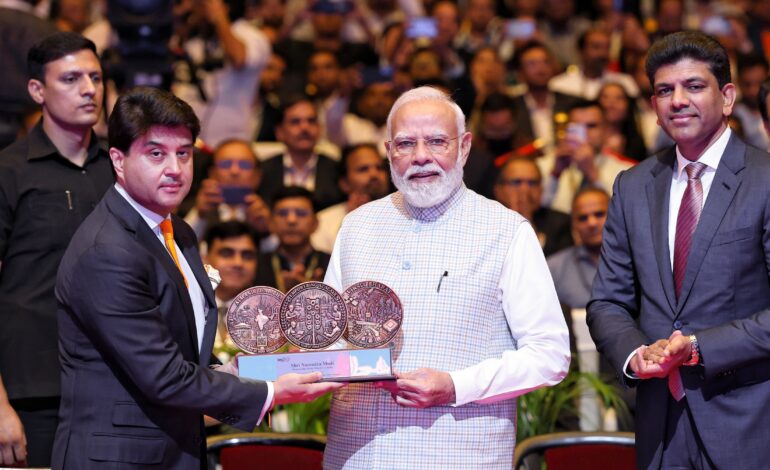
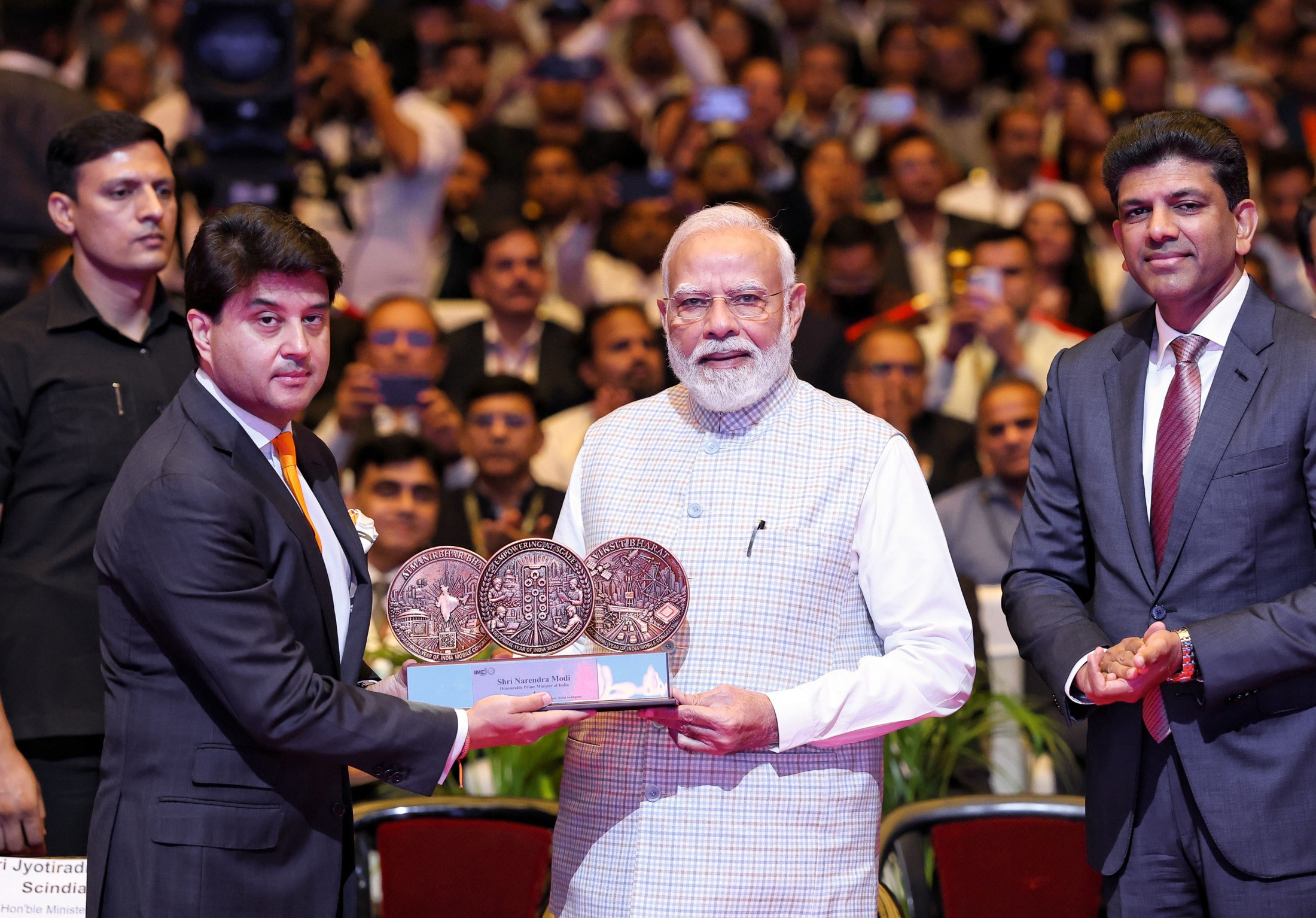
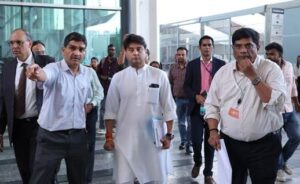
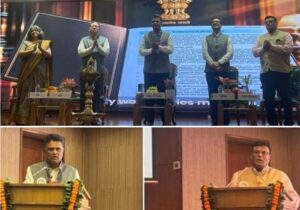
Prime Minister Narendra Modi with Union Minister Communications Jyotiraditya Scindia and MoS Chandrasekhar Pemmasani at the inaugural of Indian Mobile Congress 2026 in New Delhi on Thursday.

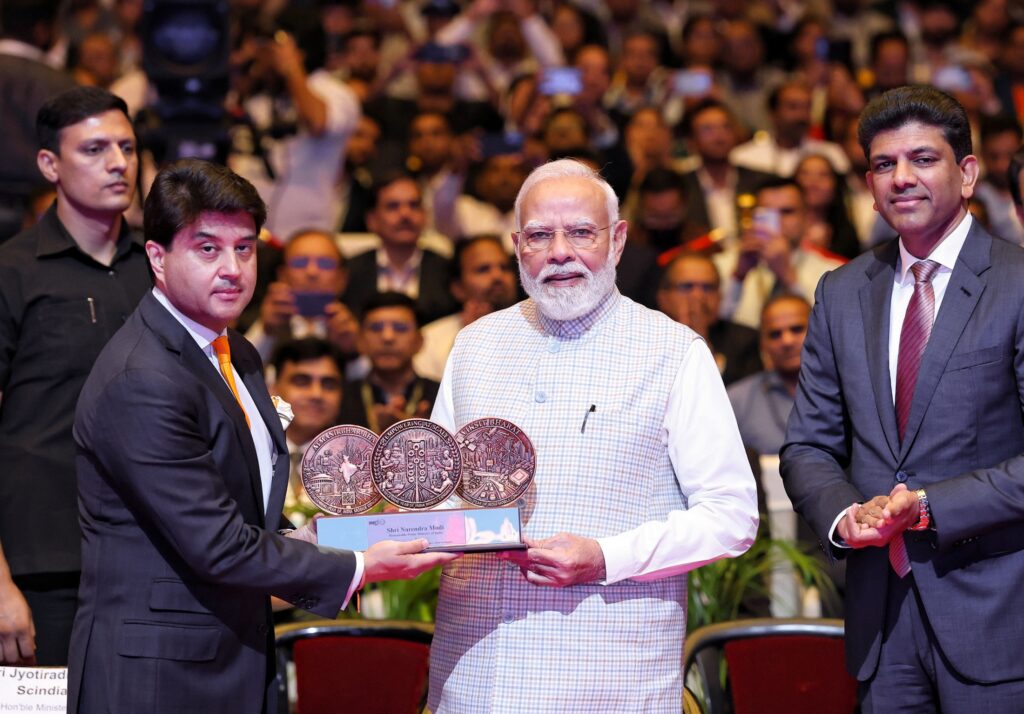
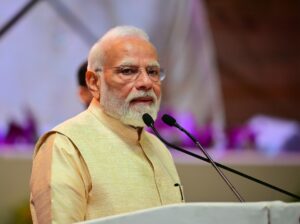
NEW DELHI: Prime Minister Narendra Modi called for a coordinated global framework to tackle cyber fraud and deepfakes while inaugurating the 10th India Mobile Congress at Yashobhoomi on Thursday, October 8.
Addressing telecom operators, industry leaders, academics and startups, Modi said governments, technology companies, operators and financial institutions needed to work together against digital threats, according to a statement issued by the Press Information Bureau.
He urged the GSMA to help develop mechanisms that could prevent fraud before it reaches users. Security and trust, he said, were essential to the expansion of digital services, particularly when people make payments, receive messages or share personal information.
Highlighting India’s telecom expansion, Modi said 5G connectivity had reached every district through more than 5.5 lakh base stations. He recalled the launch of 5G services at the congress in 2022 and said internet speeds had increased tenfold.
The Prime Minister described mobile connectivity as a central element of Digital India, enabling access to government services, banking, healthcare and education while reducing travel, waiting time and costs.
He said direct benefit transfers had delivered more than ₹50 lakh crore to beneficiaries and prevented leakage of ₹5 lakh crore. Transfers under PM-Kisan had exceeded ₹4 lakh crore, he added.
On digital education, Modi said the DIKSHA platform had supported more than five billion learning sessions and 60 billion learning minutes during the pandemic period up to July 2022. The government’s effort, he said, was to connect about 25 crore students with digital and online education platforms.
He also highlighted the growth of gaming and content creation, saying more than 50 crore people were participating in the gaming ecosystem. Affordable data and wider connectivity had created opportunities for esports players, regional content creators and entrepreneurs, including in smaller cities.
Modi said India’s next goal was to ensure that telecom products, designs, underlying technologies and intellectual property were developed and owned domestically. He cited the Telecommunications Act, the GatiShakti portal and manufacturing incentives as measures supporting that transition.
He said commercial semiconductor production had begun at five locations and that the next phase of the India Semiconductor Mission would focus on strengthening the domestic supply chain.
The congress, themed “Scale without boundaries”, is also hosting a GSMA Board meeting. Modi urged participants to use the platform to build research collaborations and partnerships that support India’s development goals.