NITI Aayog launches leadership workshop series to turn PM Modi’s 25-year governance experience into civil service learning material
The five-workshop initiative will convert first-hand accounts of major governance decisions into case studies and training resources for civil servants, universities and administrative institutions, with proceedings streamed on iGOT Karmayogi.
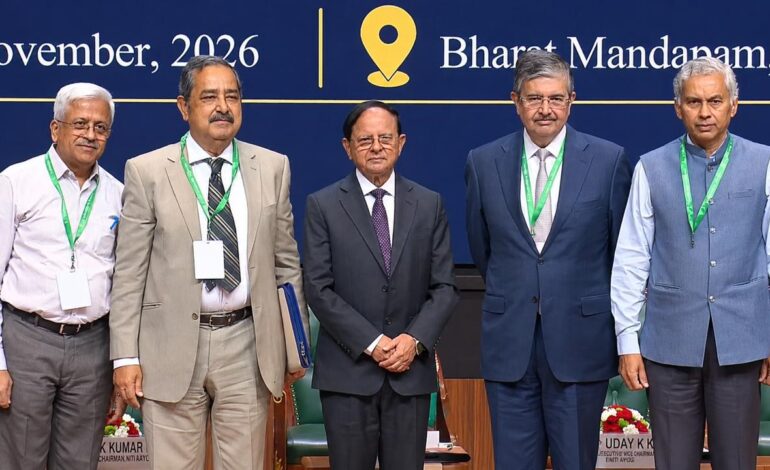
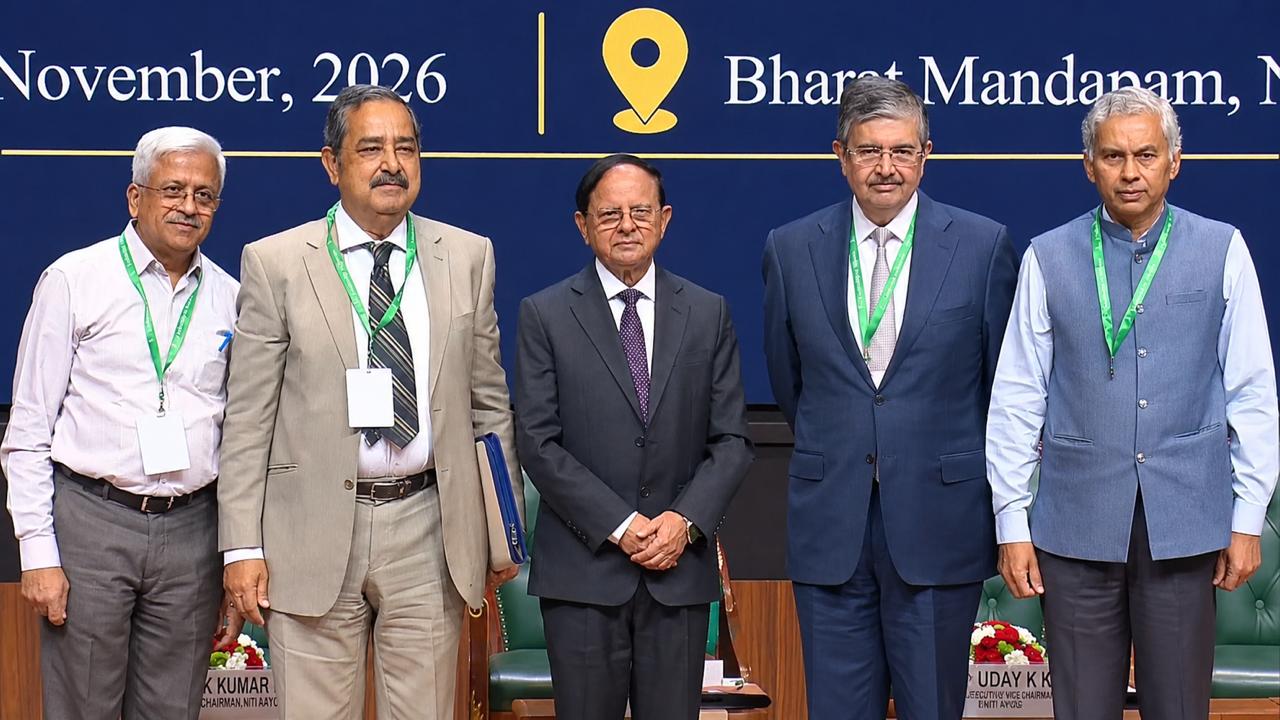
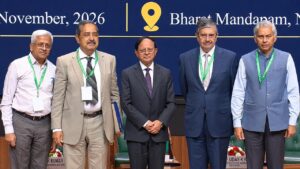
The first National Workshop on “Leadership as a Mission” was held at Bharat Mandapam, New Delhi, on November 17.

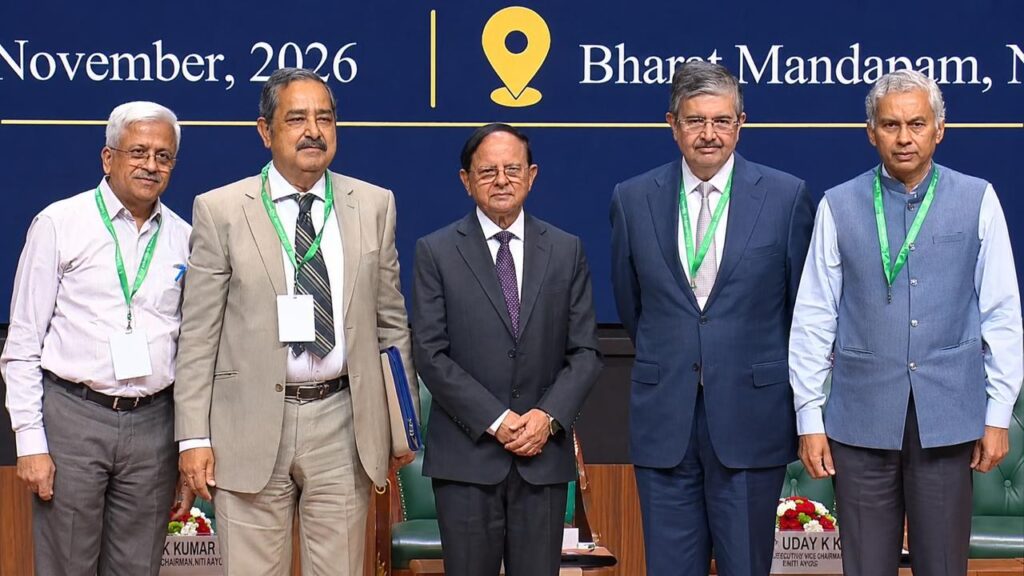
NEW DELHI: NITI Aayog has launched a national workshop series to document governance experiences and leadership decisions over the past 25 years and translate them into structured learning material for civil servants, universities and public administration institutions.
The first National Workshop on “Leadership as a Mission” was held at Bharat Mandapam, New Delhi, on November 17, bringing together more than 900 participants, including senior Union and State government officials, district collectors, university students, community representatives and beneficiaries of government programmes.
The initiative is based on the governance experience of Prime Minister Narendra Modi, who became Chief Minister of Gujarat in October 2001 and Prime Minister in May 2014. The series seeks to examine leadership decisions and their administrative and institutional outcomes across the two levels of government.
The workshop is the first in a planned series of five national programmes. The deliberations and first-hand accounts will be developed into case studies and learning resources for civil services training institutes, educational institutions and universities.
Governance experience to become institutional knowledge
Addressing the inaugural session, Principal Secretary to the Prime Minister P. K. Mishra said India’s governance journey included several milestones demonstrating how political leadership and responsive administration could translate policy vision into implementation.
He cited the reconstruction of Kutch following the 2001 earthquake, India’s response to the COVID-19 pandemic, developments in the space sector and the Lakhpati Didi initiative as examples of mission-driven governance.
NITI Aayog CEO Anurag Jain said the objective was to document the lessons from 25 years of leadership and convert them into institutional knowledge for the future.
He outlined four principles emerging from the leadership journey: prioritising purpose over hierarchical position, placing service above command, building resilience through conviction and ensuring that empowerment continues through strong institutions, capable teams and sustainable systems.
NITI Aayog Vice Chairman Ashok Kumar Lahiri highlighted the importance of political and administrative leadership in India’s development ambitions. He also referred to the organisation’s roadmap for a USD 30–40 trillion economy by 2047, with a projected per capita income of USD 15,000–18,000.
Five-stage approach to leadership learning
NITI Aayog Member R. Balasubramaniam explained that the workshop was structured around five stages: Learn, Analyse, Reflect, Apply and Commit.
Participants examined significant governance decisions through first-hand accounts, analysed their implications in discussions involving government officials, academics and citizens, and considered how the lessons could be applied to their own administrative responsibilities.
The objective is to develop an Indian body of knowledge on public leadership, drawing on domestic governance experiences and institutional practices.
Case studies to be hosted on iGOT Karmayogi
A key component of the initiative is the conversion of workshop discussions into structured case studies.
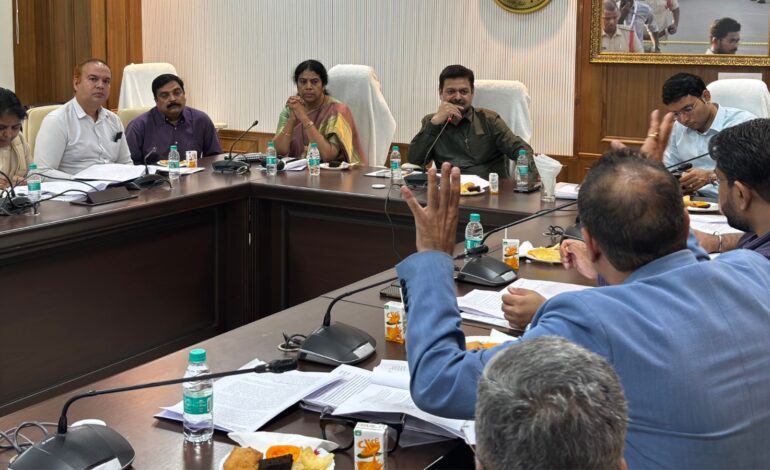
During the Case Clinic, groups comprising government officers, community representatives and students examined specific governance decisions. Each group was guided by a case writer trained under the Capacity Building Commission’s Amrit Gyaan Kosh initiative.
The Capacity Building Commission will develop the group discussions and first-hand accounts into case studies and make them available through the iGOT Karmayogi platform for use by civil servants, training institutions and universities.
The workshop proceedings were also streamed on iGOT Karmayogi and at Central and State Administrative Training Institutes, enabling officers across the country to participate.
Four governance experiences examined
The Leadership Moments session featured presentations on four major governance experiences.
Rajeev Topno, Additional Chief Secretary and Principal Secretary, Health and Family Welfare Department, Gujarat, discussed the reconstruction of Kutch after the 2001 earthquake, highlighting public participation, institutional strength and coordinated government action.
Former Union Health Secretary Preeti Sudan discussed India’s COVID-19 response, focusing on inter-governmental coordination, technology-enabled interventions, public participation and the Vaccine Maitri initiative.
Former Rural Development Secretary Shailesh Kumar Singh examined the Lakhpati Didi initiative and its emphasis on women’s economic independence, entrepreneurship and social recognition.
Former ISRO Chairman S. Somanath discussed the opening up of the space sector to private participation through changes in foreign direct investment norms and the role of ISRO in enabling private-sector access to expertise and infrastructure.
The workshop also featured a panel discussion on “Leadership for Viksit Bharat” and an application clinic. Cabinet Secretary T. V. Somanathan was scheduled to launch the Karmayogi Sankalpa and deliver the closing remarks.
Through the five-workshop series, NITI Aayog aims to carry the learning from these governance experiences into research, teaching and administrative training as India works towards the Viksit Bharat 2047 goal.