
India modernises official statistics system with AI, digital surveys and open data platforms
The National Statistical Office has expanded the use of AI-enabled digital platforms to improve the quality, speed and accessibility of official statistics, with the eSankhyiki portal now hosting 137 million
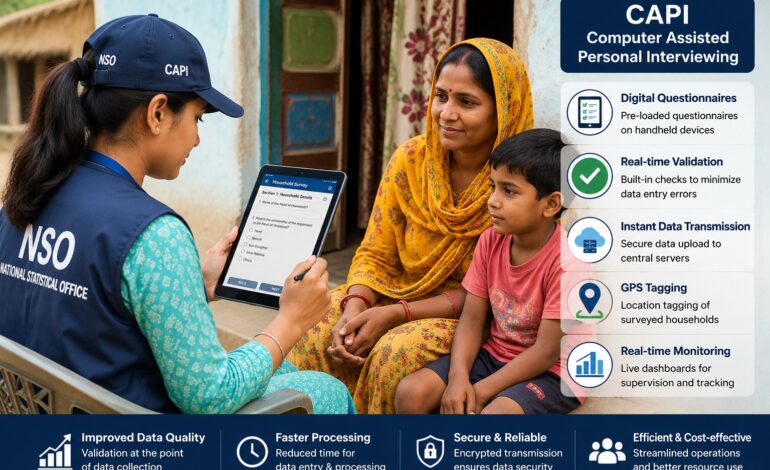
Enumerators now use handheld digital devices equipped with built-in validation checks, while survey operations are supported through centralised servers, GPS tagging of surveyed households, secure electronic data transmission and real-time monitoring dashboards.

NEW DELHI: The National Statistical Office (NSO) under the Ministry of Statistics and Programme Implementation (MoSPI) has significantly modernised India’s official statistical system by adopting digital technologies, integrating administrative databases and expanding public access to government data through advanced online platforms.
In a written reply to the Rajya Sabha on Monday, Minister of State (Independent Charge) for Statistics and Programme Implementation Rao Inderjit Singh said the ministry has introduced several technology-driven initiatives to improve the quality, reliability and timeliness of official statistics.
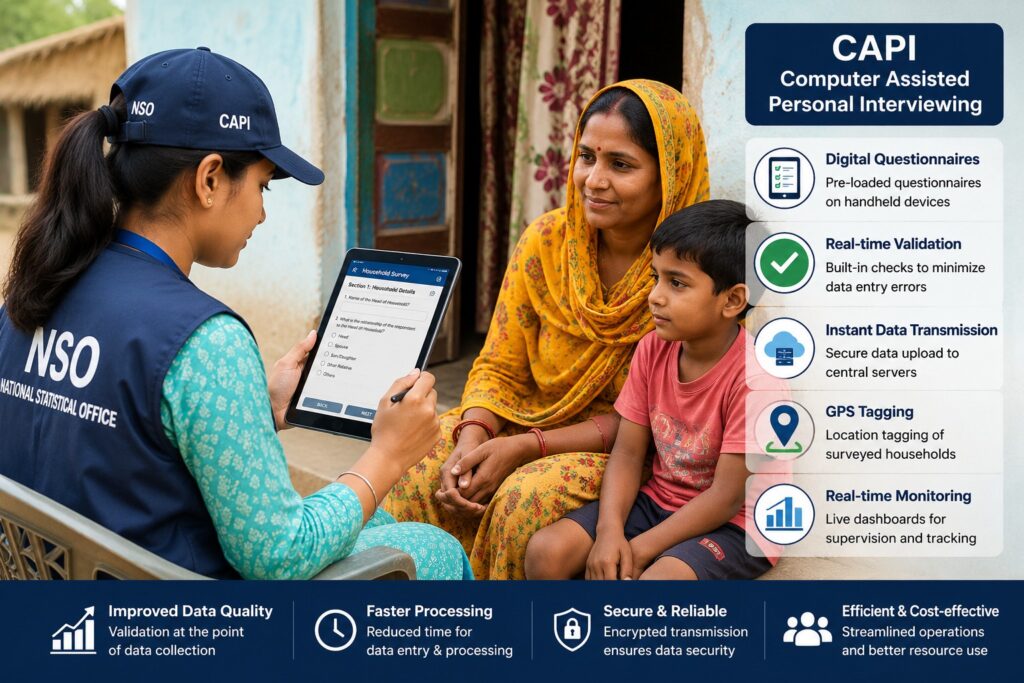
A key reform has been the adoption of Computer Assisted Personal Interviewing (CAPI) for field surveys. Enumerators now use handheld digital devices equipped with built-in validation checks, while survey operations are supported through centralised servers, GPS tagging of surveyed households, secure electronic data transmission and real-time monitoring dashboards. Various stages of survey administration, including sample selection, field monitoring, validation and data processing, have also been automated, reducing processing time and improving data quality.
The NSO is also increasingly integrating administrative databases with sample surveys to strengthen statistical outputs. The Goods and Services Tax Network (GSTN) database is now used as the sampling frame for the Annual Survey of Incorporated Services Sector Enterprises, while the Annual Survey of Industries draws upon records maintained by factory inspectorates and statutory registration authorities. Similarly, the Ministry of Corporate Affairs database supports the Forward Looking Survey of Private Corporate Sector CAPEX Investment Intentions.
To strengthen quality assurance, MoSPI has developed the Statistical Quality Assessment Framework (SQAF) based on the United Nations National Quality Assurance Framework (UN NQAF) 2019. The framework aims to ensure official statistics adhere to internationally accepted principles of quality, reliability, efficiency and accountability.
The ministry has also introduced the National Metadata Structure (NMDS 2.0) to standardise how government datasets are documented and shared across Ministries, Departments and States. A dedicated Metadata Web Portal has been launched to improve discoverability of official datasets, while a Compendium of Datasets and Registries covering 287 datasets from 43 Ministries and Departments has been published to facilitate wider data use.
Public access to official statistics has also been substantially expanded through digital platforms. The eSankhyiki Portal now serves as a unified repository hosting 29 statistical products, 913 datasets and more than 137 million records, supported by application programming interfaces (APIs), interactive visualisations and metadata. The revamped Microdata Portal provides researchers access to anonymised unit-level data from over 189 socio-economic surveys.
In addition, MoSPI has modernised its official website with AI-enabled features and interactive dashboards and launched the GoIStat Mobile App to make official statistics more accessible. The ministry also disseminates statistical information through newspapers, television, radio, social media, podcasts on Sansad TV, MyGov, explanatory videos, infographics, exhibitions and other multimedia platforms to improve public engagement and data literacy.
The government said these initiatives are aimed at building a modern, transparent and technology-driven statistical ecosystem that supports evidence-based policymaking while making official data more accessible to researchers, businesses, policymakers and citizens.