IICA conference calls for ESG-led business transformation to strengthen India’s global competitiveness
Industry leaders, regulators and sustainability experts urged companies to embed ESG into boardroom strategy, strengthen sustainability disclosures and leverage AI to build resilient, globally competitive businesses.
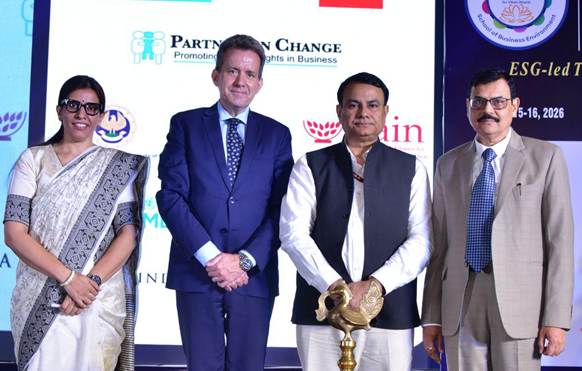
Organised by the School of Business Environment of IICA under the Ministry of Corporate Affairs, the two-day conference is themed "ESG-led Transformation for Viksit Bharat" and focuses on strengthening responsible business practices as India pursues its goal of becoming a developed economy by 2047.

NEW DELHI: The Indian Institute of Corporate Affairs (IICA) on Friday called for Environmental, Social and Governance (ESG)-led responsible business conduct to become a key driver of India’s economic competitiveness, as policymakers, regulators and industry leaders deliberated on integrating sustainability into corporate strategy at the fourth National Conference on Responsible Business Conduct (NCRBC) 2026.
Organised by the School of Business Environment of IICA under the Ministry of Corporate Affairs, the two-day conference is themed “ESG-led Transformation for Viksit Bharat” and focuses on strengthening responsible business practices as India pursues its goal of becoming a developed economy by 2047.
Addressing the inaugural session, National Financial Reporting Authority (NFRA) Chairperson Nitin Gupta said India has made significant progress in sustainability disclosures and should now focus on improving their quality, reliability and usefulness for decision-making. He stressed that sustainability reporting should be supported by robust methodologies, reliable data systems and effective internal controls, and be subjected to the same rigour as financial reporting and auditing.
Gupta also called for a pragmatic approach to sustainability reporting while leveraging technology and strengthening institutional capacity, particularly across value chains and among micro, small and medium enterprises (MSMEs).
IICA Director General and CEO Gyaneshwar Kumar Singh said India’s aspiration to become a USD 30 trillion economy requires ESG principles to evolve beyond regulatory compliance and become an integral part of the country’s economic development strategy. He said India’s sustainability journey is moving from “ESG 1.0” to “ESG 2.0”, where sustainability becomes a strategic driver of enterprise value, risk management and business resilience.
Singh highlighted the need to integrate sustainability into board-level decision-making, strengthen legal and regulatory frameworks for sustainability data assurance to address greenwashing risks, and use emerging technologies such as Artificial Intelligence to improve the quality and transparency of ESG data.
UNICEF India Deputy Representative (Programmes) Jesper Moller said child rights should be integrated into business strategy rather than treated as a philanthropic initiative, while ACCA Chief Executive Helen Brand said sustainability and social impact are becoming increasingly important considerations for professionals when choosing employers.
A high-level panel on ESG governance discussed India’s evolving sustainability framework, with SEBI Whole-Time Member Amarjeet Singh advocating a calibrated approach to global ESG standards suited to India’s stage of development. ONGC Chairman Arun Kumar Singh called for regulators to encourage companies to pursue ambitious sustainability goals, while CEEW Chief Executive Arunabha Ghosh highlighted the estimated USD 4 trillion investment opportunity in India’s green economy.
National Stock Exchange Senior Advisor Shailesh Pathak underscored the role of trust in attracting long-term capital, while ICAI Sustainability Reporting Standards Board Chairman CA Pramod Jain said India’s decision to make ESG assurance mandatory has strengthened the credibility of corporate sustainability disclosures.
The conference brought together more than 350 corporate leaders, policymakers, ESG professionals and international delegates. Discussions on the second day will focus on sector-specific ESG guidelines, responsible value chains, ESG adoption among MSMEs and strengthening environmental reporting frameworks.