DoT, TSDSI sign MoU to strengthen India’s role in global telecom standards
The collaboration will be implemented under the Technology Development and Investment Promotion (TDIP) Scheme and aims to increase India's contribution to global Standards Development Organizations (SDOs)...
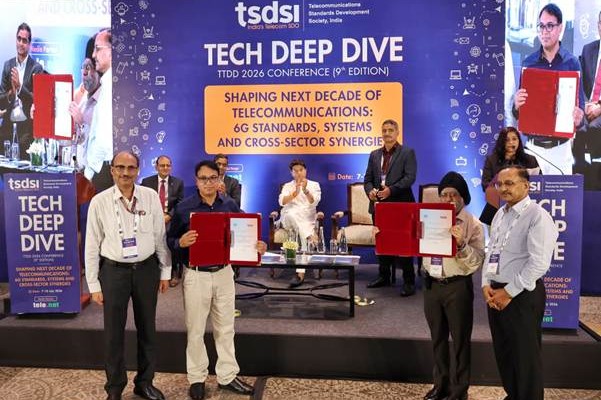
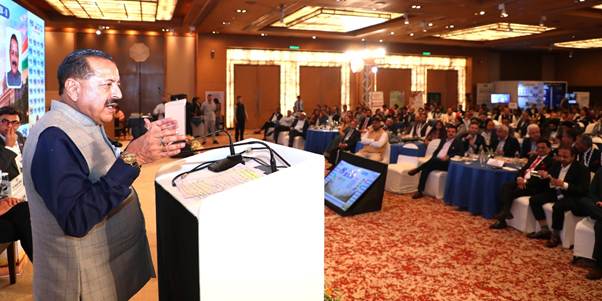
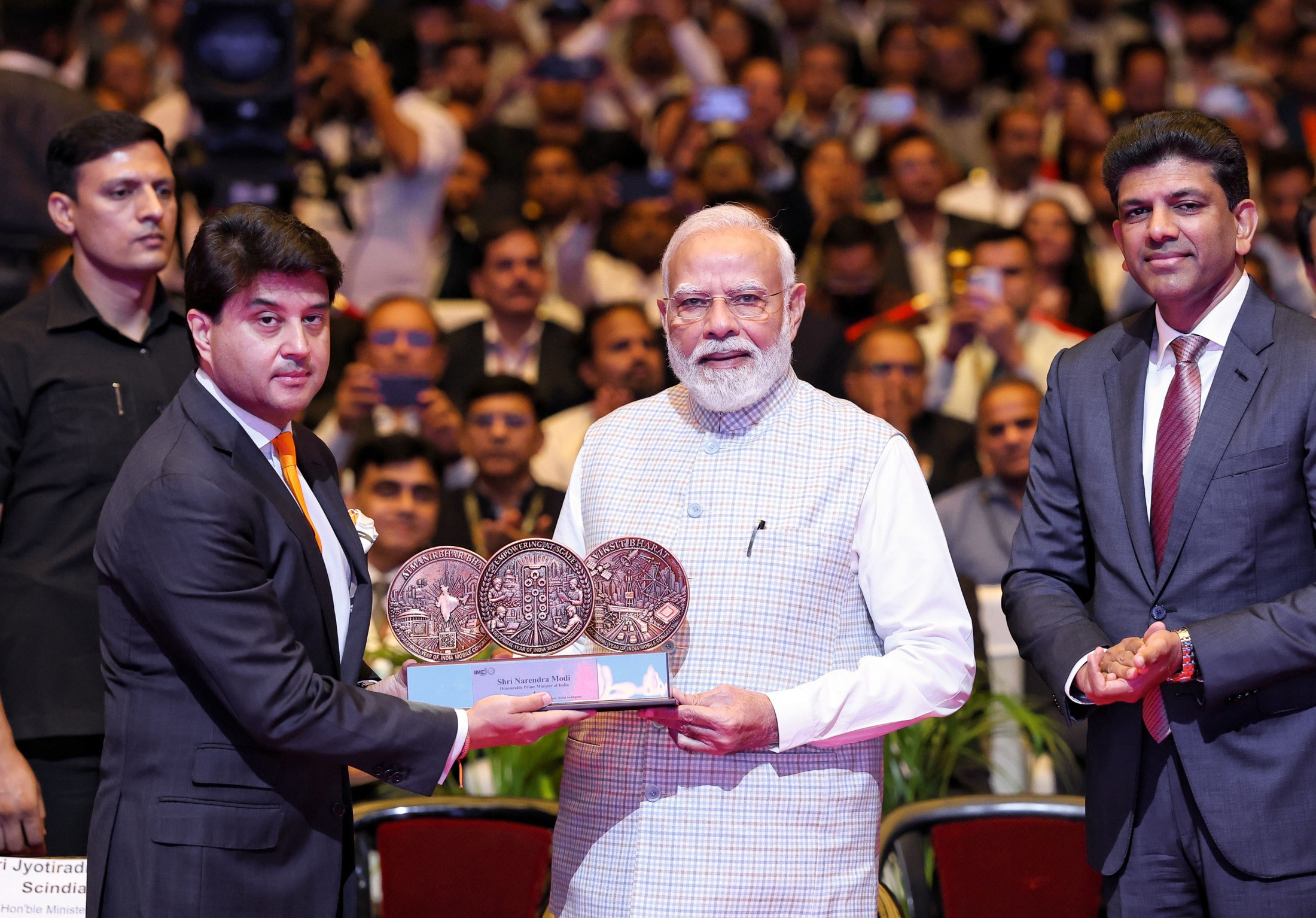
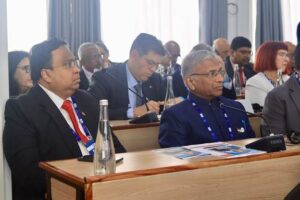
The agreement was signed during the 9th TSDSI Technical Deep Dive (TTDD) 2026 in the presence of Communications Minister Jyotiraditya M. Scindia.

New Delhi: The Department of Telecommunications (DoT) has signed a memorandum of understanding (MoU) with the Telecommunications Standards Development Society, India (TSDSI) to strengthen India’s participation in global telecom standardisation and support indigenous innovation under the Bharat 6G Mission.
The agreement was signed during the 9th TSDSI Technical Deep Dive (TTDD) 2026 in the presence of Communications Minister Jyotiraditya M. Scindia.
The collaboration will be implemented under the Technology Development and Investment Promotion (TDIP) Scheme and aims to increase India’s contribution to global Standards Development Organizations (SDOs), promote indigenous technologies, and enhance the participation of Indian startups and MSMEs in international telecom standards development.
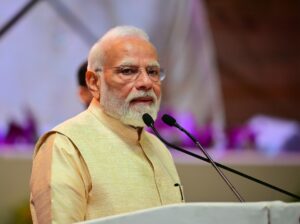
Speaking at the event, Scindia said telecommunications has transformed human civilisation by expanding the boundaries of human possibilities and enabling unprecedented connectivity. He said India has emerged as a global centre for emerging technologies and is contributing to the evolution of future communication technologies.
Under the MoU, eligible startups and MSMEs will receive financial support to participate in international standards bodies such as the 3rd Generation Partnership Project (3GPP), the International Telecommunication Union (ITU) and oneM2M.
The scheme provides up to 98 per cent support towards TSDSI membership fees for eligible DPIIT-recognised startups and MSMEs with annual turnover up to ₹10 crore, while eligible MSMEs with turnover between ₹10 crore and ₹500 crore can receive up to 80 per cent support.
The MoU also extends similar support for 3GPP Individual Membership fees, enabling Indian innovators to contribute directly to the development of global 5G Advanced and 6G standards.
To encourage greater international participation, the Department will provide travel assistance of up to 80 per cent of eligible expenditure, subject to a ceiling of ₹5 lakh per person per international standards meeting, for startups and MSMEs presenting Indian technical contributions.
The partnership also includes support for hosting major international telecom standards meetings such as 3GPP and oneM2M conferences in India, with the objective of increasing participation from Indian academia, startups and industry while positioning the country as a preferred destination for global telecom standardisation discussions.
In addition, financial assistance will be provided to support TSDSI’s membership in key international organisations, including ITU and oneM2M, ensuring sustained Indian engagement in global standards development.
The Department of Telecommunications said the initiative is expected to accelerate the development of indigenous intellectual property, strengthen innovation-led manufacturing, and enhance India’s contribution to next-generation telecom technologies aligned with the Bharat 6G Mission.
TSDSI serves as India’s telecom standards development organisation and is an organisational partner of 3GPP and oneM2M, besides being a sector member of ITU.
The initiative is supported through the Technology Development and Investment Promotion (TDIP) Scheme, which has a financial outlay of ₹203 crore for the period 2026-31. The scheme is designed to support startups, MSMEs, academia, industry and standards organisations in technology development, testing, certification, commercialisation and participation in global standards-setting bodies, with a focus on 5G Advanced and 6G technologies.