India Records 181 Million International Arrivals in a Decade as Tourism Emerges as Key Growth Engine
Government's infrastructure push, digital reforms and destination development fuel tourism-led economic growth; WTTC projects India to become the world's fourth-largest tourism economy over the next decade
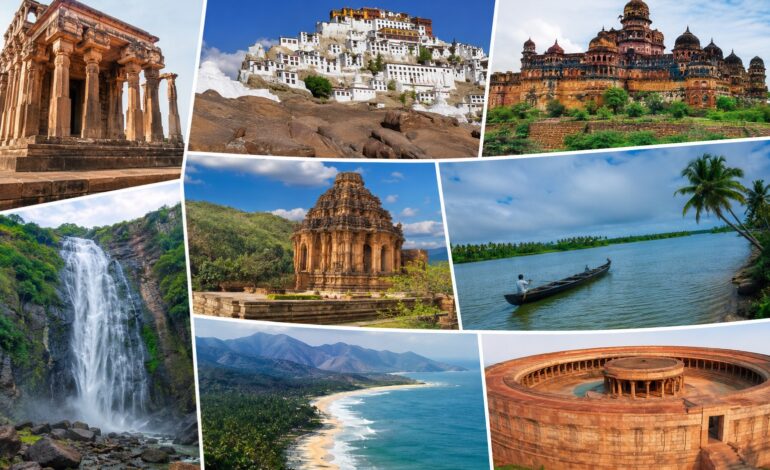
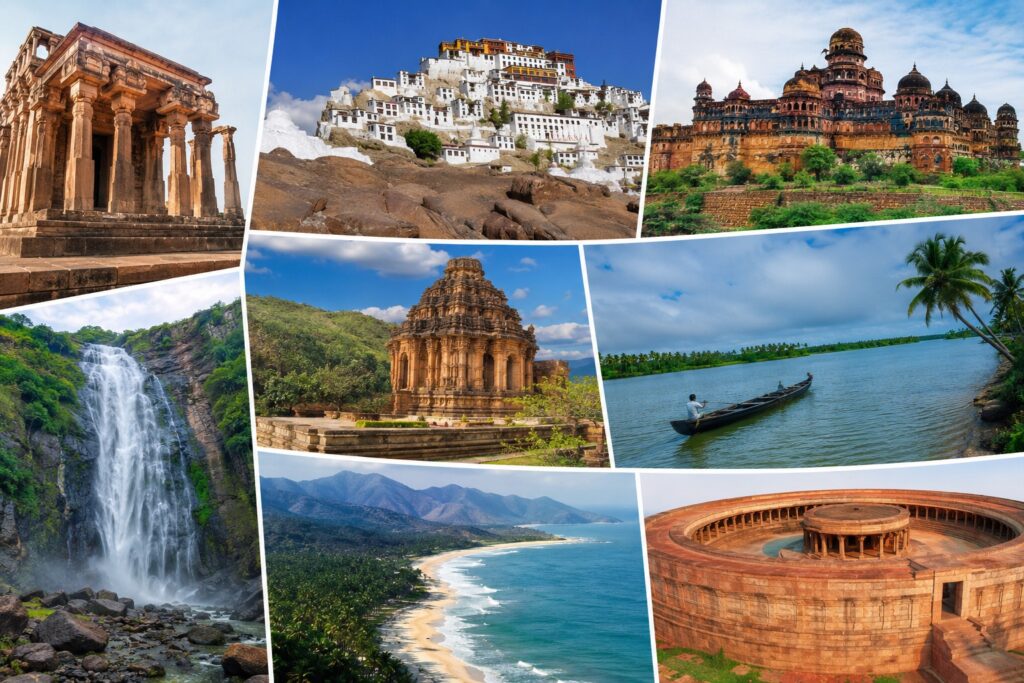
From ancient monuments and spiritual landmarks to scenic backwaters and breathtaking landscapes, India's diverse tourism destinations continue to drive economic growth and cultural exchange.

New Delhi: India’s tourism sector has undergone a significant transformation over the past decade, with improved infrastructure, digital reforms and destination-focused development helping position the country as one of the world’s fastest-growing tourism economies.
A government background paper released on Thursday shows that India recorded 181.25 million international arrivals and 93.35 million foreign tourist arrivals between 2014 and 2025, reflecting the sector’s growing contribution to economic growth, employment generation and regional development. The period also witnessed approximately 2,277 crore domestic tourist visits, while tourism generated ₹21.61 lakh crore in foreign exchange earnings, underlining its importance to the national economy.
Infrastructure-led Tourism Growth
The report attributes much of the sector’s momentum to large-scale investments in tourism infrastructure through flagship schemes such as Swadesh Darshan, PRASHAD, and the Special Assistance to States for Capital Investment (SASCI).
Under the first phase of Swadesh Darshan, 76 projects worth more than ₹5,000 crore were sanctioned across 15 tourism circuits, with 75 projects already completed. The upgraded Swadesh Darshan 2.0 programme has shifted its focus towards sustainable and experience-based tourism, including projects such as floating log huts around Tehri Lake in Uttarakhand and immersive heritage attractions in Kurukshetra.
The PRASHAD scheme has similarly strengthened India’s spiritual tourism landscape by sanctioning 54 projects worth over ₹1,700 crore, improving infrastructure at major pilgrimage destinations including Somnath, Srisailam and Govardhan.
Complementing these initiatives, the SASCI programme has approved 40 tourism projects across 23 states with an investment of ₹3,295.76 crore, aimed at developing iconic destinations to global standards.
Sustainability Takes Centre Stage
As tourist numbers continue to rise, the government is increasingly focusing on sustainable tourism to balance economic growth with environmental conservation.
The report highlights initiatives such as Himalayan trekking routes, birdwatching circuits, turtle tourism and the Travel for LiFE campaign that promote environmentally responsible travel.
India has also achieved international recognition in sustainable destination management, with Mamallapuram becoming the first UNESCO World Heritage Site in South Asia to receive the Green Destinations Silver Certification. Additionally, 38 eco-tourism and spiritual tourism projects worth ₹697.94 crore have been sanctioned under the Challenge-Based Destination Development initiative.
Digital Transformation Enhances Visitor Experience
Digital technologies have become a key enabler of tourism growth, making travel planning and visitor services more seamless.
The expansion of the e-Tourist Visa system now covers 175 countries, while digital platforms such as NIDHI and NIDHI Plus have streamlined registration processes for hotels, accommodation providers and travel operators, improving transparency and ease of doing business.
India’s international competitiveness has also improved. In 2024, the country recorded 20.6 million international arrivals, moving to 20th place globally, compared with 25th in 2016. The country’s position in the Travel & Tourism Development Index has climbed from 65th in 2013 to 39th in 2024.
Tourism Powers Employment and Local Economies
Beyond attracting visitors, tourism continues to support millions of livelihoods across hospitality, transport, handicrafts, food services and local enterprises.
More than 4.5 lakh people were trained under the Capacity Building for Service Providers programme between 2014 and 2025. The Union Budget 2026-27 has proposed establishing a National Institute of Hospitality and training 10,000 tourist guides at major destinations to further strengthen the sector’s workforce.
Improved highways, modern airports, Vande Bharat trains, UDAN connectivity and railway modernisation have also enhanced accessibility, enabling tourism-led economic opportunities to reach smaller towns and emerging destinations.
Towards a Global Tourism Leader
According to the report, India is already the eighth-largest tourism economy globally, contributing approximately US$231.6 billion to the economy. The World Travel & Tourism Council (WTTC) projects that India could become the world’s fourth-largest tourism economy over the next decade.
With plans to upgrade more than 100 destinations and develop 50 iconic tourism centres, India is seeking to position tourism as a cornerstone of its broader vision for inclusive growth, employment generation and regional development while strengthening its global competitiveness.