India Pitches ‘BRICS Space Economy’ as Next Global Growth Engine at Bengaluru Summit
The proposal envisions deeper collaboration in satellite technology, innovation, startups and sustainable space exploration, positioning BRICS nations to jointly drive the next phase of the global space economy.
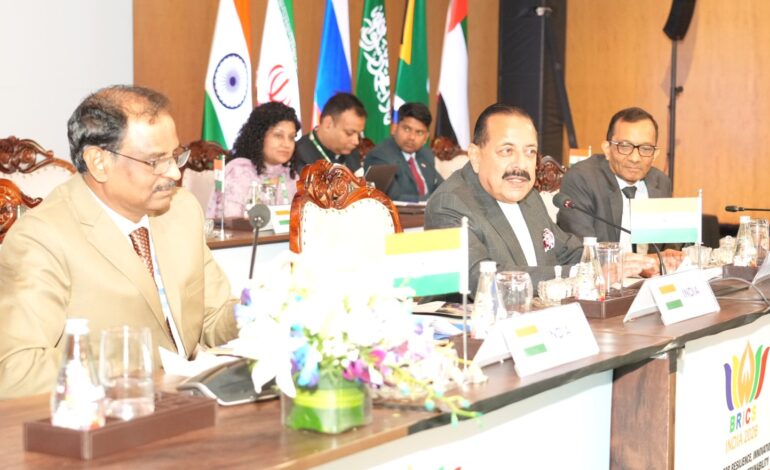
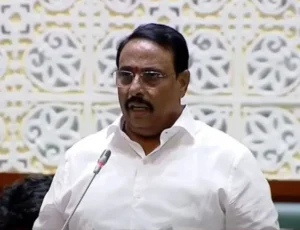
Union Minister Dr Jitendra Singh addresses the valedictory session of the BRICS Heads of Space Agencies (HOSA) Meeting in Bengaluru on Wednesday.

Bengaluru: India has proposed the creation of a collaborative “BRICS Space Economy”, positioning space technology as the next major driver of global economic growth and urging member nations to move beyond traditional cooperation towards joint innovation and industrial partnerships.
Addressing the valedictory session of the BRICS Heads of Space Agencies (HOSA) Meeting in Bengaluru on Wednesday, Union Minister of State (Independent Charge) for Science and Technology and Space, Dr Jitendra Singh, said the rapidly expanding global space economy presents a unique opportunity for BRICS nations to combine their scientific strengths, industrial capabilities and technological expertise.
“The future of the space economy will not be shaped by nations working in isolation. It will be shaped by partnerships, shared innovation and collective ambition,” the Minister said, calling upon BRICS members to emerge as one of the strongest pillars of the evolving global space ecosystem.
Space Economy Emerges as New Growth Frontier
With governments worldwide increasingly viewing space as an economic sector rather than merely a strategic domain, India’s proposal places the BRICS grouping at the centre of a new collaborative growth agenda.
Dr Jitendra Singh said the bloc—which now represents a significant share of the world’s population, economic output and scientific capability—has the potential to unlock new opportunities in innovation, investment, entrepreneurship and sustainable development through deeper cooperation in the space sector.
He stressed that future collaboration should extend beyond government agencies to include startups, private industry, academia and young innovators.
“BRICS nations must move beyond consultation and work towards co-development, co-innovation and co-creation,” he said.
Focus on Sustainability and Shared Infrastructure
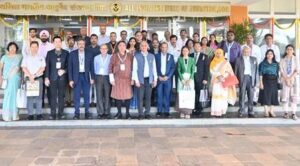
Hosted by the Indian Space Research Organisation (ISRO) under India’s BRICS Chairship 2026, the two-day meeting brought together heads of space agencies and senior officials from Brazil, China, Egypt, Ethiopia, Indonesia, Iran, Russia, South Africa and the United Arab Emirates.
Discussions focused on strengthening cooperation in several emerging areas, including space sustainability, debris-free missions, disaster management, Earth observation, capacity building and the expansion of the BRICS Remote Sensing Satellite Constellation (RSSC).
Delegates also deliberated on the proposed BRICS Space Council, an institutional mechanism aimed at providing greater continuity and strategic direction to long-term cooperation among member countries.
According to the Minister, collaborative satellite infrastructure and data-sharing mechanisms have already demonstrated how joint space programmes can support agriculture, disaster response, environmental monitoring and sustainable development.
India’s Expanding Space Ecosystem on Display
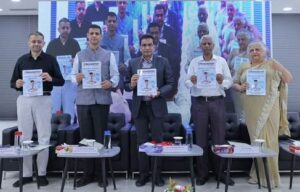
During the meeting, Dr Jitendra Singh released the Indian Space Industry Brochure and interacted with representatives of India’s rapidly growing NewSpace ecosystem, showcasing the country’s expanding private space sector before visiting international delegations.
The event highlighted the increasing role of Indian startups and private enterprises following the government’s reforms that opened the space sector to non-government participation.
Senior officials including ISRO Chairman Dr V. Narayanan and IN-SPACe Chairman Dr. Pawan Goenka participated in the concluding session alongside industry representatives and entrepreneurs.
Leveraging India’s Space Successes
The Minister said India’s recent achievements—including Chandrayaan-3, Aditya-L1, and the ongoing Gaganyaan human spaceflight mission—have strengthened the country’s global standing while creating new opportunities for international collaboration.
He noted that India’s space programme has consistently focused on translating advanced technology into practical public benefits by improving communication, navigation, healthcare, agriculture, education and disaster management.
Building a Sustainable Space Future
As global satellite launches continue to accelerate, Dr. Jitendra Singh emphasised that long-term growth of the space economy must be accompanied by responsible and sustainable use of outer space.
He called for greater international cooperation to tackle challenges such as increasing orbital congestion and space debris, while supporting discussions on debris-free missions and sustainable space operations.
Reaffirming India’s commitment to collaborative leadership, the Minister said the country envisions BRICS space cooperation evolving from coordination to genuine co-creation, enabling member nations to jointly develop technologies that address global challenges while generating new economic opportunities.
The proposal comes at a time when the global space economy is witnessing unprecedented expansion, driven by commercial satellite services, launch capabilities, Earth observation, navigation, communication technologies and private investment—areas where India has rapidly emerged as one of the world’s fastest-growing space economies.