PM Modi Highlights AI and Digital Governance as Pillars of India’s Administrative Future
With AI, digital governance and citizen-centric administration reshaping public service, the Prime Minister challenged the next generation of civil servants to become architects of India's development journey.
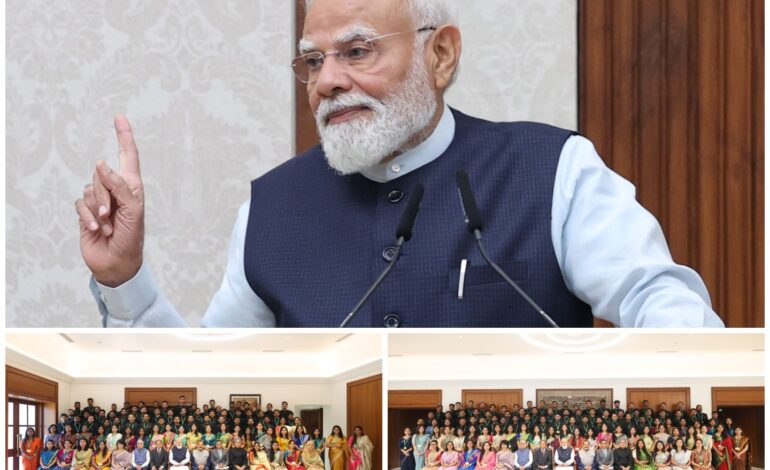
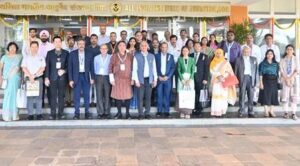
Prime Minister Narendra Modi interacts with 183 IAS officer trainees of the 2024 batch serving as Assistant Secretaries in various ministries and departments during a session at Seva Teerth in New Delhi on Tuesday.

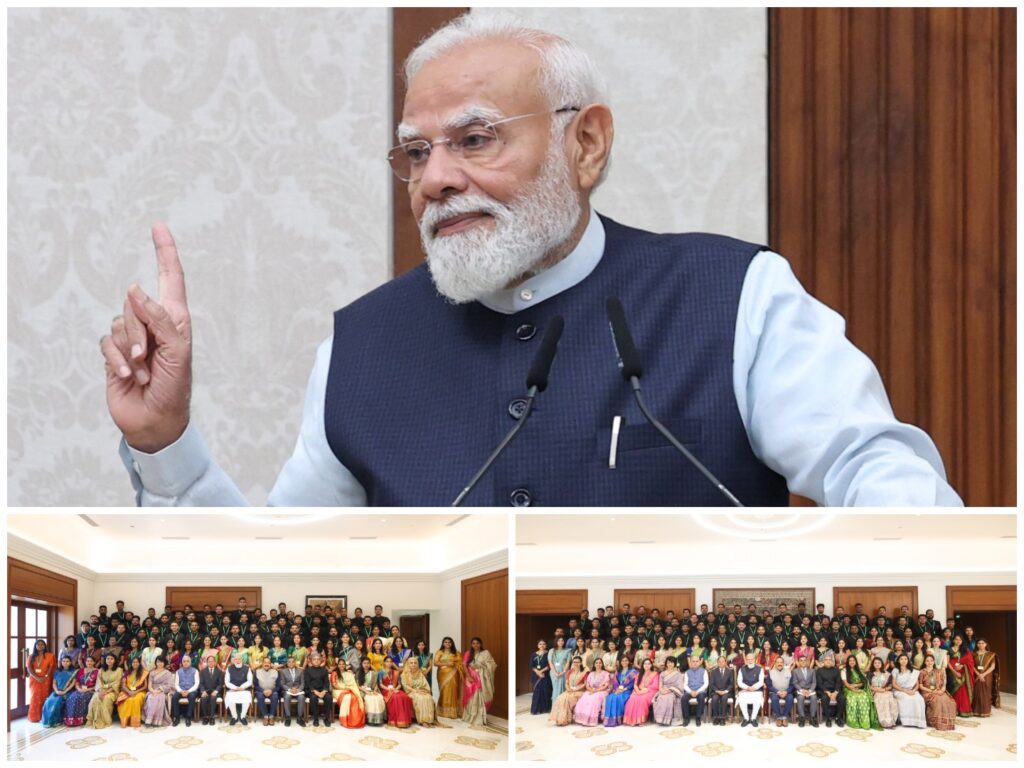
New Delhi: Prime Minister Narendra Modi on Tuesday interacted with 183 IAS officer trainees of the 2024 batch currently serving as Assistant Secretaries in various ministries and departments, urging them to place citizens at the heart of governance and contribute actively to India’s transformation into a developed nation by 2047.
The interaction took place at Seva Teerth in New Delhi, where the young officers shared insights from their field training and experiences gained through their attachments in central government ministries.
Addressing the trainees, the Prime Minister said they were entering a critical phase of public service where their decisions and actions would directly influence the lives of millions of citizens. He emphasized that the true test of administration lies not in handling files but in responding to real-world challenges with integrity, empathy and commitment.
Calling upon the officers to embrace the spirit of “Nagrik Devo Bhava”, he urged them to recognize that every administrative file represents the aspirations, concerns and expectations of citizens. He stressed that governance must remain responsive, inclusive and deeply citizen-centric.
Breaking Silos Through Collaborative Governance
Highlighting the complexity of modern development challenges, the Prime Minister advocated a whole-of-government approach, emphasizing that many issues cannot be effectively addressed by individual departments working in isolation.
He noted that greater coordination among ministries, departments and institutions is essential to deliver sustainable and impactful outcomes. According to him, collaborative governance will play a crucial role in accelerating India’s development agenda.
Civil Servants as Drivers of Viksit Bharat 2047
Referring to the national vision of Viksit Bharat 2047, the Prime Minister said every policy decision and administrative intervention over the coming decades should contribute toward building a developed India.
He identified key national priorities including Aatmanirbhar Bharat, Make in India, manufacturing expansion, energy security and employment generation for youth, urging the officers to align their efforts with these broader developmental objectives.
Technology and AI Reshaping Governance
The Prime Minister highlighted the transformation of public administration over the past decade, noting the shift from a process-driven bureaucracy to a results-oriented governance model.
He pointed to the growing adoption of digital governance, artificial intelligence and technology-enabled public services, which have improved transparency, efficiency and citizen access to government programmes.
According to him, future administrators must become comfortable working with emerging technologies and leverage innovation to improve service delivery and policy implementation.
Importance of Data-Driven Decision Making
Underscoring the value of evidence-based governance, the Prime Minister encouraged officers to view data not merely as statistics but as a reflection of the lives, challenges and aspirations of millions of people.
He urged them to continuously evaluate whether government schemes and policies are delivering measurable outcomes on the ground and making a meaningful difference in citizens’ lives.
Rising Role of Women in Public Administration
The Prime Minister also highlighted the increasing participation of women in governance, noting that more than 40 per cent of the current IAS batch comprises women officers.
He described the growing representation of women in the civil services as an important indicator of social progress and a valuable asset in shaping India’s future governance landscape.
A Call to Public Service
Concluding his address, the Prime Minister encouraged the young officers to measure their success not by positions held or authority exercised, but by the tangible impact they create through public service.
Expressing confidence in their abilities, he said the energy, talent and commitment of the new generation of civil servants would play a pivotal role in driving India’s economic growth, social progress and governance transformation in the decades ahead.
The interaction was attended by senior government officials, including Minister of State for Personnel Jitendra Singh, Principal Secretary to the Prime Minister PK Mishra, Principal Secretary-2 Shaktikanta Das, Cabinet Secretary TV Somanathan, Department of Personnel and Training Secretary Rachna Shah and senior officials from the Lal Bahadur Shastri National Academy of Administration.