Core Industries Growth Slows to 0.5% in May as Steel, Cement and Electricity Drive Momentum
India's infrastructure-linked sectors continue to show resilience despite weakness in coal, crude oil and refinery output, highlighting the economy's growing dependence on construction, manufacturing and electricity demand.
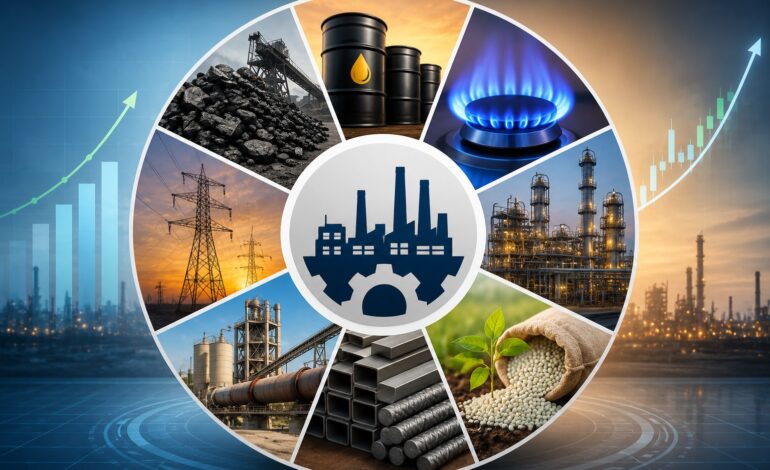
Infrastructure-intensive sectors continue to expand, supported by public investment and urban development projects, while traditional fossil-fuel sectors face production constraints and evolving market dynamics.

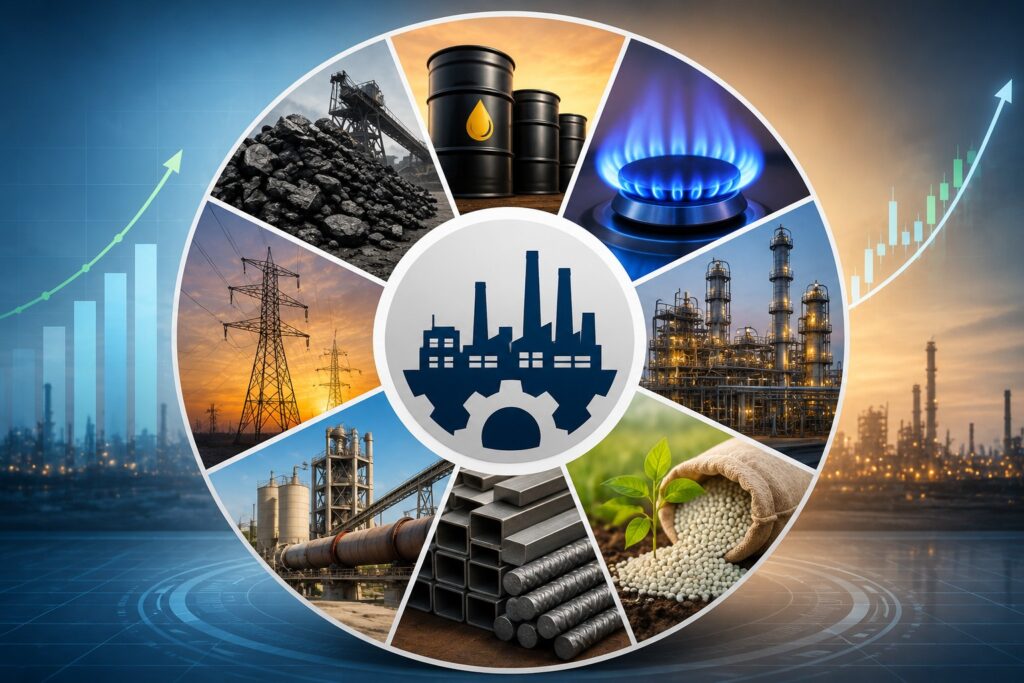
New Delhi: India’s eight core industries registered a modest growth of 0.5 per cent in May 2026, reflecting a mixed performance across key sectors of the economy as strong expansion in steel, cement and electricity offset declines in coal, crude oil, natural gas and refinery products.
According to data released by the Ministry of Commerce and Industry on Monday, the Index of Eight Core Industries (ICI) increased by 0.5 per cent on a year-on-year basis in May 2026. The index tracks the performance of coal, crude oil, natural gas, refinery products, fertilizers, steel, cement and electricity, which together account for 40.27 per cent of the weight in the Index of Industrial Production (IIP).
The latest data indicate that while India’s infrastructure and construction-linked sectors remain robust, traditional energy sectors continue to face production challenges.
Steel, Cement and Electricity Lead Growth
Among the eight sectors, electricity generation emerged as the strongest performer, recording growth of 8.7 per cent in May 2026 compared to the same month last year. Cement production increased by 8.4 per cent, while steel production expanded by 5 per cent, reflecting sustained demand from infrastructure, construction and industrial activity.
The strong performance of these sectors helped cushion the impact of declines recorded across several energy-related industries.
Energy Sector Faces Headwinds
Coal production declined by 9.3 per cent, the steepest contraction among all core sectors during the month. Refinery products output fell by 8.7 per cent, while natural gas production dropped by 4.9 per cent and crude oil production declined by 4.6 per cent. Fertilizer production also slipped by 0.9 per cent.
The data suggest continuing pressure on conventional energy production even as electricity demand remains strong across the country.
Cumulative Growth Remains Positive
For the first two months of the current financial year, April-May 2026-27, the cumulative growth rate of the Index of Eight Core Industries stood at 1.1 per cent, matching the growth recorded during the corresponding period of the previous financial year.
The final growth rate for April 2026 has been revised upward to 1.8 per cent, providing a slightly stronger base for the current fiscal year’s industrial performance.
Infrastructure Demand Continues to Support Economy
The data underline the continuing importance of infrastructure investment and construction activity in sustaining industrial growth. Rising steel and cement output typically serves as a leading indicator of economic activity, particularly in sectors such as housing, transportation infrastructure and manufacturing.
Electricity generation has also maintained strong momentum, suggesting continued expansion in industrial operations, commercial activity and household consumption.
What the Numbers Indicate
While overall growth has moderated significantly from previous years, the composition of growth reveals a structural shift within India’s industrial economy. Infrastructure-intensive sectors continue to expand, supported by public investment and urban development projects, while traditional fossil-fuel sectors face production constraints and evolving market dynamics.
Economists will closely watch upcoming industrial production and GDP data to assess whether the resilience shown by steel, cement and electricity can sustain broader industrial growth during the remainder of FY27.
The Ministry said the next release of the Index of Eight Core Industries for June 2026 will be published on July 20, 2026.