India Launches World’s Largest AI-Powered Smart Warehousing System for Foodgrain Storage
Union Minister Pralhad Joshi inaugurates technology-driven platform across CWC and FCI warehouses to enhance efficiency, transparency, and food security.
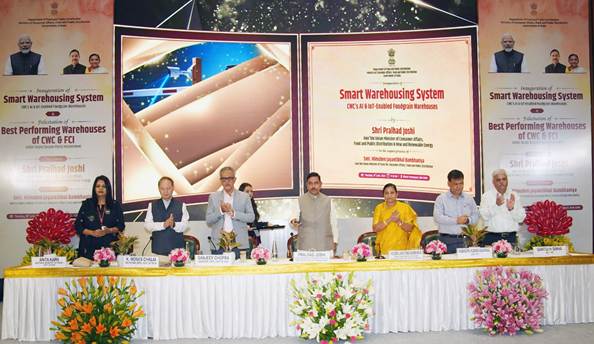
The system was inaugurated by Union Minister for Consumer Affairs, Food and Public Distribution and New & Renewable Energy, Pralhad Joshi, in the presence of Minister of State Nimuben Jayantibhai Bambhaniya at Bharat Mandapam, New Delhi.

New Delhi: In a landmark move to modernise India’s foodgrain storage infrastructure, the Department of Food and Public Distribution (DFPD) on Thursday launched the Smart Warehousing System, an Artificial Intelligence (AI) and Internet of Things (IoT)-enabled platform designed to transform warehouse operations across the country.
The system was inaugurated by Union Minister for Consumer Affairs, Food and Public Distribution and New & Renewable Energy, Pralhad Joshi, in the presence of Minister of State Nimuben Jayantibhai Bambhaniya at Bharat Mandapam, New Delhi.
Described as the world’s largest deployment of AI and IoT technologies in public-sector foodgrain warehousing, the initiative has already been implemented in 215 bag-based warehouses operated by the Central Warehousing Corporation (CWC). The Food Corporation of India (FCI) is simultaneously rolling out the system across an additional 150 warehouses.
The Smart Warehousing System integrates a range of advanced technologies, including FASTag and Automatic Number Plate Recognition (ANPR)-based gate automation, geo-tagged smart locks, AI-enabled bag counting, facial recognition systems, object detection tools, IoT-based environmental monitoring, and AI-powered surveillance for detecting fire, smoke, and rodent activity. The platform also supports Enterprise Resource Planning (ERP) integration, automated record generation, and advanced analytics for warehouse management.
According to the Ministry, the technology is expected to significantly improve operational efficiency by reducing vehicle turnaround times, strengthening compliance monitoring, enhancing manpower productivity, enabling early hazard detection, and providing real-time visibility into warehouse operations.
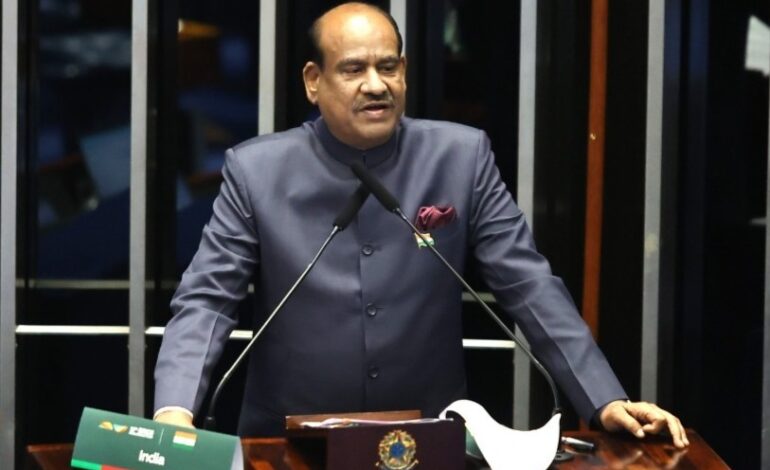
Speaking at the event, Shri Pralhad Joshi said the Government remains committed to strengthening India’s food security architecture through technology-driven reforms. He noted that the Smart Warehousing System would ensure scientific storage and better preservation of foodgrains, benefiting farmers, warehouse operators, and more than 80 crore beneficiaries covered under the Public Distribution System (PDS).
The Minister also highlighted the Government’s efforts to improve transparency in food subsidy delivery through digitisation. He stated that over 2.43 crore ineligible ration cards have been identified and removed through various digital reforms, helping ensure that benefits reach genuine beneficiaries.
Over the past few years, the DFPD has introduced several technology-led initiatives, including SMART PDS, Anna Chakra, Depot Darpan, ASHA, SCAN, and Anna Darpan. These platforms leverage AI and Machine Learning technologies to strengthen procurement, storage, logistics, and foodgrain distribution systems nationwide.
During the event, the Department felicitated the top 20 performing warehouses of CWC and FCI under the Depot Darpan assessment framework, recognising excellence in storage and operational efficiency.
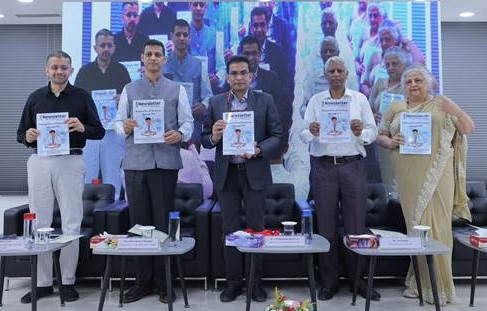
The Ministry also unveiled several publications and knowledge resources, including the Practical Guide for Safe Grain Storage at Mandis/Procurement Centres, Pocket Handbook for FPS Dealers, 12 Years of Ensuring Food Security, Anna and Algorithms: Advancing to Next-Gen Governance in the PDS (2024–2026), and the Smart Warehousing Manual containing standard operating procedures for IoT-enabled warehouse management.
Officials said the Smart Warehousing System aligns with key national initiatives such as Digital India, the IndiaAI Mission, PM GatiShakti, and Atmanirbhar Bharat. The initiative is expected to play a critical role in strengthening India’s long-term food security while creating a more efficient, transparent, and technology-driven foodgrain management ecosystem.