Great Nicobar Project to Build Mega Transshipment Hub, Airport and Power Plant
Strategic project aims to boost maritime strength, reduce dependence on foreign ports
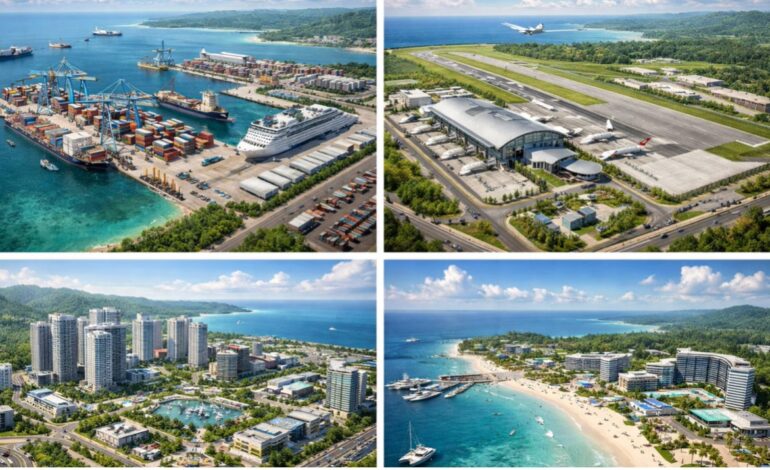
At the core of the development is a proposed International Container Transshipment Terminal with a capacity of 14.2 million TEU, supported by a greenfield international airport designed to handle up to 10 million passengers annually in the long term.

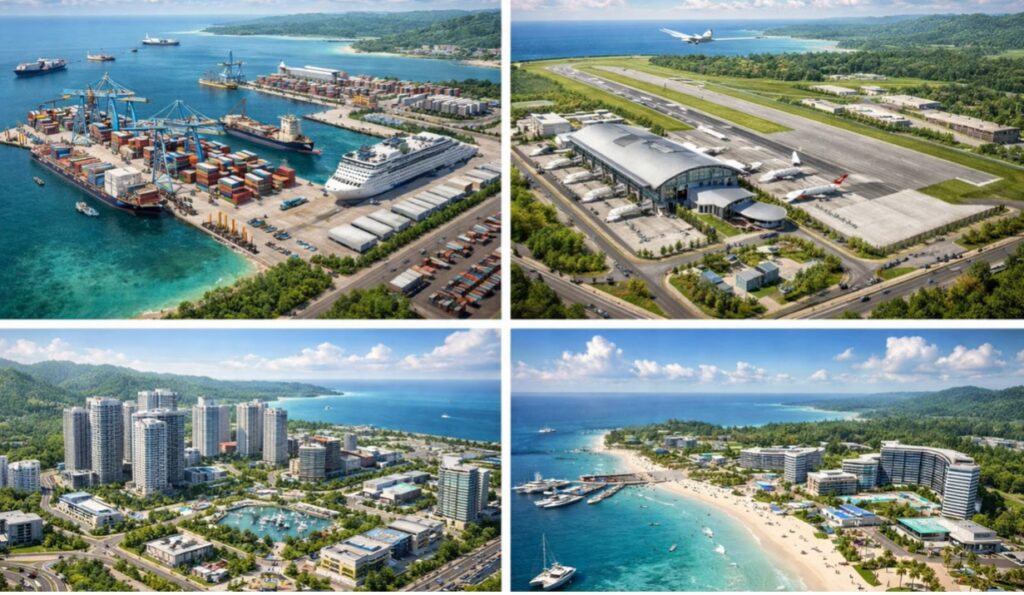
New Delhi: The Government of India is advancing the Great Nicobar Project to transform the island into a strategic maritime and economic hub, with key infrastructure including a transshipment terminal, international airport, power plant and township.
The project leverages Great Nicobar’s proximity – about 40 nautical miles – to the East–West international shipping route, positioning it as a critical node in global maritime trade while reducing India’s dependence on foreign transshipment hubs such as Colombo and Singapore, the government said in an official release on Friday.
At the core of the development is a proposed International Container Transshipment Terminal with a capacity of 14.2 million TEU, supported by a greenfield international airport designed to handle up to 10 million passengers annually in the long term. The project also includes a 450 MVA gas–solar power plant and a planned township spanning over 16,000 hectares.
The development will be implemented in three phases between 2025 and 2047, covering a total area of 166.10 sq km, combining economic expansion with environmental safeguards and social considerations.
The project has received environmental clearance under the EIA Notification, 2006, with 42 compliance conditions covering biodiversity, pollution, and disaster management. As highlighted in the environment section on page 4, multiple expert institutions including the Zoological Survey of India and Wildlife Institute of India have assessed the project, with monitoring committees set up for oversight.
To offset ecological impact, compensatory afforestation is planned over 97.30 sq km, while 65.99 sq km will be preserved as green zones. The project will divert 1.82% of the island’s forest cover in a phased manner.
The government has stated that no displacement of indigenous Shompen and Nicobarese communities is proposed. Instead, tribal reserve areas will see a net increase through re-notification measures, with independent monitoring committees overseeing welfare concerns.
Strategically, the project is expected to strengthen India’s presence in the Indo-Pacific, enhance national security, and support port-led economic growth, while positioning the island as a hub for trade, tourism and logistics.