Wholesale Inflation Edges Up to 2.13% in February as Food Prices Firm; Fuel Continues to Decline
Data released by the Ministry of Commerce and Industry on Monday shows the WPI index for all commodities increased to 158.2 in February from 157.8 in January, indicating steady but moderate price momentum in the wholesale economy.

Primary articles and manufactured products push WPI higher, while fuel and power remain in negative territory
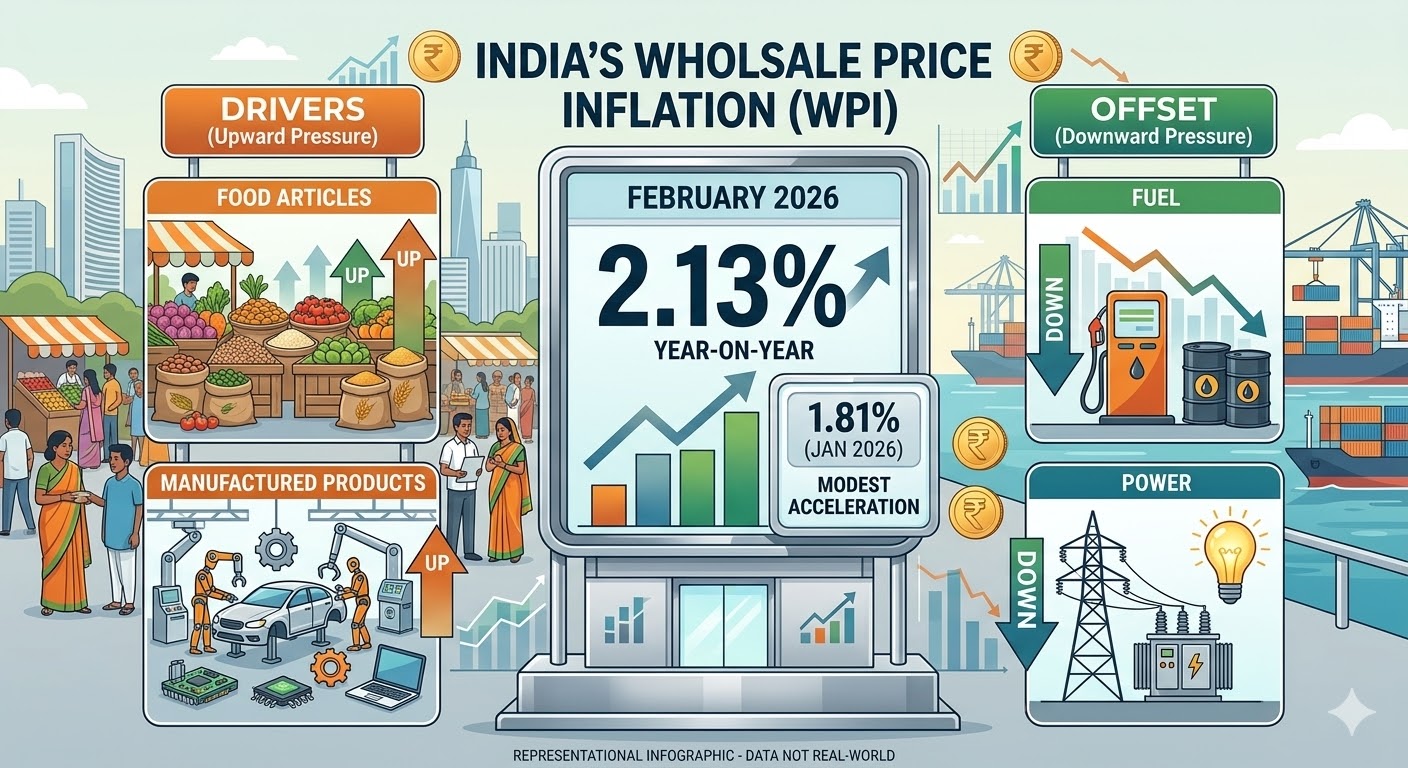
New Delhi: India’s wholesale price inflation (WPI) rose to 2.13% in February 2026 on a year-on-year basis, marking a modest acceleration from 1.81% in January, driven mainly by higher prices of food articles and manufactured products even as fuel and power continued to exert downward pressure.
Data released by the Ministry of Commerce and Industry on Monday shows the WPI index for all commodities increased to 158.2 in February from 157.8 in January, indicating steady but moderate price momentum in the wholesale economy.
The latest numbers highlight a familiar inflation pattern emerging in recent months: food-driven price pressures combined with stable manufacturing costs and declining energy prices.
Food and primary commodities drive inflation
A key contributor to the rise in wholesale inflation was the primary articles category, which recorded 3.27% inflation in February, up from 2.21% in January.
Within this category, several food items showed notable price movements.
Vegetables registered strong inflation of 4.73% year-on-year, reversing the sharp deflation recorded earlier in the year. Fruits prices rose 3.57%, while milk increased 3%, indicating a gradual strengthening of food prices at the wholesale level.
Eggs, meat and fish recorded a 5.36% price rise, reflecting sustained demand and supply-side pressures in protein-based food items.
However, cereals and pulses continued to show mixed trends. Wheat prices remained in negative territory at –4.43% inflation, while pulses recorded –5.92%, suggesting improved supply conditions in these segments.
Among non-food primary articles, oil seeds registered a sharp price increase of 25.38%, highlighting volatility in global edible oil markets and domestic supply dynamics.
Manufacturing prices show steady rise
The manufactured products category, which carries the largest weight in the WPI basket at over 64%, recorded 2.92% inflation in February, slightly higher than January’s 2.86%.
Manufacturing inflation was led by increases in food processing, beverages, textiles and apparel segments.
Manufacture of food products registered 1.12% inflation, while textiles rose 3.29% and wearing apparel increased 2.14%, reflecting moderate cost pressures across consumer goods industries.
Basic metals also recorded stronger inflation at 4.35%, suggesting firm demand from infrastructure and construction sectors.
At the same time, some industrial categories showed price corrections. Rubber and plastic products registered –0.46% inflation, while paper and paper products saw –0.35%, indicating softening input costs in certain manufacturing segments.
Energy prices continue to soften
In contrast to food and manufacturing, the fuel and power category remained in deflation, recording –3.78% inflation in February, extending the negative trend from earlier months.
Petrol prices declined –5.38%, high-speed diesel fell –3.72%, and LPG prices dropped –4.63%, reflecting global energy price adjustments and domestic pricing dynamics.
Crude petroleum also remained in deflation at –1.29%, contributing to lower overall energy costs in the wholesale system.
Economists note that this continued weakness in fuel inflation has helped offset rising food prices, preventing a sharper increase in overall wholesale inflation.
Month-on-month momentum remains moderate
On a monthly basis, the WPI rose 0.25% in February compared with January, indicating modest price momentum across sectors.
The increase was driven primarily by manufactured products and fuel price movements, while primary articles registered a slight month-on-month decline due to seasonal fluctuations in agricultural commodities.
Inflation trajectory over the past six months
Wholesale inflation has shown a gradual upward trend over the past few months.
The WPI inflation rate moved from –0.13% in November 2025 to 0.96% in December, 1.81% in January, and now 2.13% in February, indicating a steady normalization of price pressures after earlier deflationary phases.
Despite this upward movement, overall wholesale inflation remains moderate compared with earlier inflation cycles.
Policy implications
The latest WPI numbers present a mixed picture for policymakers.
On one hand, the rise in food and manufacturing prices suggests strengthening demand and supply-side adjustments in the economy. On the other hand, continued deflation in fuel prices and stable manufacturing inflation indicate that cost pressures remain largely contained.
Since retail inflation (CPI) carries greater weight in monetary policy decisions by the Reserve Bank of India, economists will watch whether wholesale price pressures begin to transmit to consumer prices in the coming months.
For now, the February data suggests that India’s inflation dynamics remain balanced — with food inflation rising gradually while energy prices continue to act as a stabilizing factor in the broader price environment.