Union Budget 2026–27: ₹12.2 Lakh Crore Capex Push, New Income Tax Act from April 2026, and ₹10000 Crore SME Growth Fund
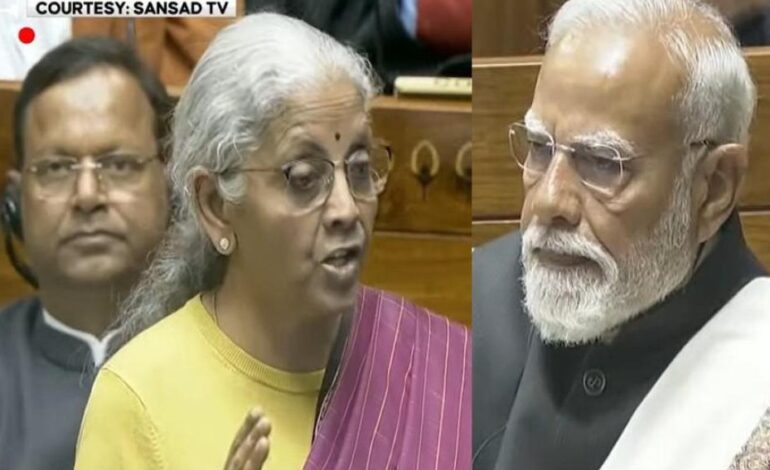
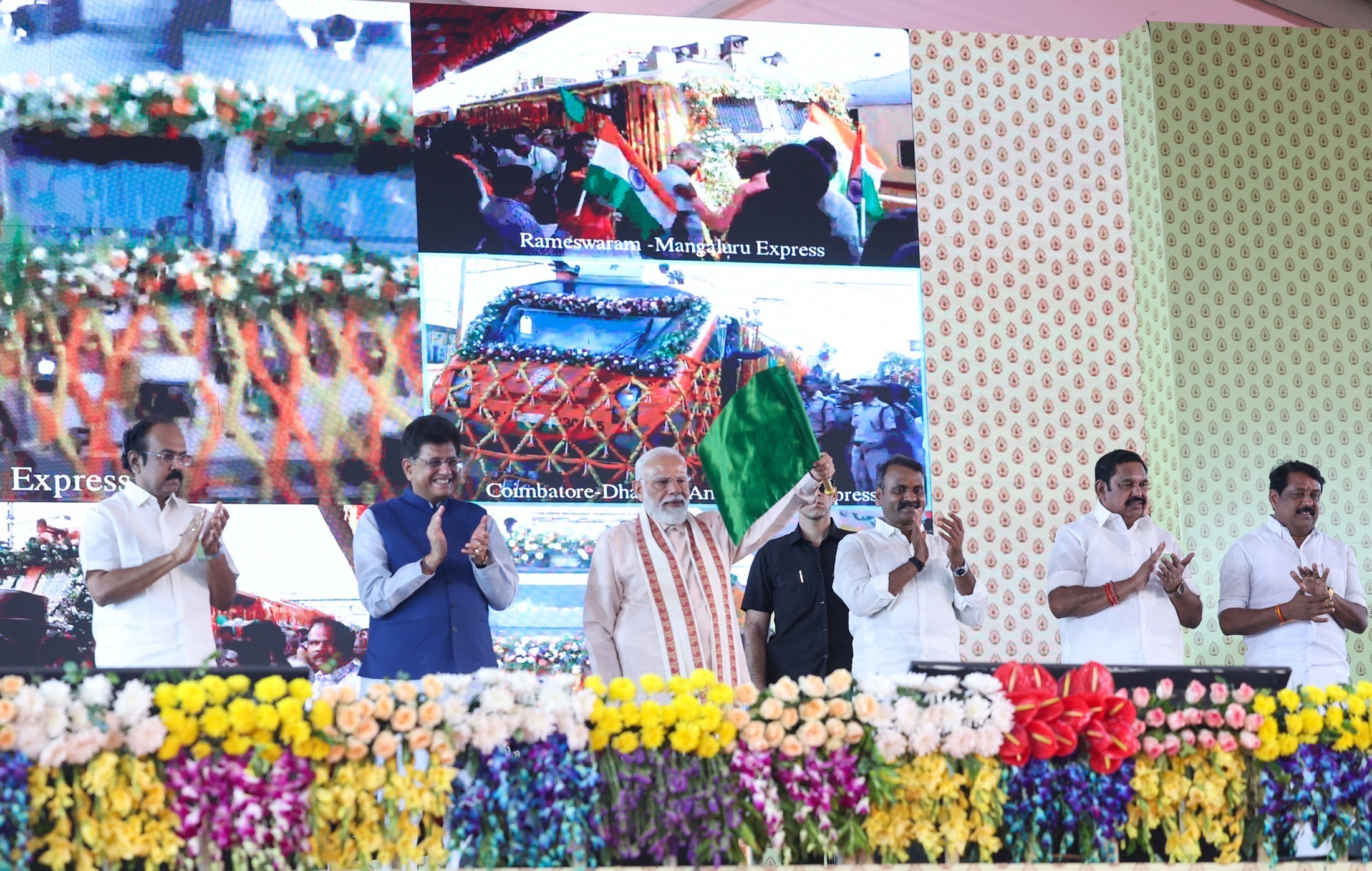
Prime Minister Narendra Modi look on as Union Minister for Finance and Corporate Affairs Nirmala Sitharaman present the Union Budget 2026–27 in Parliament on Sunday.

New Delhi: Union Minister for Finance and Corporate Affairs Nirmala Sitharaman presented the Union Budget 2026–27 in Parliament, outlining a growth-led, capacity-building and inclusion-focused roadmap anchored in three kartavya.
Three Kartavya Framework
- Accelerate and sustain economic growth through productivity, competitiveness and resilience
- Fulfil aspirations and build capacity of people as partners in growth
- Ensure inclusive development aligned with Sabka Sath, Sabka Vikas
Budget Estimates at a Glance
- Total expenditure: ₹53.5 lakh crore
- Non-debt receipts: ₹36.5 lakh crore
- Net tax receipts: ₹28.7 lakh crore
- Capital expenditure: ₹12.2 lakh crore
- Fiscal deficit (BE 2026–27): 4.3% of GDP
- Debt-to-GDP ratio: 55.6%
First Kartavya: Accelerating and Sustaining Growth
Manufacturing and Strategic Sectors
- Biopharma SHAKTI: ₹10,000 crore to build a global biopharma manufacturing hub
- India Semiconductor Mission 2.0 to strengthen equipment, materials and IP
- Electronics components manufacturing outlay raised to ₹40,000 crore
- Rare Earth Corridors to support mineral-rich states
- Three Chemical Parks to be developed through a challenge route
Capital Goods and Textiles
- Hi-tech tool rooms by CPSEs
- Scheme for advanced construction and infrastructure equipment
- ₹10,000 crore container manufacturing scheme
- Integrated textile programme covering fibres, clusters, handloom and mega parks
MSMEs and Micro Enterprises
- ₹10,000 crore SME Growth Fund to create “Champion MSMEs”
- Additional ₹2,000 crore for Self-Reliant India Fund
- Professional institutions to train Corporate Mitras in Tier II–III towns
Infrastructure Push
- Infrastructure Risk Guarantee Fund to boost private participation
- New dedicated freight corridors and 20 national waterways
- Coastal cargo promotion and seaplane connectivity schemes
- Seven high-speed rail corridors as growth connectors
Energy and Cities
- ₹20,000 crore for carbon capture, utilisation and storage (CCUS)
- City Economic Regions with ₹5,000 crore allocation per region over five years
Second Kartavya: Building Capacity and Aspirations
Education, Skills and Jobs
- Standing committee on education-to-employment linkage
- 100,000 allied health professionals to be added in five years
- Five regional medical hubs for medical tourism
- AVGC labs in 15,000 schools and 500 colleges
- One girls’ hostel in every district for STEM institutions
Tourism, Culture and Sports
- National Institute of Hospitality to be set up
- Upskilling 10,000 tourist guides with IIM collaboration
- Digital knowledge grid for heritage and cultural sites
- Khelo India Mission to transform sports sector
Third Kartavya: Inclusive Development
Agriculture and Farmers
- Integrated development of 500 reservoirs and Amrit Sarovars
- Focus on high-value crops including coconut, cocoa and cashew
- Bharat-VISTAAR, a multilingual AI platform integrating AgriStack and ICAR
Social Sectors and Regions
- Divyangjan Kaushal Yojana for job-linked skilling
- NIMHANS-2 and upgrades to mental health institutes
- East Coast Industrial Corridor and Purvodaya-focused tourism
- Buddhist circuit development in the north-east
Direct Tax Highlights
- New Income Tax Act, 2025 effective from April 2026
- Simplified tax forms and rules
- Reduced TCS on overseas tours, education and medical remittances
- Rationalised penalty and prosecution regime
- Single IT services category with 15.5% safe harbour, threshold raised to ₹2,000 crore
- Tax holiday till 2047 for foreign cloud service providers using Indian data centres
Indirect Tax and Customs Reforms
- Duty exemptions for lithium-ion cells, critical minerals, aircraft components and medicines
- Personal import duty reduced from 20% to 10%
- Customs clearance through single digital window
- AI-based non-intrusive scanning to expand across ports
- Removal of ₹10 lakh cap on courier exports
Bottom Line
Union Budget 2026–27 combines high public investment, manufacturing depth, youth skilling, tax simplification and digital trade facilitation to position India firmly on the path to Viksit Bharat by 2047.