Startup India at 10: From Policy Initiative to Defining Movement of New India
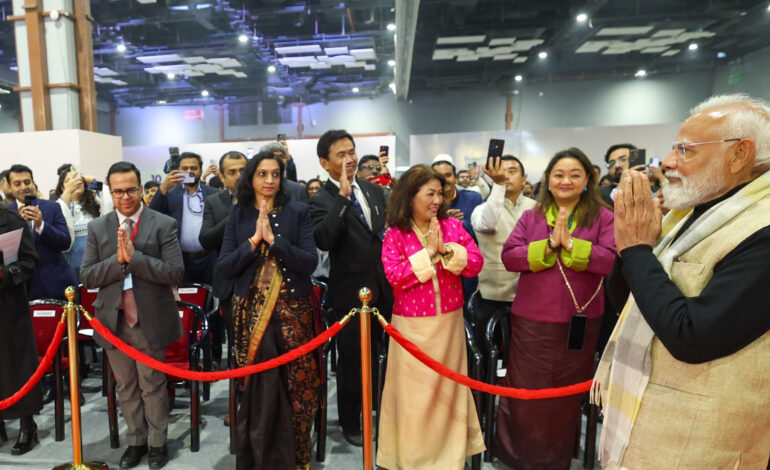
PM participates in National Startup Day programme marking a decade of Startup India at Bharat Mandapam, in New Delhi on January 16, 2026.

New Delhi: Startup India has evolved from a government-led programme into a defining national movement, reshaping India’s economic and innovation landscape over the past decade, Prime Minister Narendra Modi said on National Startup Day, marking ten years of the flagship initiative.
Addressing startup founders, innovators and young entrepreneurs at Bharat Mandapam, the Prime Minister said Startup India has gone far beyond its original mandate to become a symbol of India’s youthful ambition, problem-solving mindset and confidence-driven growth. He noted that Indian startups today are focused on solving real-world challenges across agriculture, fintech, mobility, health and sustainability, while increasingly attracting global attention.
India has emerged as the world’s third-largest startup ecosystem in just ten years. The number of startups has grown from fewer than 500 in 2014 to over two lakh today, while the number of unicorns has risen from four to nearly 125. In 2025 alone, nearly 44,000 startups were registered—the highest in any single year—highlighting the accelerating momentum of the ecosystem.
Union Minister for Commerce and Industry Piyush Goyal said the Startup India journey represents a fundamental shift in national thinking, with young Indians moving from being job seekers to job creators. He recalled that when the initiative was launched in 2016, India had around 400 startups; today, over two lakh are registered with the Department for Promotion of Industry and Internal Trade (Department for Promotion of Industry and Internal Trade), generating an estimated 21 lakh jobs across the country.
The government has placed a strong emphasis on deep tech and high-impact innovation. Startups are now active across more than 50 sectors, including artificial intelligence, machine learning, quantum computing, agri-tech, space tech, drones, aerospace and rocket technology. To strengthen risk capital availability, the government constituted a ₹10,000 crore Fund of Funds in 2016, followed by a second tranche of ₹10,000 crore in the latest Union Budget, with a significant portion earmarked for deep-tech deployment. In addition, a ₹1 lakh crore fund has been announced to support research, development and innovation at global standards.
A defining feature of the startup revolution has been its geographic spread. Nearly half of India’s startups now originate from tier-II and tier-III cities, underscoring the transition from a metro-centric ecosystem to a truly national movement. The North East has emerged as a notable example, while Andhra Pradesh is gaining recognition as a drone hub. Karnataka and Tamil Nadu have consolidated their positions as centres for deep tech and AI-driven startups.
India’s startup ecosystem is also becoming a strategic tool in global economic engagement. According to the minister, startup collaboration has gained prominence in free trade agreement negotiations, with nearly 100 countries expressing interest in building startup bridges with India through structured coordination platforms.
As part of the National Startup Day celebrations, DPIIT announced the results of the fifth National Startup Awards (NSA 5.0) and the States’ Startup Ranking Framework (SRF 5.0). The awards recognised excellence across more than 20 categories, including deep-tech innovation, bootstrapped enterprises, women-led startups and startups from tier-II and tier-III cities. The States’ Startup Ranking assessed 34 states and union territories across policy support, infrastructure, funding access, market linkages and ecosystem sustainability, reinforcing accountability and competitive federalism.
Launched on January 16, 2016, Startup India was envisioned as a catalyst for innovation-led growth, institutional support and investment-driven entrepreneurship. Over the past decade, sustained policy backing, ecosystem collaboration and access to capital have transformed startups into key drivers of employment generation, domestic value creation and economic resilience.
As India advances towards the vision of Viksit Bharat @ 2047, the government said Startup India will continue to play a pivotal role in fostering inclusive growth, technological leadership and long-term economic strength.