MoSPI, DSCI join hands to build trusted data-sharing framework for India’s official statistics
MoSPI and DSCI will develop trusted data-sharing protocols, explore privacy-enhancing technologies and promote responsible AI adoption to strengthen India's national statistical system.

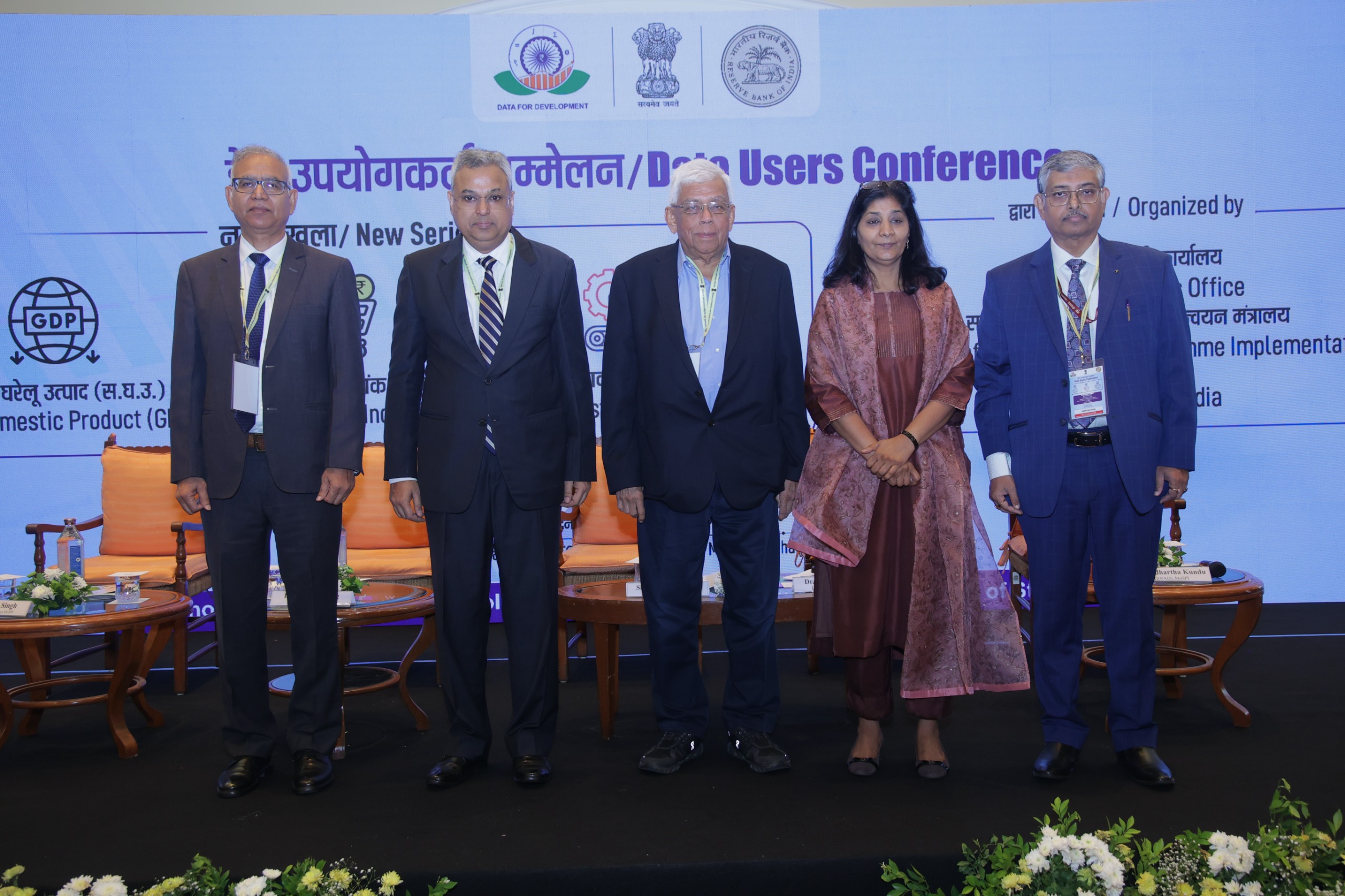
Dr Saurabh Garg, Secretary, MoSPI, and Vinayak Godse, Chief Executive Officer, DSCI, signed the agreement in the presence of senior officials of the ministry in New Delhi on Wednesday.

NEW DELHI: India’s efforts to strengthen data governance and protect privacy in the digital economy have received a fresh impetus, with the Ministry of Statistics and Programme Implementation (MoSPI) signing a Memorandum of Understanding (MoU) with the Data Security Council of India (DSCI) to establish a framework for trusted data sharing in official statistics.
The agreement, signed in New Delhi on November 25, 2026, aims to strengthen the National Statistical System through collaboration on data governance, cybersecurity, privacy protection and the responsible adoption of emerging technologies, including Artificial Intelligence (AI).
Dr Saurabh Garg, Secretary, MoSPI, and Vinayak Godse, Chief Executive Officer, DSCI, signed the agreement in the presence of senior officials of the Ministry. DSCI is a not-for-profit industry body and think tank on data protection and cybersecurity established by Nasscom.
Data privacy meets statistical requirements
The growing use of alternative data sources by statistical agencies has created new challenges for data management. While such sources can improve the quality, coverage and timeliness of official statistics, they may also contain personal identifiers, raising concerns about privacy, confidentiality and responsible data usage.
The partnership assumes significance in the context of the Digital Personal Data Protection Act, 2023, whose provisions are scheduled to come into force in 2027. Data-producing agencies need to strengthen their data-handling practices to ensure compliance with evolving privacy requirements without compromising the quality and reliability of official statistics.
Under the MoU, MoSPI and DSCI will work towards developing protocols for trusted data sharing within and across agencies. These protocols will seek to maintain data quality, protect personal privacy and preserve statistical confidentiality.
Policy framework and privacy-enhancing technologies
As an initial step, the two organisations will jointly prepare a policy paper on trusted data flows and data management. The document will draw upon international best practices in data protection and cybersecurity.
The collaboration will extend to joint research on data governance and technical assistance for adopting privacy-enhancing technologies (PETs). These technologies can help organisations analyse and derive insights from data while reducing the exposure of sensitive personal information.
The MoU also envisages promoting the responsible use of Artificial Intelligence in statistical processes, potentially strengthening the ability of public institutions to process complex datasets while maintaining appropriate safeguards.
Industry and research collaboration
Another important component of the agreement is the facilitation of pilot projects involving industry, academia, research institutions and international organisations.
Such collaborations are expected to encourage innovation in secure data management, strengthen institutional capabilities and accelerate the adoption of emerging technologies across the national statistical ecosystem.
Building trust into India’s data infrastructure
As India expands its digital public infrastructure and data-driven governance capabilities, the ability to share information securely across institutions is becoming increasingly important.
The MoSPI-DSCI partnership represents an effort to address this challenge by bringing data protection and cybersecurity expertise into the official statistical ecosystem.
The larger test will be translating policy recommendations and technical frameworks into practical safeguards that allow public institutions to use data effectively while protecting individual privacy and maintaining public trust.